Remembering loved ones on All Souls' Day

All Souls’ Day is a solemn occasion to remember those who have passed, keep their memory alive in our hearts and offer prayers for their souls. Observed on 2 November, it calls us to extend our compassion beyond those we have loved deeply, reaching out even to souls who may have been forgotten over time. Such prayers are acts of charity, offered in the hope that all souls may find peace on their journey to heaven.

Every year, as November approaches, my family returns to the Western Road cemetery in Penang. The paths are familiar, as are the graves we have visited for as long as I can remember. We come bearing flowers, candles and prayers, but we also bring something intangible: the memories of those who once walked beside us. There is a bittersweet comfort in these moments, standing together in prayer and honouring the lives that have helped shape us. Among the graves we visit are those of my father Paul, my sister Sandra, my brother Terence, our grandparents, granduncles, grandaunties, uncles, aunts and other relatives.

For many years, it was Sandra who knew the cemetery best. “Our grandparents are over there,” she would say, pointing towards the graves, “and eight plots down is our Auntie Catherine.” She seemed to know every grave by heart, guiding us from one resting place to another without hesitation. Today, Sandra is among those we visit. The sister who once led us to the graves of our departed relatives has become someone we return to remember.
A father’s foresight

In the early 1980s, my late father undertook the reconstruction of parts of our family gravesite to accommodate numerous urns. With eight children of his own, 20 grandchildren and more than 10 great-grandchildren, as well as five siblings, he knew, with a wisdom that was both pragmatic and deeply sentimental, that this would be the best way to keep our family together, even in death.
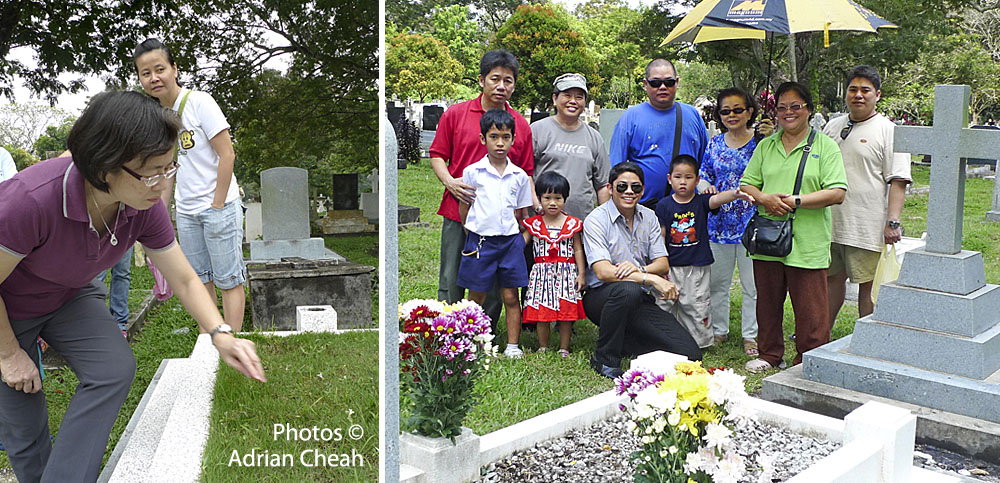
It was a practical solution, making better use of the available space, but it also reflected something deeply personal. My father was making room for generations to come, although he could not have known who would eventually join those already laid to rest. In time, similar arrangements, adopting the same space-saving approach, appeared in other graves in the newer section of Western Road cemetery.

Looking back, I find something moving in this act of foresight. He was thinking of the family as a whole, of those who came before him and those who would follow. In making room for everyone, he was also making room for himself.
The meaning of All Souls’ Day
In the Catholic faith, All Souls’ Day is closely associated with the belief in purgatory, a state of purification for souls who have died in God's grace but are not yet fully prepared for the joy of heaven. Catholics believe that prayers offered for the departed can assist these souls on their journey towards eternal life.
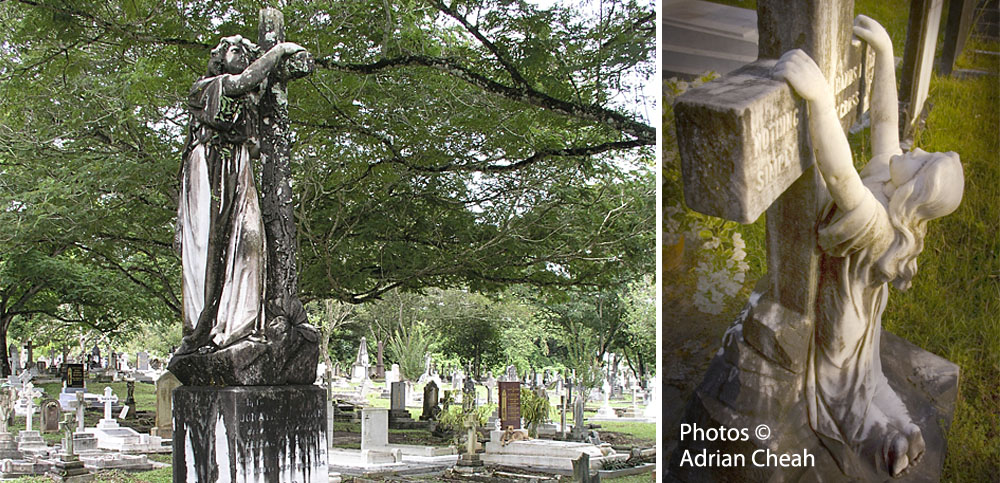
When Catholics observe All Souls’ Day, they are, in a sense, continuing a tradition rooted in the actions of Judas Maccabeus, a biblical figure whose account offers one of the earliest scriptural examples of prayer for the dead. After discovering that fallen Jewish soldiers had carried forbidden objects associated with idolatry, Judas recognised the importance of praying for the departed and arranged for an offering to be made on their behalf. His actions, recorded in the Second Book of Maccabees, helped establish a tradition that has endured across centuries, reflecting the belief that prayer, love and intercession can reach beyond the grave.
For Catholics, remembering the dead is not confined to one day of the year. Prayers are offered throughout the year, and families may request Masses for departed loved ones. All Souls’ Day, however, brings this remembrance into particular focus. Churches hold requiem Masses, and the faithful are encouraged to pray not only for their own relatives but for all the departed.
A universal act of remembrance
Across diverse religious traditions, people have found meaningful ways to honour those who have departed, each faith expressing remembrance through its own rituals and beliefs.
In some local Malay traditions, customs surrounding Ramadhan and Syawal include visiting and cleaning graves, offering prayers and remembering loved ones. Such visits reflect an enduring desire to maintain a spiritual bond with those who have passed. Beliefs about the departed returning to visit their families, however, vary between communities and should not be taken as a universal Islamic teaching.
In Buddhism, the Ullambana festival draws on the story of Maudgalyayana, a disciple of Buddha Shakyamuni, who sought to relieve his deceased mother from suffering. The festival is marked by offerings and acts of merit dedicated to departed relatives and other beings, reflecting the Buddhist values of compassion and filial devotion.
Similarly, the Chinese observance of Cheng Beng, or Qingming, is a cherished time for ancestral veneration. Families visit and tend to graves, make offerings and remember those who came before them. These customs echo the familial bonds that remain important across generations and cultures.

Catholics, too, observe All Souls’ Day as a special occasion to honour their departed loved ones and offer prayers for their souls. Though the rituals and beliefs differ, they share a common human impulse: to remember, honour and maintain a connection with those who are no longer among us.
The Flicker of a Candle
When my family visits the cemetery, we light candles and recite the rosary at each gravesite. Through these devotions, we offer our prayers and hopes that they may reach the heavens. The significance of this tradition stretches beyond religious lines. It stands as a profound reminder that life does not stretch on forever. The flicker of a candle on a tombstone is a silent witness to the brevity of our existence. Like its flame, our lives will one day come to an end. Much like a song that begins, enchants and ultimately fades into silence, we, too, will live, laugh and cry before setting forth on our final journey.

Surrounded by so many resting souls, we sometimes find ourselves looking for signs of a presence beyond what the eye can see. There are moments when we feel that those we cherish are somehow still with us, sharing in these moments of remembrance. Whether it is a matter of faith, memory or the heart, the feeling brings a special comfort, as though the bonds we shared in life have not entirely been broken by death.
Cultural perspectives on life and death
The ancient Aztecs held a poetic belief that life is but a fleeting dream, and death, rather than an end, is an awakening to a truer reality. In their view, passing from this world was not simply a loss, but a return to a more profound existence. Across cultures and religions, we find different ways of contemplating the mysteries of life and death, and the possibility that our earthly existence is only part of a greater journey. To cling to life is, ultimately, an exercise in futility.

The feast of All Souls’ Day, occupies a sacred place in the hearts of Catholics. On this day, requiem Masses are celebrated in churches worldwide, honouring the memory of those who have departed. The priests officiating at these solemn Masses may wear vestments in different liturgical colours, each carrying its own symbolism. Black signifies mourning and sorrow for the dead. Violet represents penance and reflection, inviting contemplation of life, death and forgiveness. White, associated with the hope of resurrection, expresses the faith that those who have passed will one day share in eternal life.
Through these symbolic colours and reverent prayers, All Souls’ Day becomes not just a remembrance, but a connection to the souls of those who have left this world, reminding the faithful of the mysteries that lie beyond.
-------------------------------------
Written and photographed by Adrian Cheah
© All rights reserved.
Updated 2 November 2026