Chap Goh Meh—The Night of Romance

A charming Chap Goh Meh tale tells of a lonely young bachelor who, on a moonlit outing, was spellbound by a fleeting glimpse of the most beautiful girl he had ever seen. Radiant in her finery, she passed before him like a vision, leaving him breathless and desperate to know her name. Heart pounding, he hastily noted the number of her car.
At first light, buoyed by hope, he traced her address and implored his mother to dispatch a matchmaker to the home of the girl he was certain he would marry.

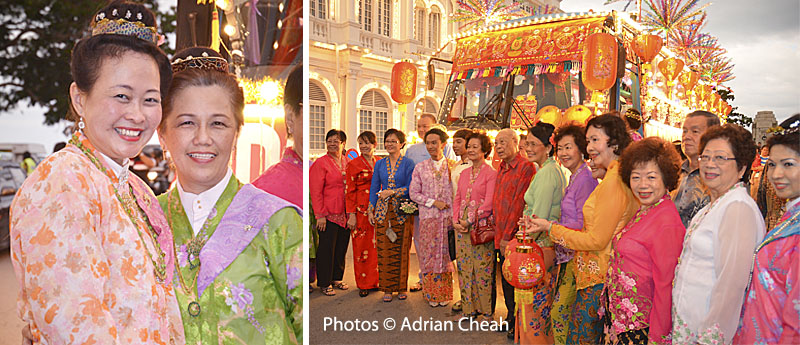
The matchmaker fulfilled her task with commendable efficiency, and the young man was beside himself with joy. All seemed perfectly arranged... until the wedding day. Only when the bridal veil was lifted did the truth come to light. The girl who had so captivated him on that moonlit night was merely a visiting niece. Standing before him was her cousin—respectable, composed, and decidedly less dazzling than the vision he had pursued. Yet fortune, as it often does, had the final word. His bride was blessed with considerable means, and in time he found himself enjoying a life of comfort, security, and unexpected contentment.
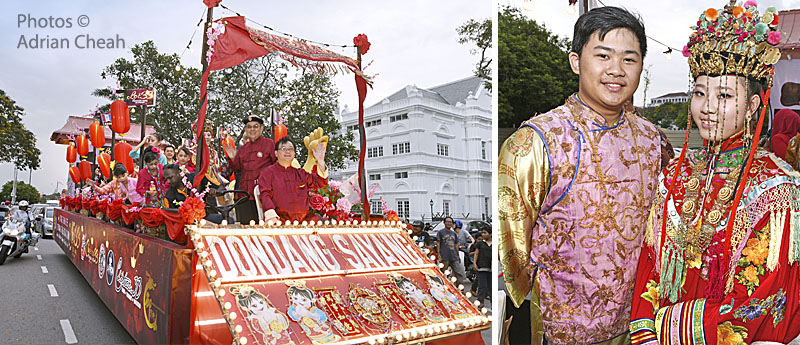
Chap Goh Meh—"the fifteenth night" in Hokkien, is a celebration to mark the end of the 15-day festivities of the Chinese New Year. During this auspicious occasion, Chinese homes are brightly decorated with lights, and lanterns are hung over balconies or main entrances. Prayers are offered in reverence to departed loved ones and ancestors, bringing the fifteen days of merriment to a meaningful close.


On this auspicious day, the Nyonyas prepare a beloved sweet known as pengat. The dessert brings together sweet potatoes in hues of yellow, orange and purple, accompanied by taro, cubes of tapioca jelly, sago pearls, and caramelised bananas (invariably pisang raja). All are bathed in a velvety coconut gravy infused with aromatic pandan leaves. Some households would further add black-eyed peas as well.

Bubur cha cha, on the other hand, shares many of the same ingredients as pengat but omits the bananas. Ask ten people and you could well receive ten different interpretations of both desserts. In some kitchens, black-eyed peas are only used in pengat. Some would even add ti kuih (caramelised glutinous rice cake) to pengat, however, in my household, such liberties are never taken.
In Malay, "bubur" translates to "porridge." The term "cha cha," homophonous with the Hokkien "che che" (signifying "abundance"), imbues the dish with a connotation of unity and abundant happiness.

To my mind, the components of a dish should blend harmoniously, offering well-balanced flavours and engaging textures. While tradition provides inspiration, it need not be followed rigidly. Traditionalists will readily explain the ingredients they deem essential, along with the symbolic meanings attached to each. Yet one suspects that many of these “rules” are, in truth, customs observed within individual households rather than doctrines carved in stone. After all, while there are published cookbooks and records documenting Nyonya recipes and food history, I have not found definitive written sources that settle every claim about mandatory ingredients or symbolic meanings across households.
Culinary heritage is a living tradition, shaped by memory, taste, and circumstance—not by any single authority. To suggest otherwise would be to deny the very evolution that makes Nyonya cuisine so remarkable. I advocate a more liberating approach: let your preferences lead, embrace experimentation, and allow adventurousness to unveil delightful surprises and uncharted culinary territories. This spirit of ingenuity has long defined the Nyonyas, whose confidence and creativity in the kitchen form the very foundation of their culinary prowess.

This day also marks the final opportunity for families and friends to partake in the tossing of yee sang. The “prosperity toss” is a vibrant ritual, featuring a medley of finely shredded vegetables crowned with strips of raw fish and a variety of sauces and condiments. With chopsticks in hand, diners lift and toss the ingredients high into the air, calling out their auspicious wishes as they go. Beyond its symbolism of good fortune, prosperity, and well-being, the act itself carries meaning—the higher the toss, the greater the expected growth in luck and abundance.


To mark this special occasion, a variety of festive activities take place. Dondang Sayang ensembles serenade audiences with timeless songs and playful pantuns (Malay poems), while the traditional tangerine-throwing ceremony adds a note of romance and anticipation. These celebrations are often held in Penang at Gurney Drive or the Esplanade.


Dondang Sayang, which translates as “the lullaby of love,” is an intricate performance of sung poetry. Its themes often explore the subtleties of affection, played out in a witty exchange between a man and a woman. Each participant attempts to outwit the other in pursuit of the heart, accompanied by the gentle strains of traditional musical instruments.
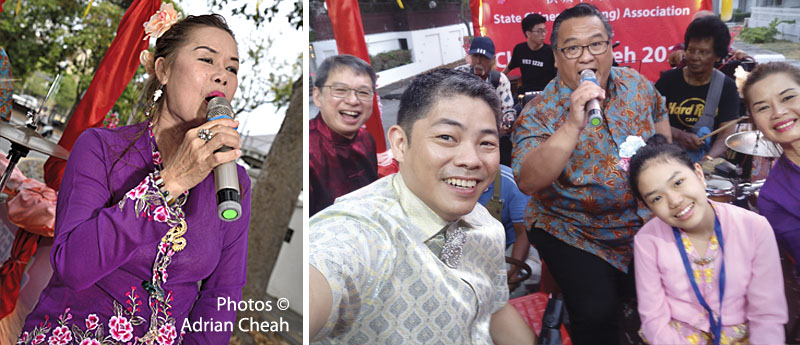


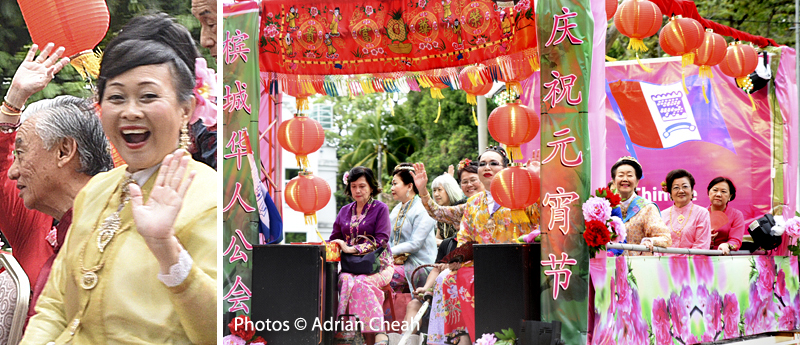
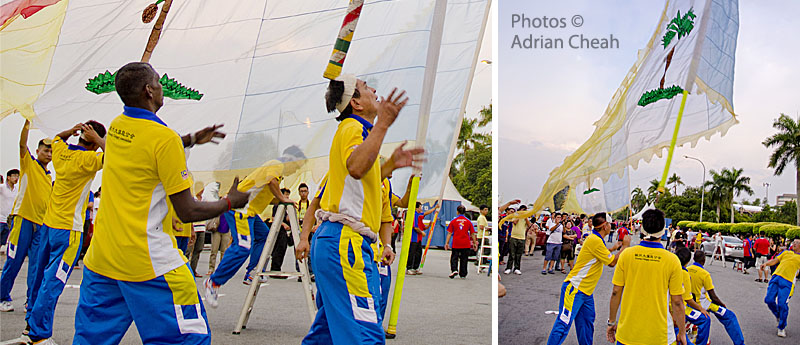
The State Chinese (Penang) Association has annually celebrated Chap Goh Meh with various activities. These include a gala dinner on the eve and, on the day itself, a Dondang Sayang musical float procession and traditional Nyonya dance performances at designated venues. The Penang State government would also join in the merriment with chingay and lion dance performances and at times, with live concerts and street food galore as well.

In bygone days, Chap Goh Meh was one of the rare occasions when eligible young Nyonyas, resplendent in their finest attire, could venture beyond the confines of their homes. Hopeful maidens would cast tangerines into the sea, silently expressing their wish for a suitable husband. From afar, eager bachelors could only admire the passing beauties, closely guarded by formidable aunts and amahs. If fortune smiled, matchmakers would be dispatched, and a union might follow.
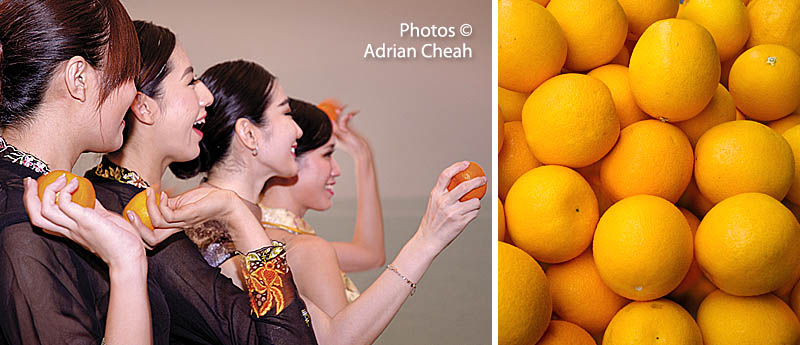
Today, this charming tradition has evolved into a lively competition: tangerines thrown into the sea by girls, single or otherwise, are scooped up by boys in boats, with the boat collecting the most oranges declared the winner. The pursuit of love and marriage has entirely dissipated, leaving us only a reflection of the romantic past.
---------------------------------------------------------
Written and photographed by Adrian Cheah
© All rights reserved
First published in 18 August 2017 with photographs updated through the years
If you enjoyed this story, you may like to bookmark this site or return for future essays.