Our bold and beautiful red Bunga Raya

Let us take a moment to reflect on the name of Malaysia’s national flower, Hibiscus rosa-sinensis. The word “hibiscus” has its roots in ancient Greece, derived from the Greek hibiskos. The name was recorded by the physician Pedanius Dioscorides (c. 40–90 AD) for a mallow plant now generally identified as marsh mallow, Althaea officinalis. Dioscorides described the plant in his celebrated "De Materia Medica", a five-volume work on medicinal plants and substances that became one of the most influential texts on herbal medicine in the ancient world.
In 1753, Swedish naturalist Carl Linnaeus provided a detailed description of the hibiscus in his seminal work, Species Plantarum. It was Linnaeus who formally published the name Hibiscus rosa-sinensis, with "sinensis" meaning “Chinese” in Latin, making this the earliest validly published use of the name. The epithet "rosa-sinensis" literally means “rose of China”, although the plant is not a true rose. Intriguingly, what Linnaeus described was already a cultivated form, including a double-flowered specimen.

For centuries, the exact origin of Hibiscus rosa-sinensis remained a botanical mystery. The plant has never been found growing wild, and its origins were variously attributed to China, South and Southeast Asia, the Indian Ocean islands and even the Americas. Recent research, however, has finally shed light on its remarkable past. Scientists have found that Hibiscus × rosa-sinensis is a prehistoric hybrid of two Pacific species, Hibiscus kaute and Hibiscus cooperi, brought together through ancient human cultivation.
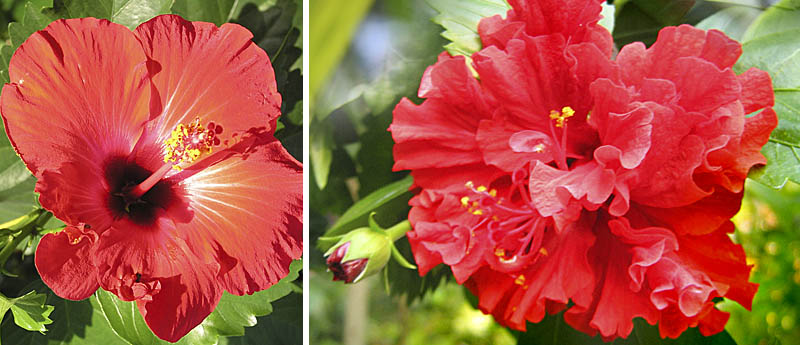
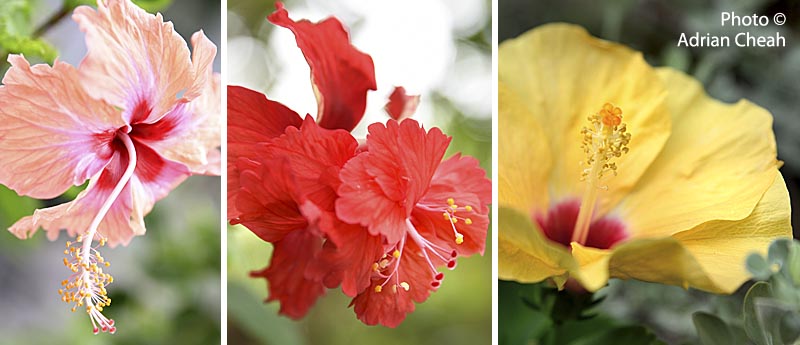
The hibiscus chosen as Malaysia’s national flower is the familiar single-flowered, five-petalled Bunga Raya (top left). Modern tropical hibiscus cultivars have a complex breeding history involving at least eight Hibiscus species, producing an extraordinary diversity of colours and forms. Hibiscus × rosa-sinensis belongs to the Malvaceae family and includes a remarkable range of floral forms, from the simple five-petalled flower we recognise as our national flower to elaborate double blooms, such as the one shown here (top right).
In the Western world, Hibiscus × rosa-sinensis is known by various names, including China rose, Chinese hibiscus, tropical hibiscus, rose mallow and shoe flower. It is called “Sembaruthi” in Tamil and “Gumamela” in Tagalog. In Indonesia, it is known as “Kembang Sepatu”, literally “shoe flower”, a name associated with the traditional use of its petals for polishing leather shoes.
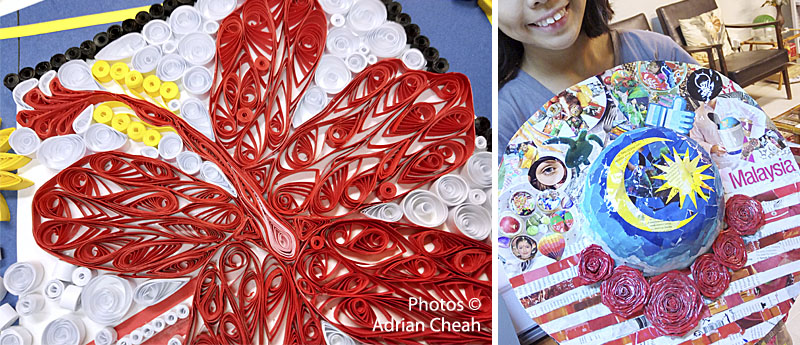
In Malaysia, we call it Bunga Raya. In Malay, “bunga” means “flower”, while “raya” carries the sense of something grand or celebratory, making Bunga Raya the “celebratory flower”. Over time, it has become a distinctive symbol of Malaysia.
So, how did the vibrant red hibiscus become our national flower? The story begins in the wake of Malaya’s independence in 1957. As the newly independent nation began forging its identity, the search for a national flower began.
In 1958, the Ministry of Agriculture invited proposals for a national flower, and seven flowers were put forward: Hibiscus (Bunga Raya), Ylang-ylang (Bunga Kenanga), Jasmine (Bunga Melur), Magnolia (Bunga Cempaka), Lotus (Bunga Teratai), Rose (Bunga Mawar) and Spanish cherry (Bunga Tanjung). Preferences varied across the country: residents of the East Coast favoured the hibiscus, while those on the West Coast preferred jasmine.
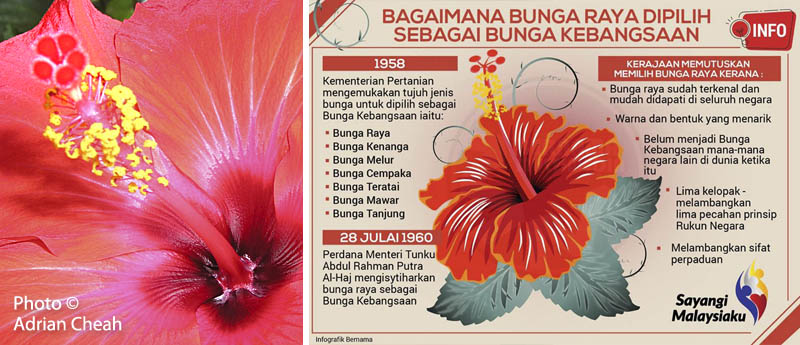
On 28 July 1960, then Prime Minister Tunku Abdul Rahman Putra Al-Haj officially declared the hibiscus the national flower of Malaya. The announcement was made during the inauguration of the Malayan Agro-Horticultural Association (MAHA) exhibition at the Selangor Turf Club.
The decision was based on several factors. Bunga Raya was already a familiar flower among Malaysians, and its striking red colour was seen as symbolising life, joy, splendour and, most importantly, courage. Its five broad, beautiful petals later came to represent the five principles of the Rukun Negara (National Principles), a pledge many of us can still vividly recall reciting in school. Additionally, the hibiscus blooms throughout the year and is well suited to Malaysia’s tropical climate. It can be easily propagated from branch cuttings and requires minimal maintenance, making it a practical as well as symbolic choice for our national flower.

Bunga Raya holds a special place in the hearts of Malaysians. Its image is featured prominently on Malaysian currency, as well as on stamps and commemorative coins, a familiar symbol of the nation’s identity and pride.

Since then, the hibiscus has inspired the logos for numerous significant events and initiatives, including the Kuala Lumpur 98 XVI Commonwealth Games and the Visit Truly Asia Malaysia 2020 campaign. The flower is also featured in the logos of Tourism Malaysia, the National Mark of Malaysian Brand and Management and Science University, among others.

Annually, the prestigious Prime Minister’s Hibiscus Award serves as a platform to acknowledge and honour the environmental achievements and leadership of businesses and industries. Beyond recognition, this award plays a vital role in fostering environmental consciousness and contributing to the improvement of Malaysia's ecological landscape. Through its symbolism, the hibiscus is instrumental in promoting these efforts towards a greener Malaysia.

Even Lexis Hibiscus Port Dickson celebrates the national flower through its distinctive hibiscus-inspired architecture, with its villas arranged in the shape of a giant hibiscus along the coastline. It is another striking example of how the Bunga Raya has become woven into Malaysia’s visual identity.
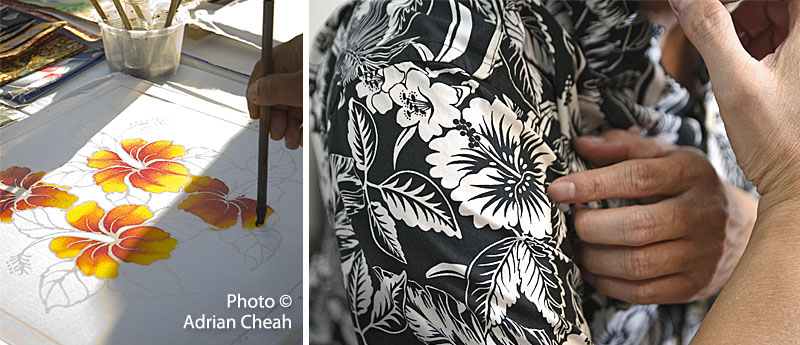

During the Merdeka celebrations, alongside the Malaysian flag, Bunga Raya is a familiar presence in decorations across the country. From logos to architecture, from batik and kebaya motifs to nouvelle cuisine, the humble Bunga Raya has found its way into almost every facet of Malaysian culture.
The hibiscus is also celebrated as a national or state flower in other parts of the world. Hibiscus syriacus, known as the Rose of Sharon, is the national flower of South Korea, while the Yellow Hibiscus (Hibiscus brackenridgei) is the official state flower of Hawaii. In Haiti, the hibiscus is widely associated with the country and is known locally as choublak.

Entopia, located in Teluk Bahang, evolved from the Penang Butterfly Farm and has grown into a much larger nature attraction. Within its lush living gardens, visitors can observe butterflies drawn to the nectar of hibiscus flowers, while bees and other nectar-feeding creatures also make use of the blooms. It offers a delightful experience for visitors and nature enthusiasts alike, providing a glimpse into the intricate relationships between plants and the creatures they support, with the hibiscus playing its own small but important part.

In July 2017, I visited GK Organic Farm for a tour and buffet luncheon. The buffet spread was visually striking, with the chef incorporating edible flowers such as hibiscus into the dishes. The colourful salads, tossed with vibrant flower petals, were as delightful to look at as they were to savour.
In Jamaica and Mexico, hibiscus tea is popular as a refreshing beverage and is traditionally valued for its potential health benefits. Hibiscus tea is rich in organic acids, including citric, malic and tartaric acids, as well as hibiscus acid, which contributes to its characteristic tart flavour and deep red colour.
If you have a suitable edible hibiscus in your garden, you can make a refreshing tea from its petals. Simply place fresh red petals in a teapot, pour over hot water and allow them to steep for about five minutes. The water will gradually take on a deep red, almost burgundy hue. Strain the petals, add sugar to taste if desired, and finish with a splash of lemon juice. Watch as the colour transforms into a brighter, vivid red. Garnish with a slice of lemon and enjoy.

A 2010 study published in the Journal of Nutrition found that drinking Hibiscus sabdariffa tea was associated with a significant reduction in systolic blood pressure among adults with prehypertension or mild hypertension. The six-week, placebo-controlled study involved 65 participants, who consumed three cups of hibiscus tea daily. Major tea companies such as BOH and Lipton have also featured hibiscus in their range of tea blends. Whether enjoyed fresh or dried, hibiscus makes a refreshing and distinctive beverage.
The hibiscus plant has also been used in traditional medicine around the world, although the species and parts of the plant used vary. In India, Hibiscus rosa-sinensis has long featured in traditional Ayurvedic practices, with its flowers and leaves used in preparations associated with hair and scalp care and other traditional remedies. In the Philippines, its flowers and leaves are traditionally used for conditions including boils, swellings and wounds, while its root has also been used as a tonic. Across South and Southeast Asia, different hibiscus species have been used for a wide variety of traditional purposes, reflecting the plant’s remarkable versatility and long history in folk medicine.
The hibiscus flower contains both male and female reproductive parts within the same bloom. The five hairy red lobes at the top of the flower are the stigma, the female reproductive part. The stigma sits at the tip of the style, a slender stalk that connects it to the ovary. The male parts, or stamens, consist of numerous slender filaments fused into a central column around the style, with each bearing an anther that produces pollen.

Hibiscus × rosa-sinensis is polyploid, meaning it possesses more than two complete sets of chromosomes. This complex genetic makeup has contributed to the remarkable diversity seen in cultivated hibiscus, with breeders producing an extraordinary range of forms, sizes and colours. From delicate pastels to vibrant reds, pinks, yellows and oranges, the Bunga Raya comes in a dazzling variety of blooms. In many ways, this diversity mirrors the rich multicultural fabric of Malaysia. It serves as a beautiful reminder of the nation's vibrant heritage that we should cherish and hold dearly.
---------------------------------------------------------
Written and photographed by Adrian Cheah
© All rights reserved
30 August 2019