Tips on making really good Seri Muka

Seri Muka (literally means "radiant face" in Malay) or Kuih Salat is a dainty sweet cake that consists of two layers. The base is made from glutinous rice which is topped with a green custard layer, scented and coloured with pandan juice. Santan (coconut milk) is a key ingredient as it imparts the “lemak” (rich) taste to the glutinous rice as well as the custard layer.
Continue Reading
The vibrant and colourful Nyonya kerabu bee hoon

When it comes to good food, the only one you have to really satisfy is yourself. When it comes to cooking (without deviating too far from the recipe), you can add whatever you like to your dish and omit all the ingredients that do not tickle your taste buds.
Continue Reading
Discover Penang's ‘island behind the hills’ in this memoir and guide
Book review by Andrea Filmer
The Star, Monday, 26 July 2021
Even with the country in lockdown, Balik Pulau has continued to receive a steady stream of visitors.
Coming in from the long, winding roads that connect the old town with the rest of Penang island, travellers now are not heading for the durian estates or famous laksa stalls.
Rather, most have their attention on their GPS devices, trying to make their way to the mega vaccination centre (PPV) at the Balik Pulau Sports Complex that has been administering hundreds of Covid-19 vaccines daily to those living in the state’s south-west district.
Continue Reading
Feringgi Grill, redefining haute cuisine

Feringgi Grill, one of Penang's premier Western-style grill restaurants, has won numerous awards and accolades since 1973, delighting some of the most discerning diners. It is one of my favourite restaurants to celebrate a romantic evening or to mark a special occasion.
Continue Reading
Savouring mouth-watering Chinese dishes at Jia Shi Restaurant (formerly at Song River)

It is vital for a restaurant to have popular signature dishes loved by many. This is an important factor in establishing a long and lasting clientele that will continue its patronage.
Continue Reading
KTM Swing Bridge in Prai – a rare engineering novelty in Asia
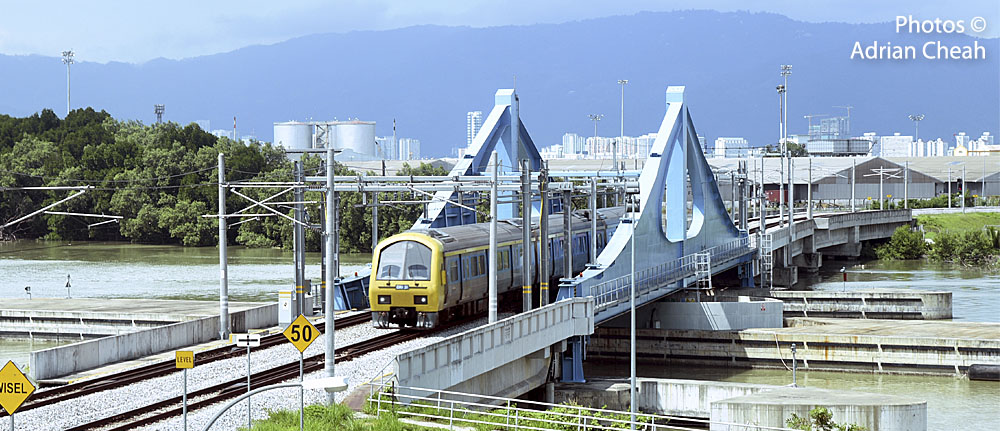
A marvel of engineering, this “swing bridge” is built over the Prai River specifically to allow trains to cross over, connecting the Butterworth Railway Terminal on the northern side to other rail destinations further south in Malaysia. The bridge also opens up occasionally for large barges, ships and ferries that need to pass through along the river. It is operated by Keretapi Tanah Melayu (KTM), the national railway company.
Continue Reading