Maritime Captain Somaasundram s/o Sinnathamby Called to The Bar
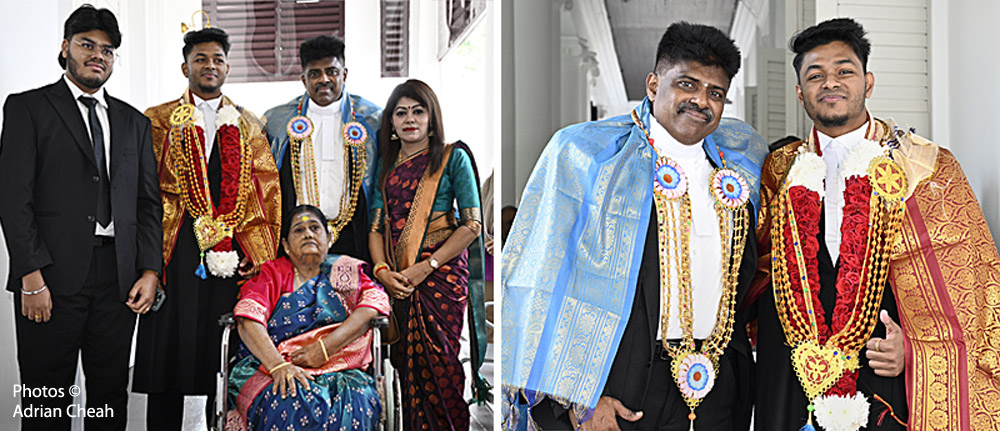
On 27 February 2026, I stood in the High Court in Penang, watching my old friend step forward to don a new robe. That Friday morning, the courtroom was formal and composed, yet it was clear that this moment marked the culmination of many years of hard work. The man standing there, Somaasundram s/o Sinnathamby, was more than just another petitioner being admitted to the Bar. He was Soma, the boy I have known since Standard One at La Salle.
We met as children at La Salle School, far too young to know where life would take us. From those early days through St Xavier’s Institution and then into our separate paths, we grew up and moved forward as friends often do.
Early Life and Family Roots
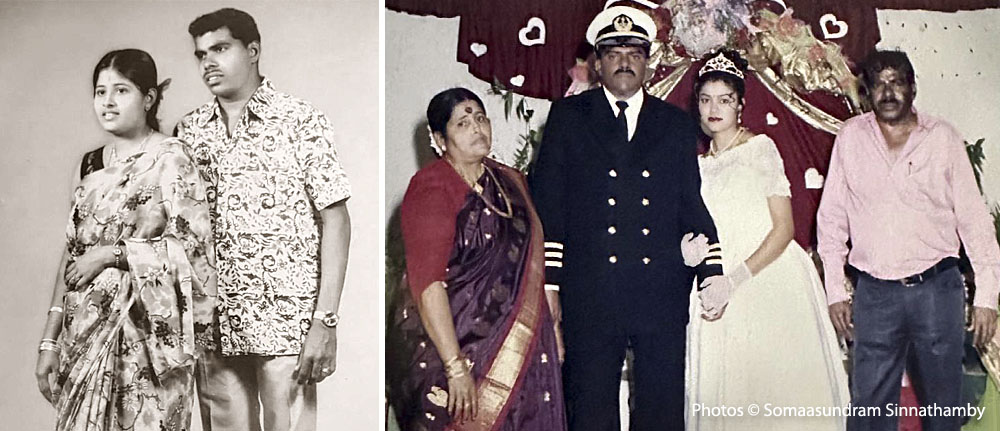
Left: Soma’s youthful parents on the cusp of a life together, 1970.
Right: Soma with Angaleswary d/o Muniandy Chettiar at their wedding, flanked by his loving parents, 1999.
Soma was born on 30 September 1968 to Reakayee d/o Periasamy Pillai and the late S.P. Sinnathamby, into a close-knit family where he grew up as the eldest among his siblings. He shared his early years with his elder sister, Patmavathy Ganesan, and his three younger brothers, Visvanathan, Manoharan, and the late Shanmuganathan Pillai. They were raised under the watchful hopes of their parents, and it was his late father, in particular, who had always wanted Soma to become a lawyer. It was a deeply held aspiration, but Soma’s path eventually led him elsewhere.
Like many of us in those days, Soma did not step straight into a profession after completing his Sijil Tinggi Persekolahan Malaysia (STPM) in 1987. He took on whatever work he could find, from waiting tables at the Penang Sports Club to working shifts as a Production Operator at Baxter Healthcare in Bayan Lepas, and later as a Translator at the late Darshan Singh Khaira’s law firm. That last role now feels almost prophetic, as if life had, in its own way, placed him close to the law long before he was ready to embrace it.
Life at Sea
At 22, Soma on his first ship, with Alcatraz Prison in the background, 1991.
In 1991, he went to sea. What began as a job grew into a lifelong career at sea. Soma joined Neptune Orient Lines (NOL), Singapore’s national carrier at the time, and entered a world few truly understand unless they have lived it. The sea is a challenging workplace, requiring discipline, resilience, and long periods away from family. For Soma, life at sea is a calling, where waves test your strength, distance tests your heart, and each sunrise reminds you why you endure. It is not easy, but it builds strength and character like nothing else.
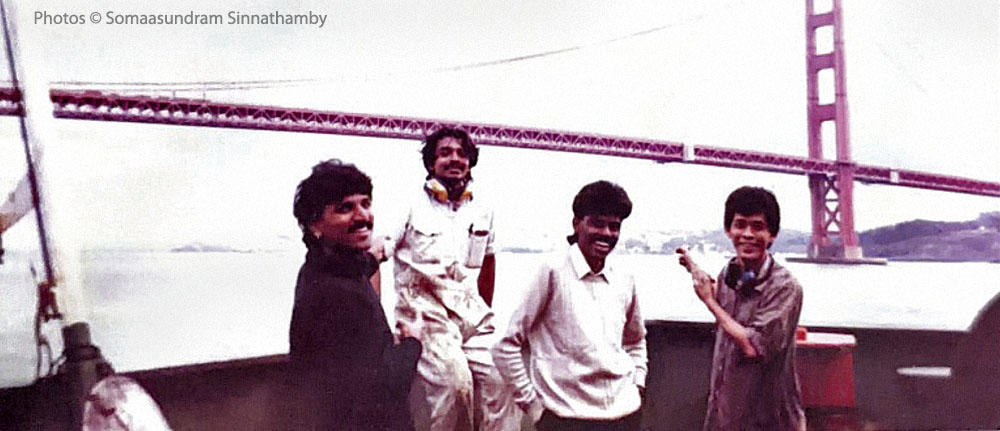
Soma, third from left, passing the Golden Gate Bridge, San Francisco.
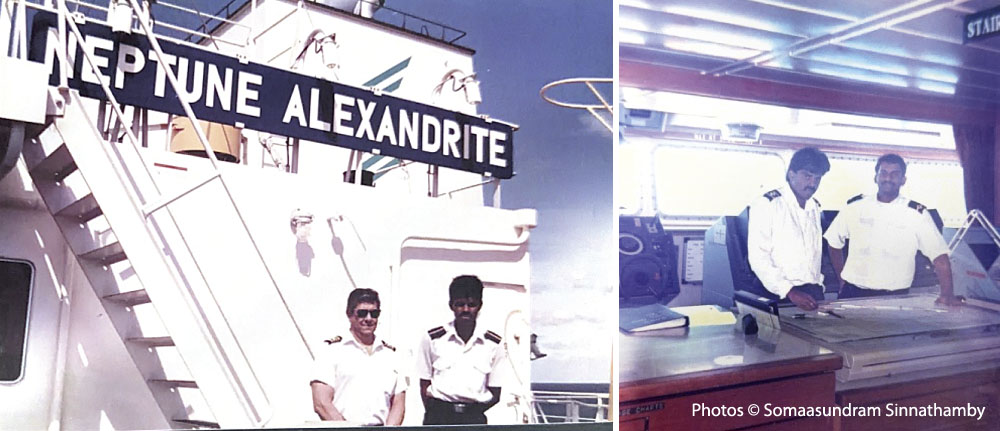
Left: Soma as a cadet, part of the Neptune Alexandrite delivery team alongside Captain Malcom Francis Neville James, 1993.
Right: Soma as a Junior Officer on the bridge, 1996.
He trained at Singapore Polytechnic and later completed his professional examinations at the Australian Maritime College, steadily rising through the ranks with a determination that, in hindsight, had always been part of him. Years of study, demanding examinations, and long stretches at sea followed, culminating in his attainment of the Australian Maritime Safety Authority Certificate of Competency (COC) Class 1 (Unlimited) in March 2002, the highest qualification in the maritime profession, granting him the status of Master Mariner Class 1. With this qualification, Soma was authorised to command vessels of any size at sea.
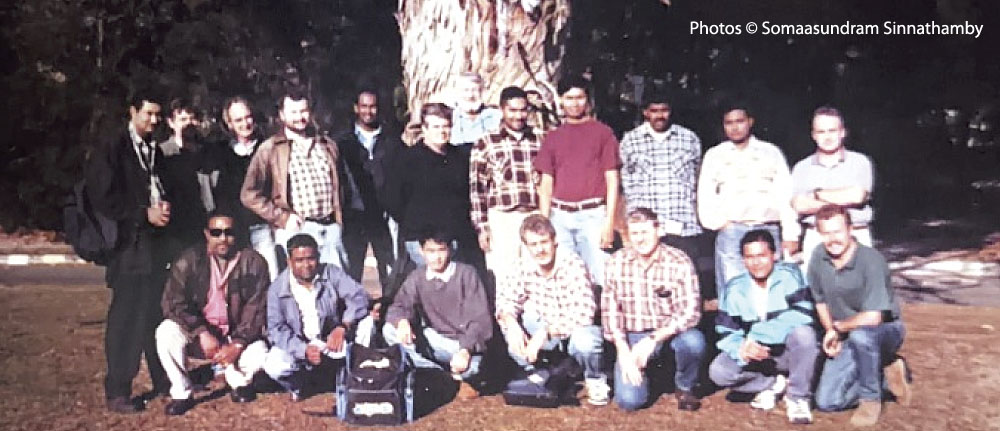
Soma, third from right, with the Advanced Diploma in Applied Science Class of 1997 cohort at Australian Maritime College.
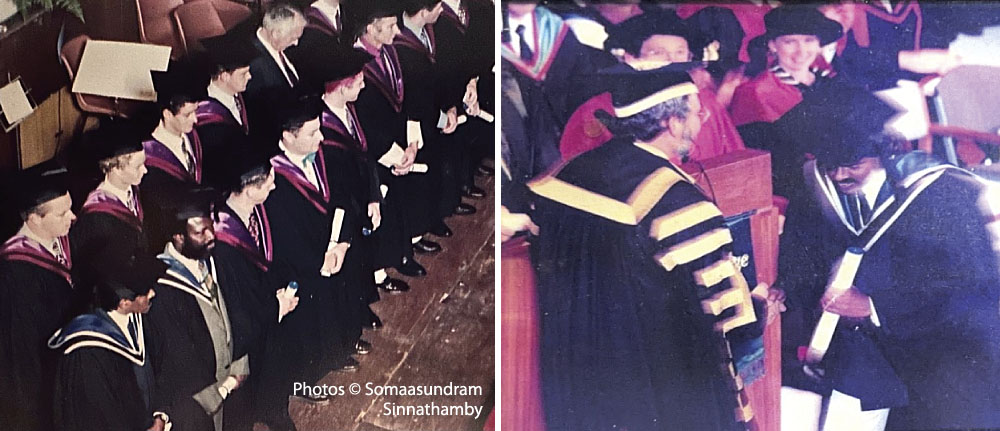
Left: Soma, first from left, at the Advanced Diploma in Applied Science graduation, 1998.
Right: Soma receiving his scroll from Robert (Bob) Clifford.
It was a proud moment for Soma, as it is for any mariner reaching the pinnacle of their professional qualification. Although he faced countless setbacks during his examinations, he persevered. Soma often reflects on the belief that in life, “the harder one falls, the bolder one becomes".
Never allow failure to deter you from achieving your dreams. As the late A.P.J. Abdul Kalam once said, FAIL stands for “First Attempt In Learning". What makes this achievement especially memorable is that Soma had to convince the Master’s Orals Examiner, Captain Mike Fitzpatrick, who was regarded as one of the toughest examiners in Australia, that he was capable of performing the duties of a captain. It was a qualification earned through rigorous effort, demanding intellect, endurance, and an unshakeable sense of responsibility.
As a Captain, Soma no longer took orders but gave them. Over the years at sea, he had experience in handling both deepsea and offshore vessels, moving between different types of operations with ease plus working with major oil companies throughout the world. The boy from La Salle had become Master of a vessel, a role few on land can truly comprehend. Only in writing this story did I begin to understand the weight he carried all those years at sea as the final authority for the safety of his crew, the vessel, and all that was entrusted to him. The waters he sailed carried various risks from unpredictable weather conditions, piracy threats and the uncertainties of life at sea, all demanding constant composure and decisive action.
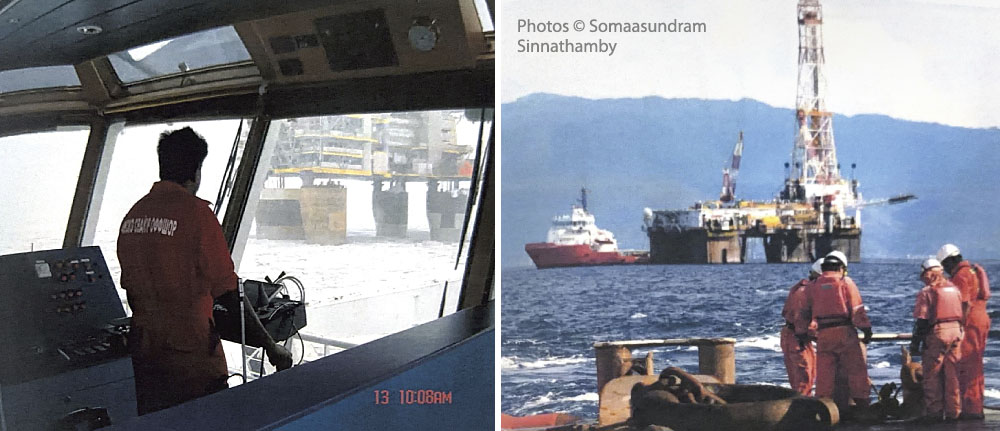
Left: Soma aboard an icebreaker operating off Sakhalin, Russia.
Right: Anchor handling operations in Sulawesi, Indonesia.
According to Soma, life as a seafarer is a mix of adventure and hardship, often romanticised from afar but demanding in reality. The appeal lies in travelling across continents, experiencing different cultures, and at times, the open seas simply take your breath away. The hardship, however, also comes in the form of long periods away from family, isolation, and limited communication.
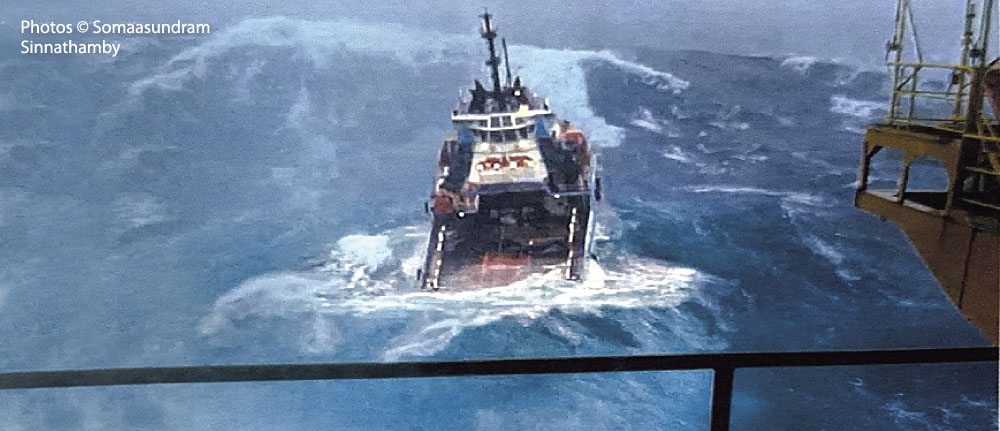
A Mariner’s Prayer: “Lord, have mercy on me, for the seas are vast and my ship is small".
Throughout his seagoing career, Soma encountered a wide range of experiences, from being in Saudi Arabia shortly after the end of the Gulf War in 1991 to navigating narrow channels, passing through dense fishing traffic, operating in near-zero visibility due to heavy fog, and working in extreme weather conditions.
While there were many incidents during his time at sea, one in particular in 2004 remains unforgettable. While serving aboard an Anchor Handling Tug Supply vessel operating off the coast of Malta in the Mediterranean Sea with a crew of just twelve, Soma encountered a distressed fishing boat carrying around forty migrants calling out for help. The situation was critical. The vessel was overcrowded, unstable, and rapidly becoming unsafe. Soma and his North Sea crew carried out a rescue operation, transferring all the migrants safely to the Libyan Navy. Once everyone had been accounted for and brought to safety, the fishing vessel following assessment and approval the fishing vessel was safely scuttled under the supervision of relevant authorities to prevent it from posing a navigational risk to other passing vessels. It was a demanding operation carried out in open waters, where every decision mattered and the sea offered no margin for error.
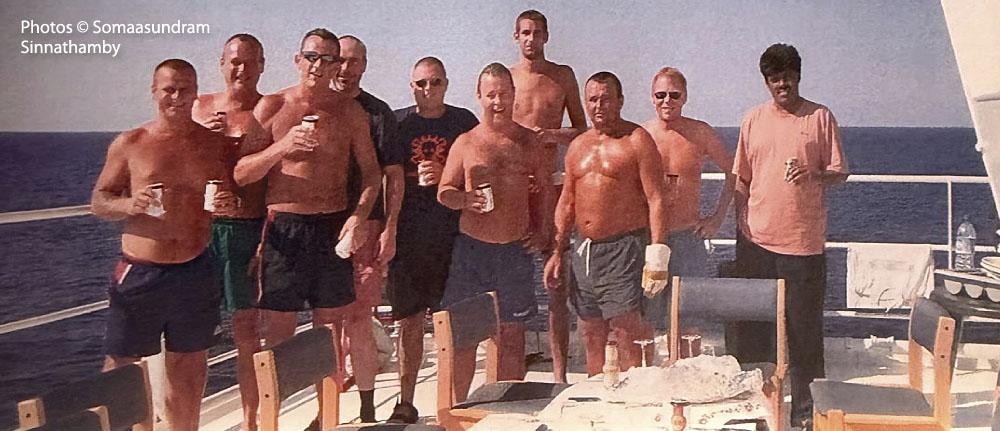
Soma (far right) with the North Sea crew off the coast of Malta, 2004.
Over 33 years, Soma saw more of the world than most of us ever will. He crossed vast oceans, faced or weathered all the storms that mother nature can unleash that tested both man and machine, and bore the weight of command where every decision mattered. He once told me that there is no room for panic at sea, that one learns to steady oneself because others depend on it. That, I think, defines him more than any title ever could. And yet, as he built a life at sea, his father’s hope that he would become a lawyer never left him.
The Path to Law
Somewhere between voyages, he began studying law. In 2008, he enrolled in the University of Malaya’s Bachelor of Jurisprudence (BOJ), an external law degree programme. There were no lectures to attend, no classmates to rely on, and little guidance to speak of. Much of his studying was done alone, sometimes while the ship carried him across open waters, far from any classroom. He would spend long hours on deck and on the bridge, supervising daily operations to ensure everything was carried out safely, then return to his cabin to study legal principles, textbooks, case law, and statutes, and to work through past year questions. He passed almost all his papers on his first attempt and graduated with Second Class Lower Honours in 2012.
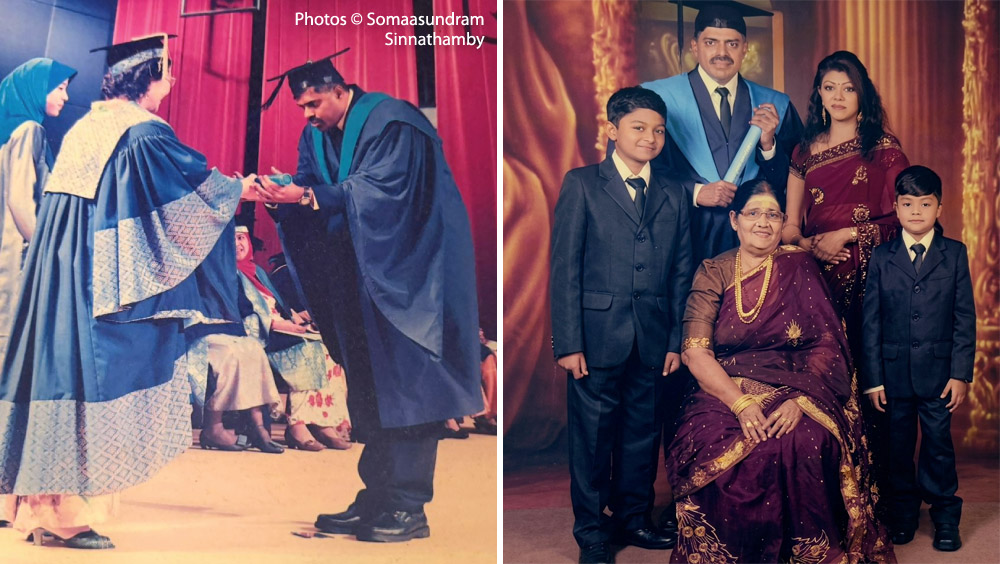
Left: Soma receiving his scroll from Toh Puan Dato’ Seri Hajjah Dr. Aisyah Ong at Dewan Tunku Canselor, University of Malaya, 2012.
Right: A family portrait taken to mark Soma’s BOJ graduation, 2012.
The next step, the Certificate in Legal Practice (CLP), proved far more challenging. The pressure of the exams, combined with the lack of structured guidance, made it a formidable hurdle. He attempted it more than once and, like many before him, faced disappointment. Still, he pressed on.
After returning from his tour of duty in April 2024, with barely three months to prepare for his final attempt, he sat for the examination again and obtained a Conditional Pass. Required to re-sit one paper, he succeeded despite falling ill prior to the examination.
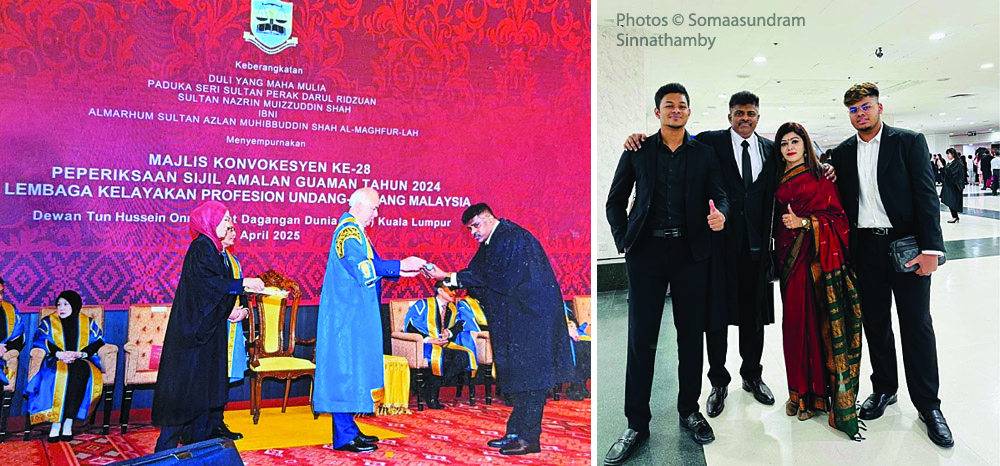
Left: Soma receiving his scroll from Sultan Nazrin Muizzuddin Shah at his CLP Convocation, 2025.
Right: Soma with his family at his CLP Convocation, 2025.
In doing so, Soma finally fulfilled his father’s wish, a milestone made possible with the support of his immediate family and his close friends including Mr Balwinder Singh and Miss Lisyani Ravindran.
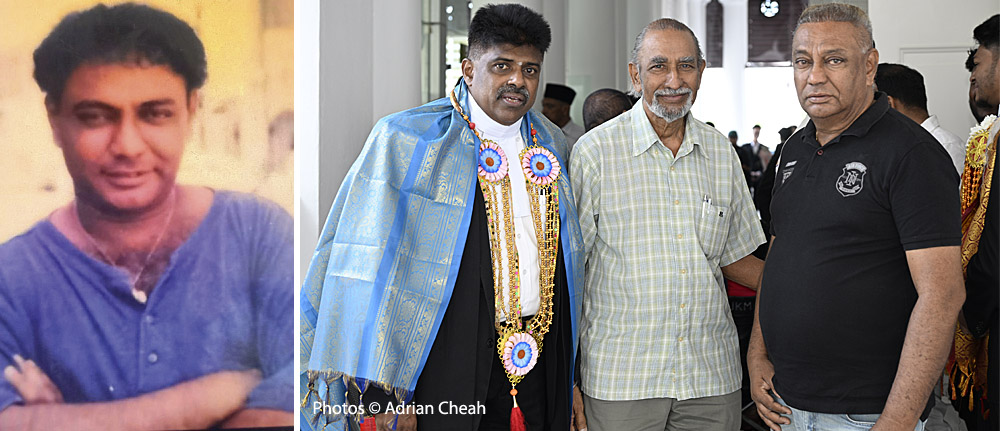
Left: Mr Balwinder Singh taken in the 1990s.
Right: From left, Soma, Mr Nermal Singh, and Mr Balwinder Singh at Soma’s long call at the High Court of Penang, 2026. Mr Nermal Singh is Soma’s former teacher from La Salle School and the elder brother of the late Mr Darshan Singh Khaira.
When Soma looks back on his career journey, he sees Mr Balwinder Singh’s presence in every chapter. Known to Soma as Binday, he encouraged him in moments of doubt, motivated him when he faced uncertainty, and reminded him of his growth and self-worth when he struggled to recognise it in himself. Having a friend like him has been a true blessing, someone genuine, uplifting, and always wanting the best for Soma. Soma remains deeply grateful to Binday.
Also not forgetting Miss Lisyani Ravindran, a practising lawyer with Lishani & Partners, Advocates & Solicitors, and excellent tutor, who guided Soma on answering techniques and provided much-needed encouragement. In a short span of time, she made a lasting impact on his journey. Her guidance, encouragement, and belief in his potential gave him the strength to push through and succeed. Passing the CLP remains a milestone he will always associate with her support.
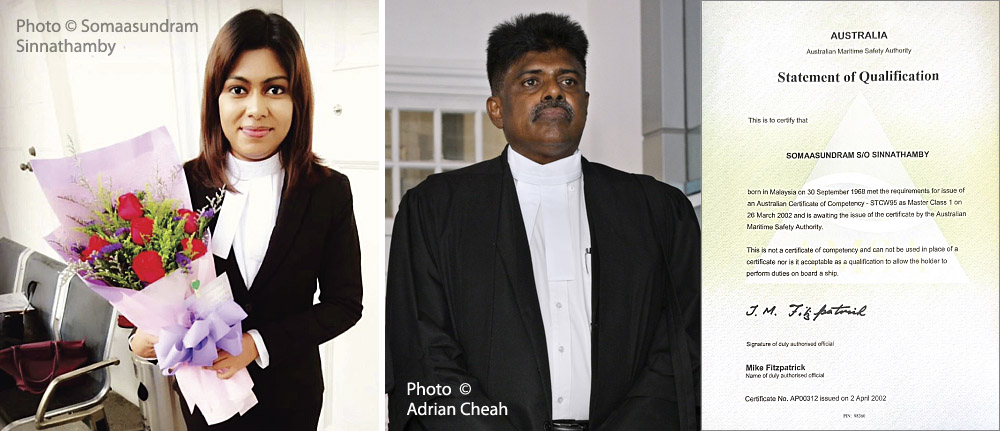
Left: Miss Lisyani Ravindran, practising lawyer and tutor to Soma.
Middle: Soma on the day he was called to the Bar, 2026.
Right: Soma’s Certificate of Competency (COC) Class 1, issued under Captain Mike Fitzpatrick, 2002.
2026 marks a new chapter for Soma. More than three decades after first going to sea, he has decided to close that chapter of his life with a sense of completion, choosing to step away from life at sea and focus on his legal career. For him, it is not an ending of achievement, but a natural conclusion to a long journey that has taken him across the world’s oceans and through the full span of his maritime profession.
Father and Son Called to the Bar
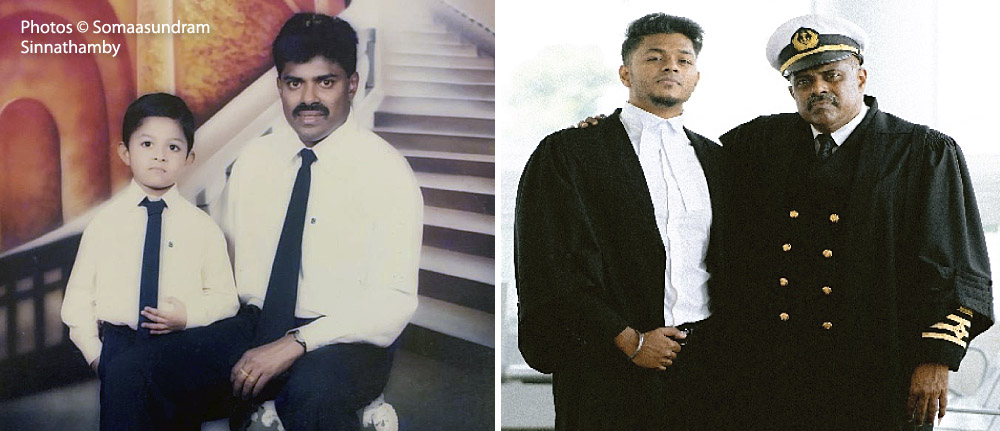
Soma with his elder son, S. Siva Prasad—left: 2005; right: 2026.
What made the day he was called to Bar even sweeter is his elder son Siva Prasad. Siva did not initially set out to follow in his father’s footsteps. Like many sons, he saw his father more as a distant figure during his childhood, shaped by long absences at sea and a strict sense of discipline when he was home. But as the years went by, something changed. Watching his father juggle work, studies, and family responsibilities left a lasting impression on him.
In time, both father and son found themselves studying law, not just at the same time, but together. They shared notes, discussed difficult subjects, and supported each other through the process. There is something deeply moving about that, a sense of time being returned in an unexpected way. And so, on that February morning, they stood side by side, both being called to the Bar on the same day.
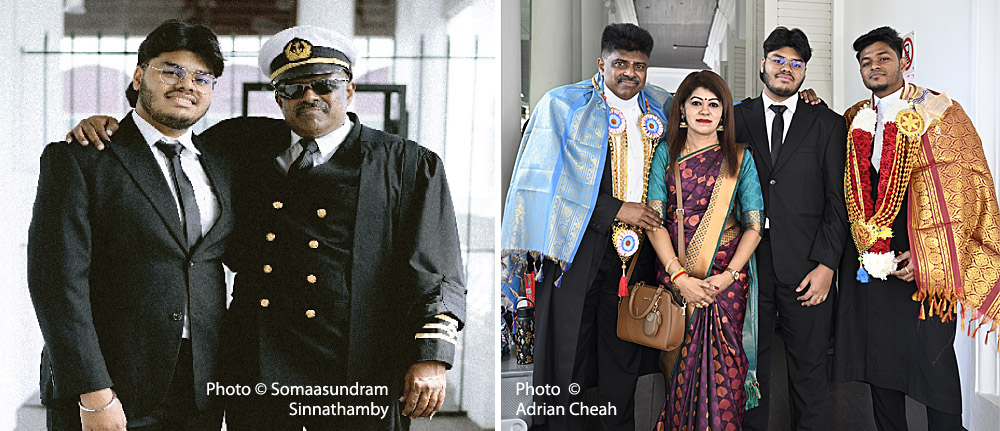
S. Siva Prakash with his family, 2026.
Soma’s younger son, Mr. S. Siva Prakash, has also chosen to pursue a career in law, following his father and elder brother. Witnessing both being called to the Bar on the same day was a defining moment that strengthened his resolve to follow their example. In doing so, he continues a growing family tradition in the legal profession.
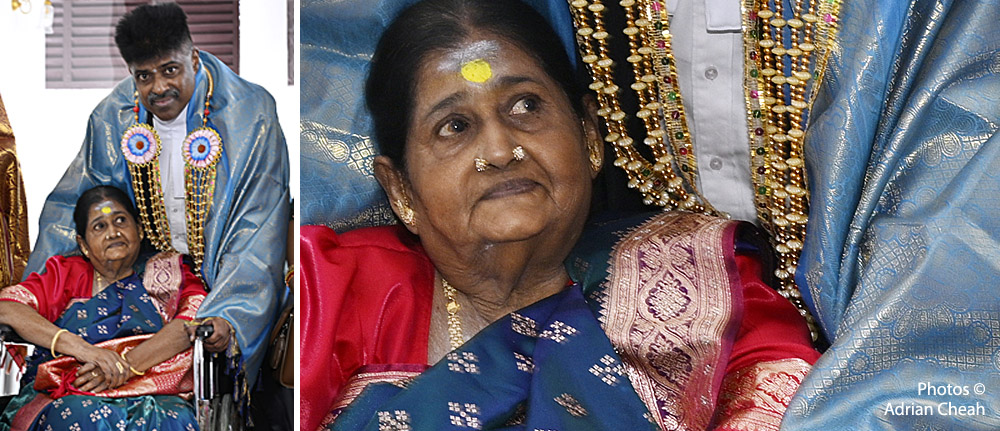
Soma with his proud mother at the ceremony, 2026.
That morning, I brought my camera to capture this momentous occasion for Soma and Siva. After the ceremony, as people gathered and photographs were taken, I found myself observing the family more closely through my lens. Soma’s mother was there, seated in a wheelchair, watching her son and grandson. There was pride in her eyes, unmistakable, but also something quieter and harder to define. Perhaps it was the absence of her husband who passed away in 2005, who had once wished for this very moment. Perhaps it was the memory of a son lost to cancer, or simply the weight of time.
La Salle and Where It All Began
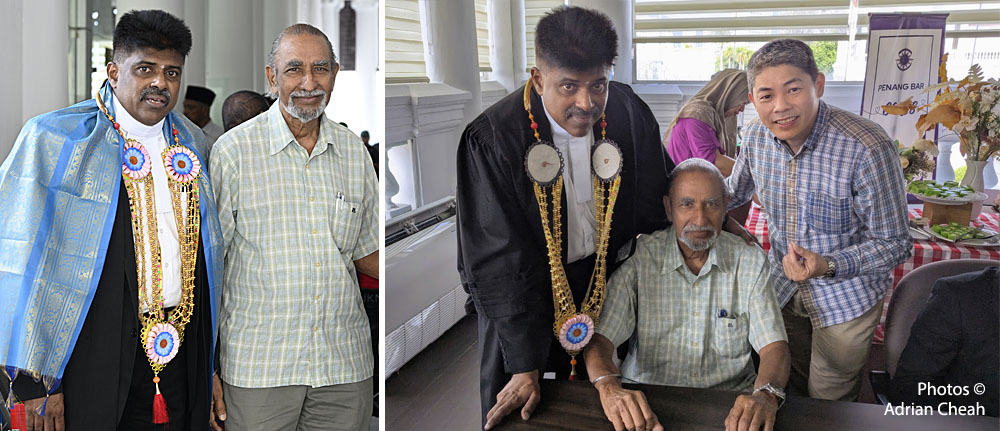
One of our former La Salle School teachers, Mr Nermal Singh, was there too, beaming with pride for Soma. La Salle was never just a school to us. It was where everything began, where childhood was shaped by laughter, imagination, and endless outdoor games that seemed to stretch whole afternoons into something timeless. It was an environment that steadily shaped who we were becoming.
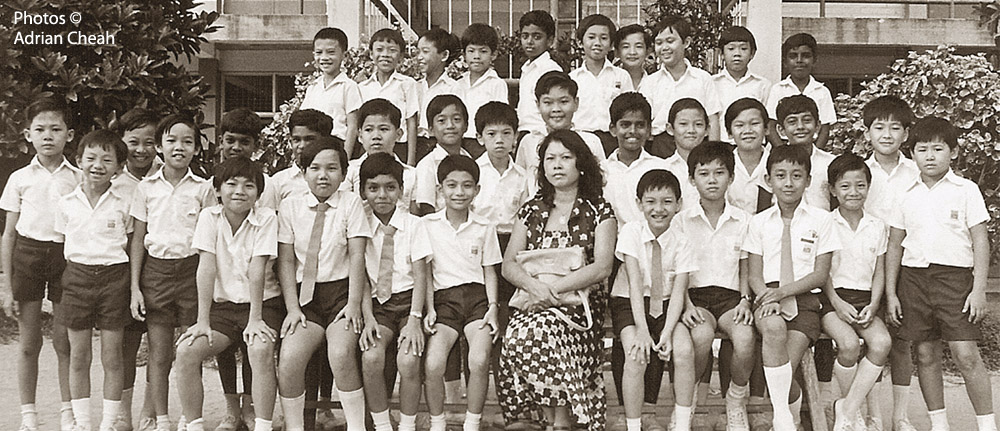
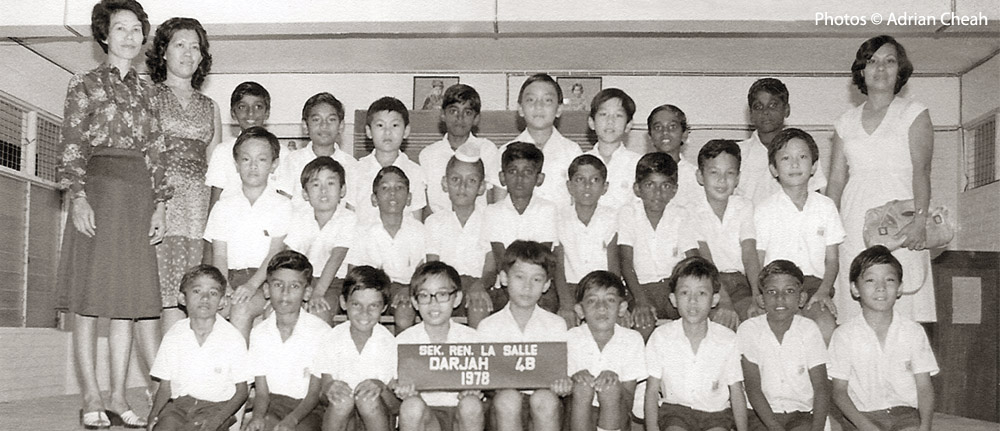
The original La Salle School in Ayer Itam was founded in the early 1960s under the vision of the La Salle Brothers, guided by the motto “Seek the Truth". It was officially declared open by the Most Honourable Brother Nicet Joseph, Superior General of the Brothers. Well received by the community, the school’s enrolment quickly grew to around 900 students within a few years, eventually offering classes from Standard 1 to Form 3 and serving as an important feeder school for St. Xavier’s Institution.
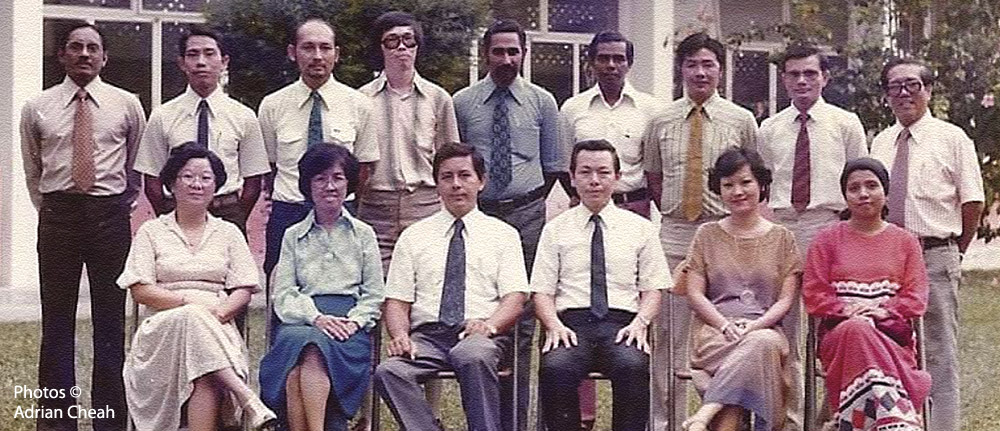
La Salle lower secondary school teachers: standing from left: Mr Patrick Aiyathurai, En. Jaafar Din, Mr Chee Thoe Lay, Mr Ng Sen Yew, Mr Nermal Singh, Chief clerk – Mr Arumugam, Mr Cheong Choi Lai, Mr Ng Kok Lum, Mr Lam See Yee; seated from left: Mrs Ooi, Mrs Lee Ewe Eong, Colin Andrew, Mr Khoo Beng Poh, Mrs Lim, Cikgu Jamilah; not in the photo: Ms Badhirama
By the early 1970s, the original Ayer Itam building was demolished due to structural concerns. Teaching continued in borrowed premises at SRK Batu Lanchang and SMK Georgetown. Soma and I were part of this later chapter, what we often half-jokingly referred to as the “squatting” years of La Salle. Despite the temporary settings, our results remained strong, and we carried with us a distinctly La Sallian spirit, a sense of discipline, curiosity, and resilience that defined us. Above all, it gave us something no syllabus could fully capture. This extended chapter eventually came to an end when the school was phased out in 1984.
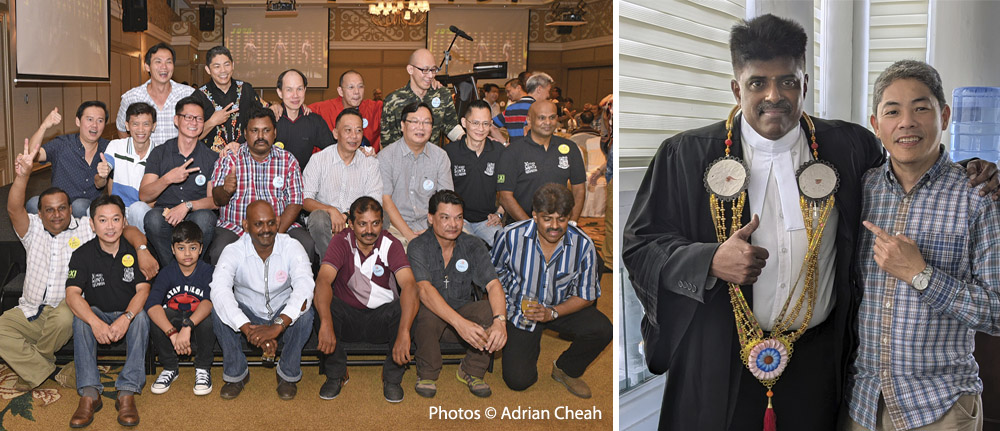
Left: Fellow Lasallians at a St. Xavier's Institution reunion dinner, 2015 (third from left in the front row is Soma’s younger son).
Right: Soma with Adrian Cheah.
Full Circle
At 58, Soma has begun a new chapter, just as many begin to think about retirement. He has now fulfilled his father’s dream. As I watched him that day, I did not just see a newly minted lawyer. I saw a man who had lived fully, worked relentlessly, and remained faithful to something that mattered deeply to him.
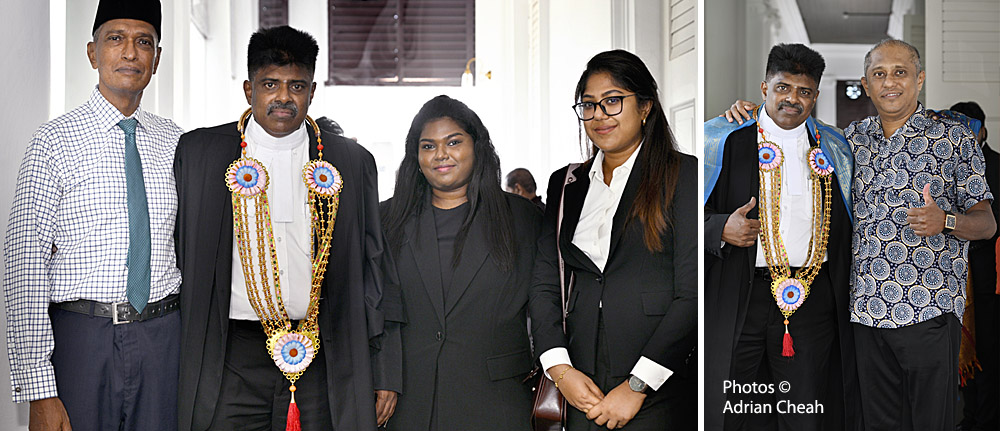
Left: From left, Mr Tajuddin bin Dato Zakaria, Soma, Miss Hema, and Miss Shanggaree Baskaran.
Right: Soma with Mr Abdul Gafoor bin Sahul Hamid.
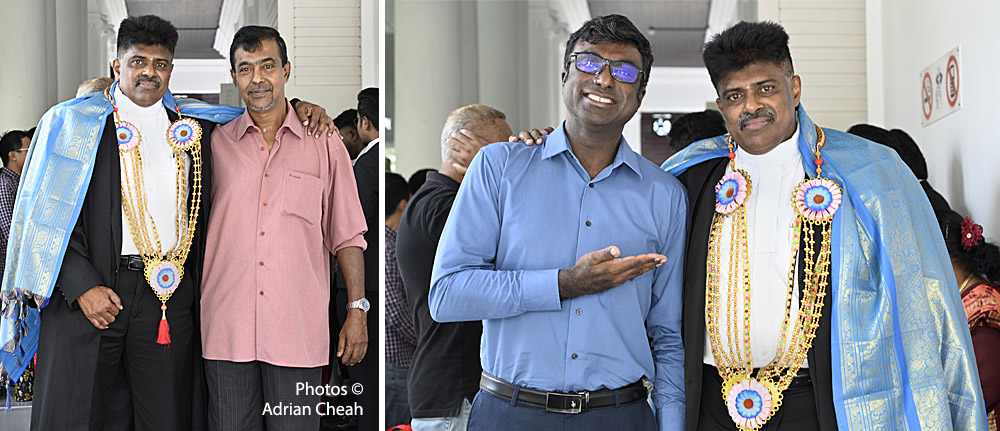
Soma with childhood friend Mr Ramesh Kumar (left) and Sumit Pillai (right).
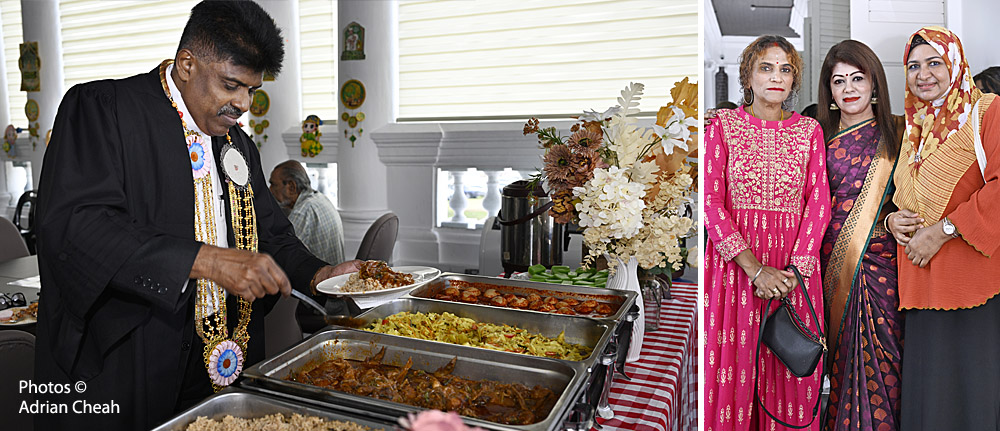
Left: Soma enjoying the luncheon after the ceremony.
Right: From left, Mrs Vijaya Ramesh Kumar, Mrs Angaleswary Somaasundram and Mrs Rabiah Bte Abu Bakar at the event.
To me, Soma is still the boy from Standard One who never quite let go of his father’s wish, even when life carried him far from it. That is what makes his story so meaningful. Well done, old friend.
-------------------------------------
Written by Adrian Cheah
Photographs by Adrian Cheah and Somaasundram s/o Sinnathamby
© All rights reserved
27 February 2026