The Chronicles of Penang at Umi Umi’s Immersive Dinner Theatre
During my month-long holiday in London in 1996, I made a point of seeking out its theatres, drawn by spellbinding musicals like The Phantom of the Opera, Blood Brothers, Oliver!, Miss Saigon and more. What captivated me, time and again, was the convergence of creative energy, brilliant collaboration, and the art of storytelling brought to life through music, lights, and heart. The moment the curtain rises, something shifts. Live performance, in its immediacy, propels you almost instantaneously into another realm.
It is this instinct to be transported that made an evening at Umi Umi feel less like an ordinary dinner and more like stepping into a story already in motion. The 90-minute dining-theatre experience, "The Chronicle of Penang", unfolded across nine chapters, weaving together gastronomy, historiography, and live performance in seamless progression. A sweeping 270-degree LED panorama surrounded the stage and dining hall, where shifting light and cinematic imagery shaped an atmosphere that felt fully immersive.
The narrative began, inevitably, with the arrival of Captain Francis Light and the late-18th-century moment that would alter the island’s trajectory. From there, the performance swept through migration, trade, conflict, cultural convergence, and prosperity.
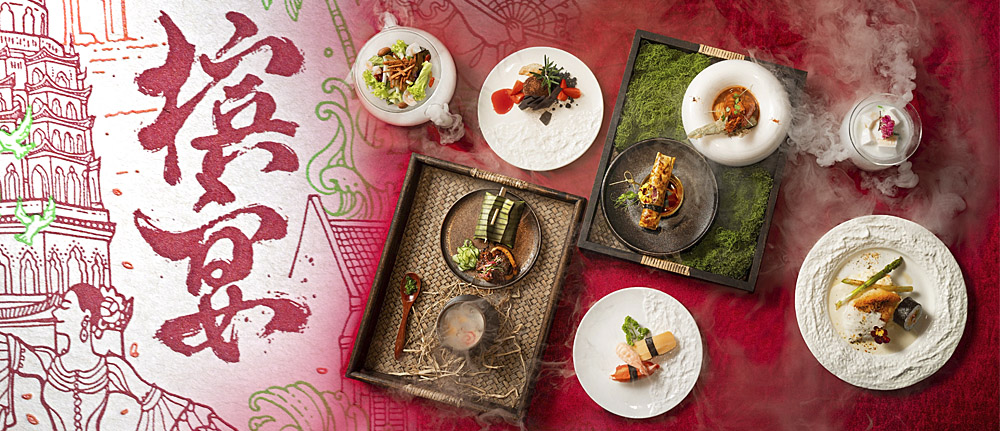
Across the chapters, seven courses were woven into the experience to help interpret the story. The curated menu drew from Penang’s culinary DNA, reframing familiar flavours through contemporary technique.
Dining Through History
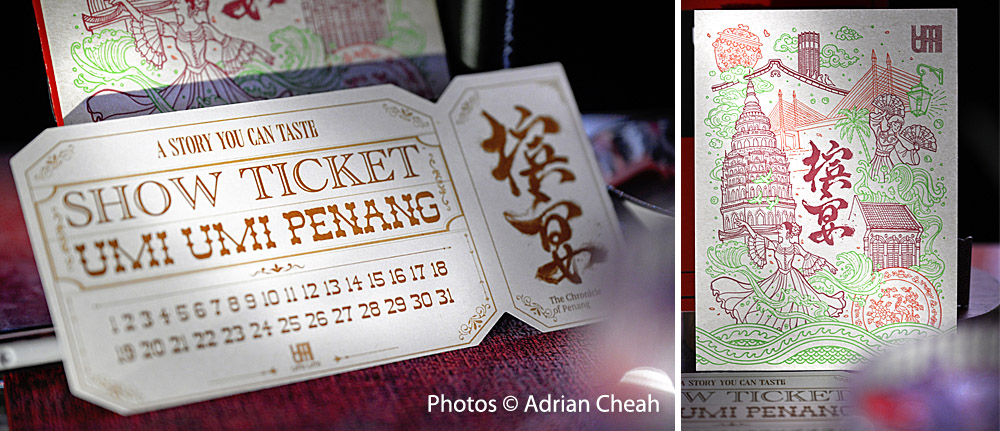
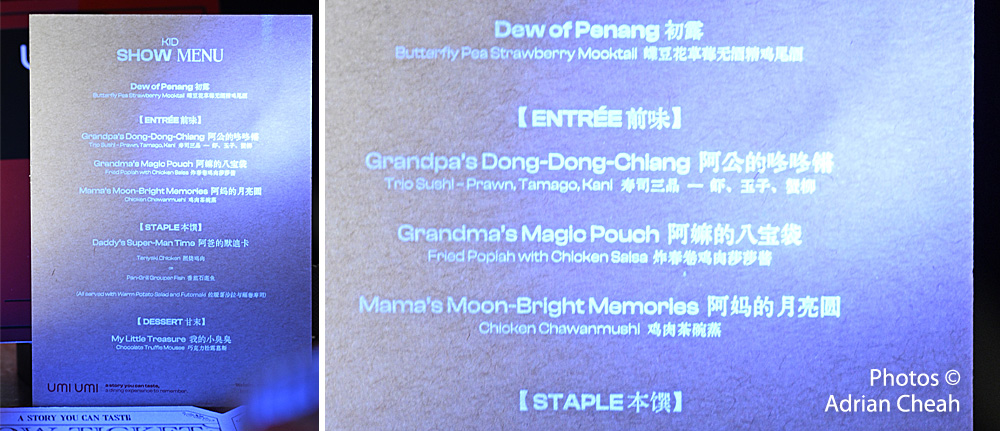
The creative menu was presented in invisible ink on a postcard-sized card, revealed only under ultraviolet light. A small UV torch was provided, turning the simple act of reading into a theatrical reveal.
The procession of dishes at Umi Umi Penang saw each course carrying a different register of Penang’s culinary memory. The food was served in tandem with the story unfolding on stage.
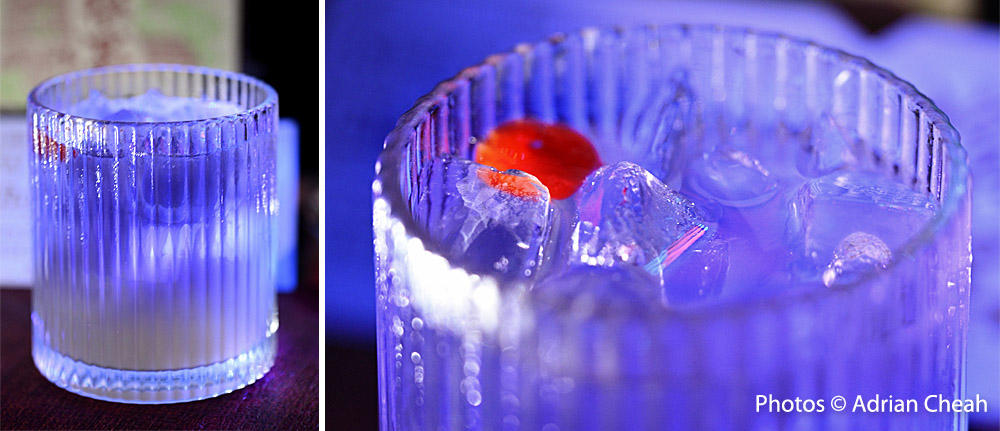
Once seated and shown the menu, we were handed a warm, wet towel to refresh ourselves before the evening began. Then, we were each served a chilled glass of “Dew of Penang”, a butterfly pea and strawberry mocktail. The butterfly pea lent a subtle blue tint to the mile pink strawberry blend that was refillable throughout the evening.
Why strawberries, when they are not native to Penang? The answer most probably lies, in part, in the history of Strawberry Hill on Penang Hill. In the late 18th century, Captain Francis Light cleared sections of Penang Hill and established a hill retreat to escape the tropical heat. Among his early agricultural experiments was the cultivation of strawberries, a fruit said to have been among his favourites. The cooler climate of the hill made it possible to grow them, and it is believed to have been one of the earliest places in the region where strawberries were successfully cultivated. Today, the hillock where he cultivated the fruit is still known as Strawberry Hill, though strawberries no longer thrive there due to warmer climate conditions.
I am not certain many diners would make this connection, or if the reference is even intentional. A more grounded alternative for a welcome drink to highlight Penang might have been one centred on nutmeg. Though not native to the island, nutmeg became one of its early cultivated crops during the height of the spice trade, leaving behind a legacy that still lingers in its distinctive flavour today.

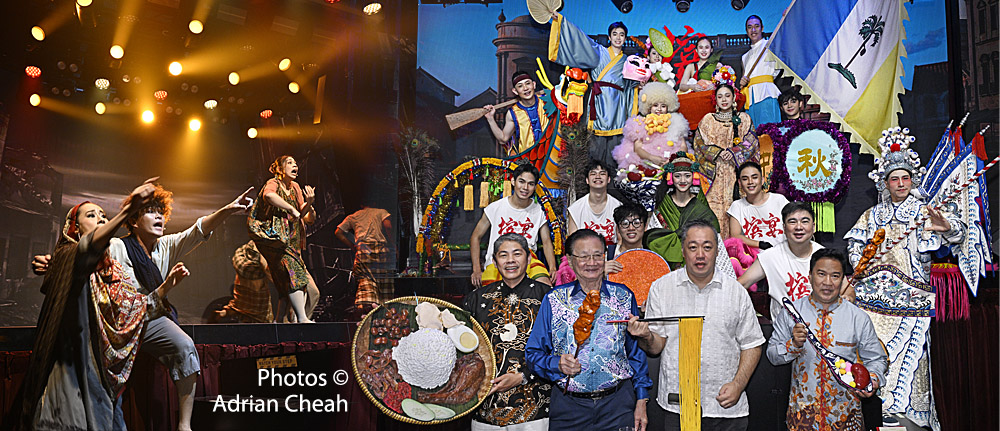
Once everyone was comfortably seated, the show began. Ethan Khoo (left), the Managing Director and creative force behind "The Chronicle of Penang", together with a fellow cast member, welcomed the audience. They both served as narrators, guiding the story as it came to live.
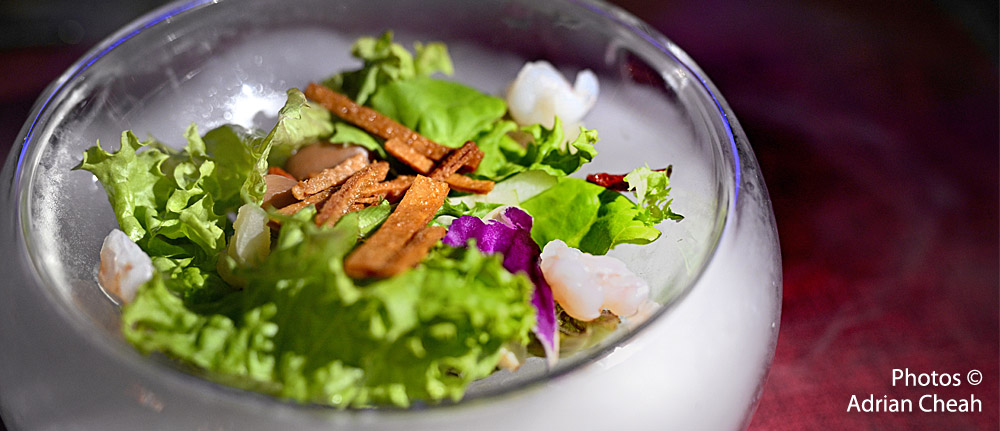
The first entrée to arrive was entitled “Sea & The Lone Isle”, presented veiled in a theatrical haze of dry ice that slowly dissipated within the glass bowl. It was a salad composed of diced prawns, lettuce, julienned green apples, Teochew pickled vegetables, and crispy beancurd. The beancurd, cut into thin strips and deep-fried, was a familiar local touch, often used as a garnish in economy fried bee hoon.
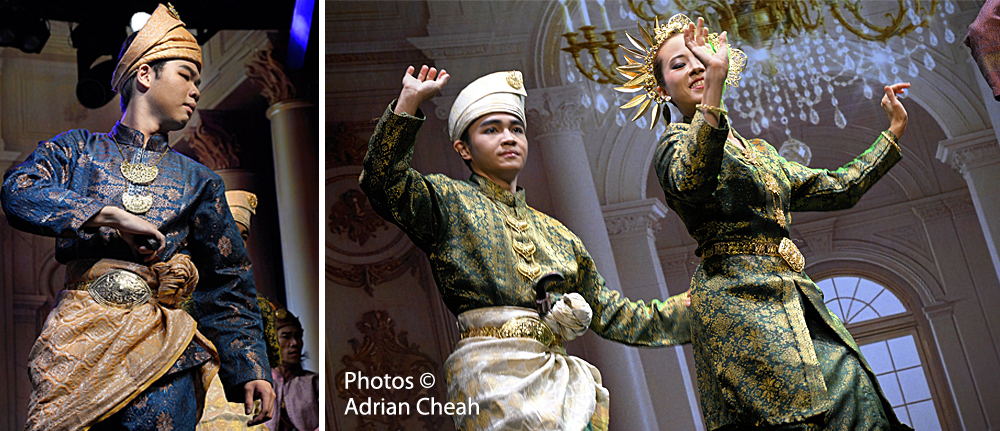
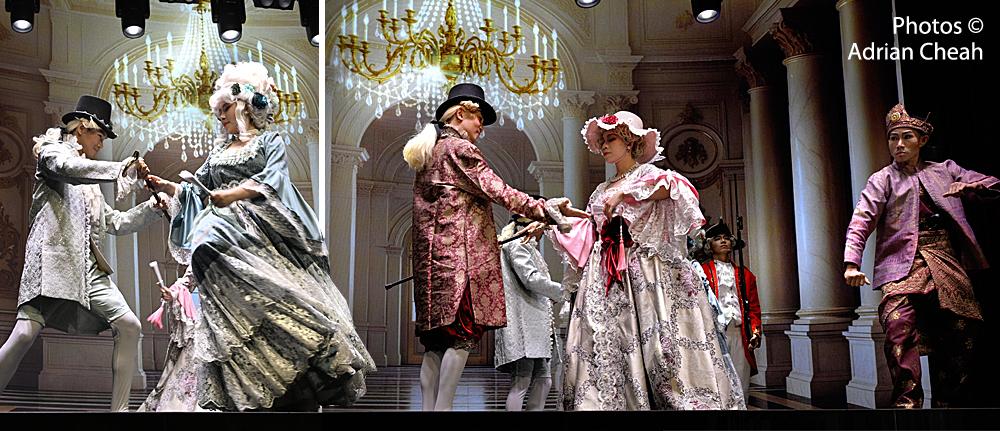
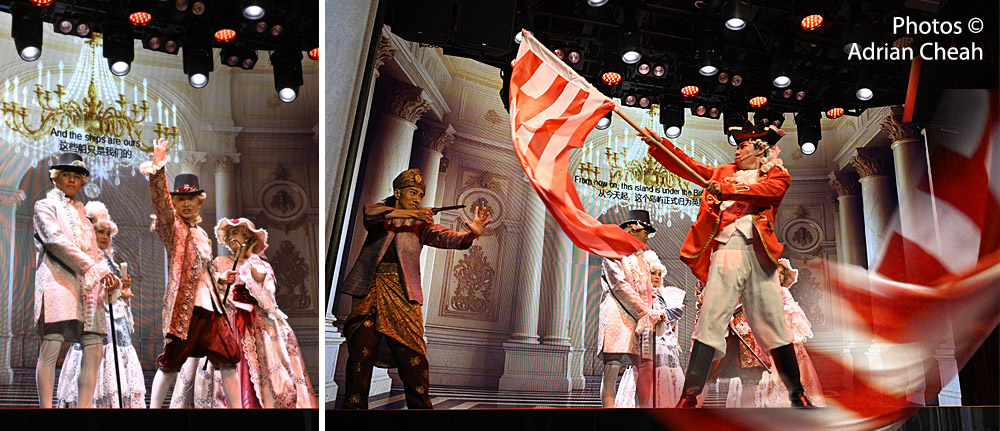
The first act depicts the arrival of the British and their establishment of control over Penang. Captain Francis Light and the Sultan of Kedah negotiated a strategic arrangement shaped by the geopolitical tensions of the time.
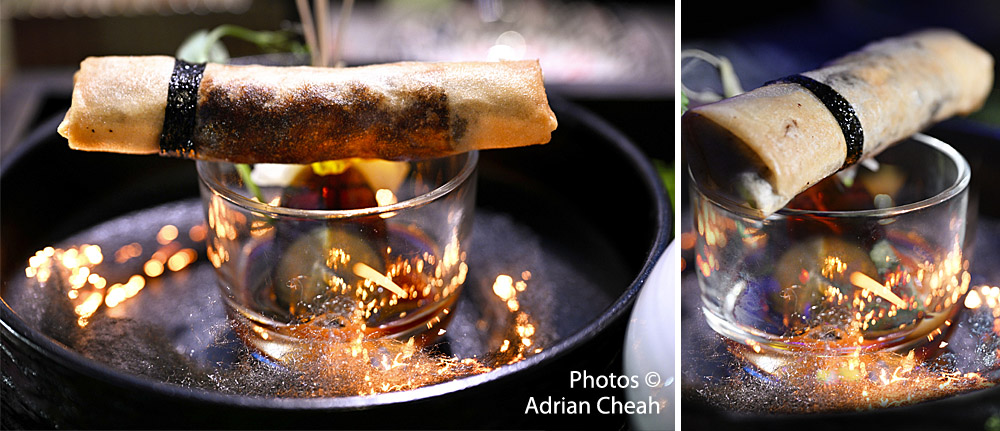
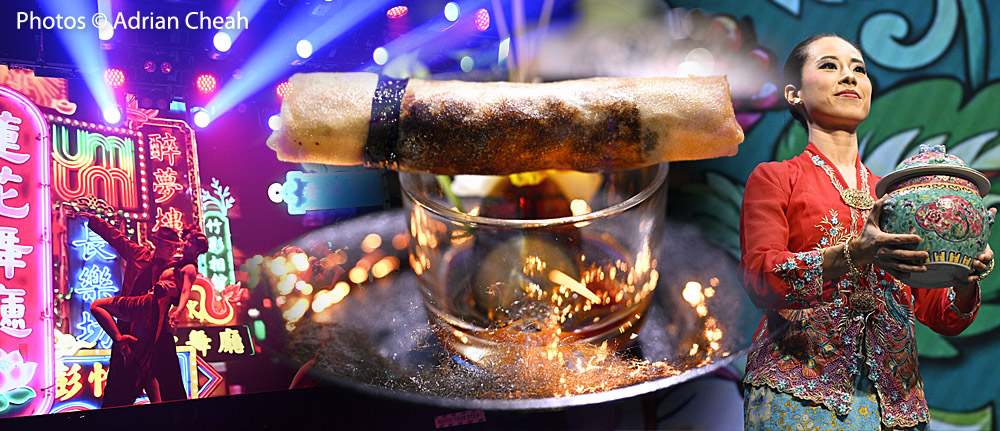
The creatively plated "Banquet of Fireworks" arrived next, drawing immediate attention. Fine steel wool encircling the dish was set alight, casting a brief flicker of glowing embers. The crispy cigar-shaped chicken roll, paired with century egg, preserved ginger, and a dark, slightly sweet sauce, leaned into playfulness. I loved the balance of warmth, crunch, and the interplay of savoury and sweet. The dish felt celebratory, perhaps echoing the arrival of the British and the beginning of a new chapter in Penang’s history.
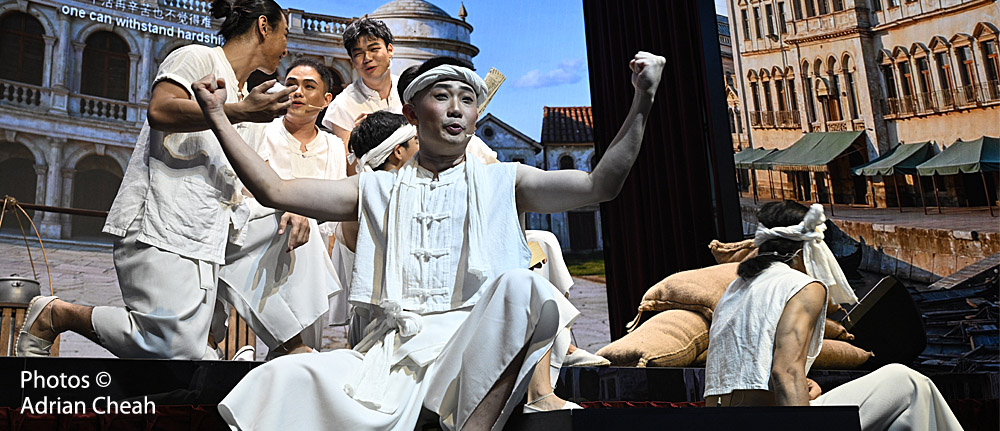
On stage, the arrival of Chinese migrants was portrayed as they toil along the docks, shaping the growing port of Penang. Nanyang (南洋), literally meaning “Southern Ocean” or “southern seas,” was a term commonly used by Chinese migrants to refer broadly to Southeast Asia, including Penang, where many of them eventually took root and made it their home.
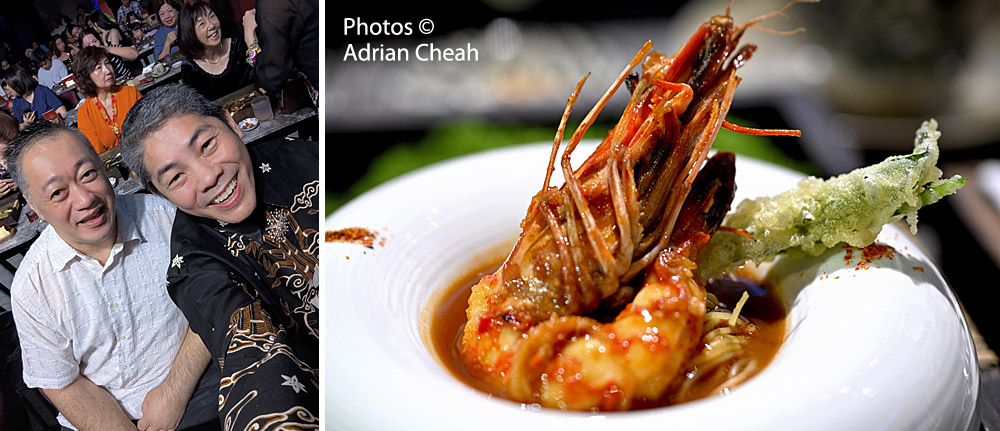
On the table, "Nanyang Fragrance" arrived as cappellini in a thick prawn broth, topped with a large prawn and ebiko, and served alongside a crisp tempura vegetable. The dish drew from the distinct flavours of Hokkien mee, a hawker favourite that arrived on these shores with the Hokkien migrants, who adapted their cooking to local ingredients.
In Fujian, prawn-based noodle soups already existed, but in Penang, the aromatic broth evolved to become more intensely "prawnier", built from prawn shells and heads, enriched with bone stock, and layered with ingredients such as kangkung, prawns, pork, hard-boiled eggs, and fried shallots.
In terms of taste, the stock in this dish leaned closer to a prawn bisque than the familiar gravy of local Hokkien mee. Presented to a local palate, it would likely spark immediate recognition and conversation, as the differences were unmistakable. It was refreshing to see this as a reinterpretation rather than a direct copy of Hokkien mee.
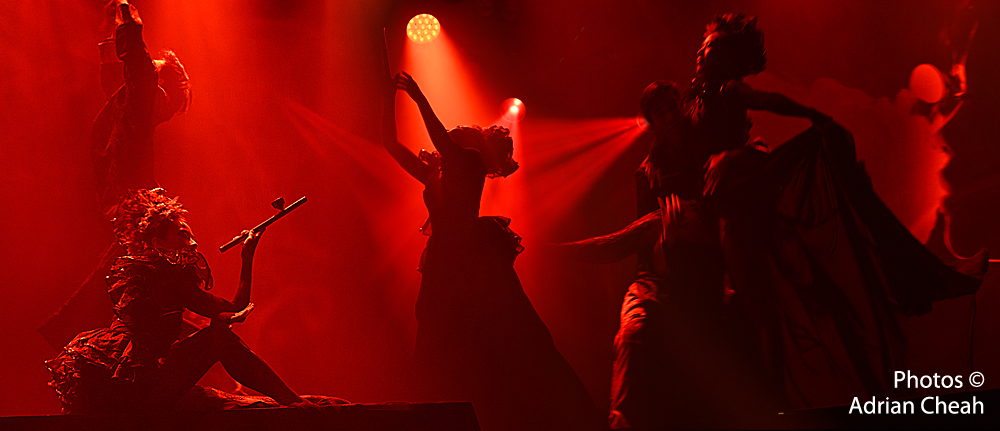
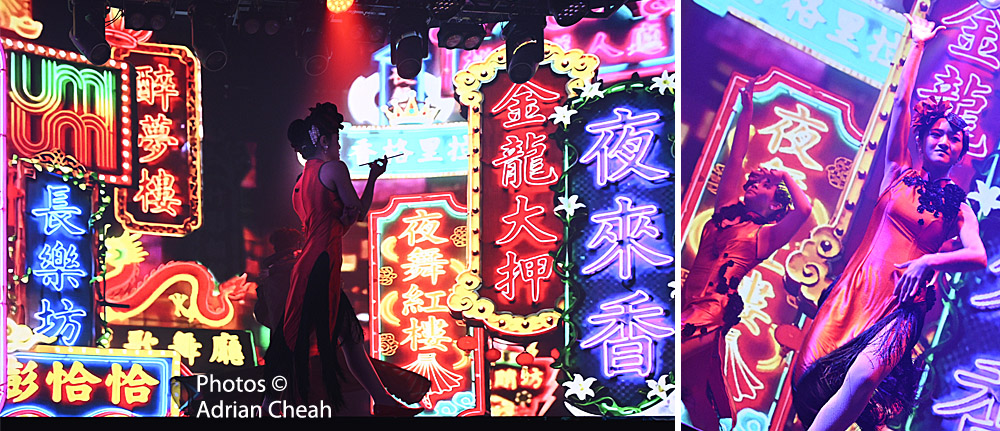
As the performance continued, a more complex reality was being portrayed. Systems of opium consumption and prostitution, often intertwined with secret societies, formed part of the social fabric that sustained and controlled the migrant workforce, reflecting both the hardships of labour and the structures of colonial economy.
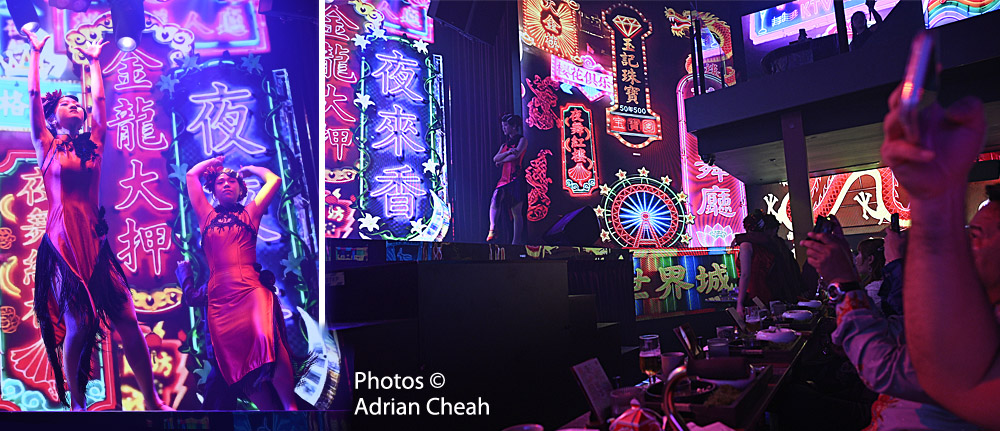
I was particularly taken by this scene, where the LED panorama surrounding the dining hall transported the audience into a neon-lit vision of a long forgotten past. Production designer Hongyo Chan, who wears many hats including costume and visual design, brought a striking cohesion to the moment.
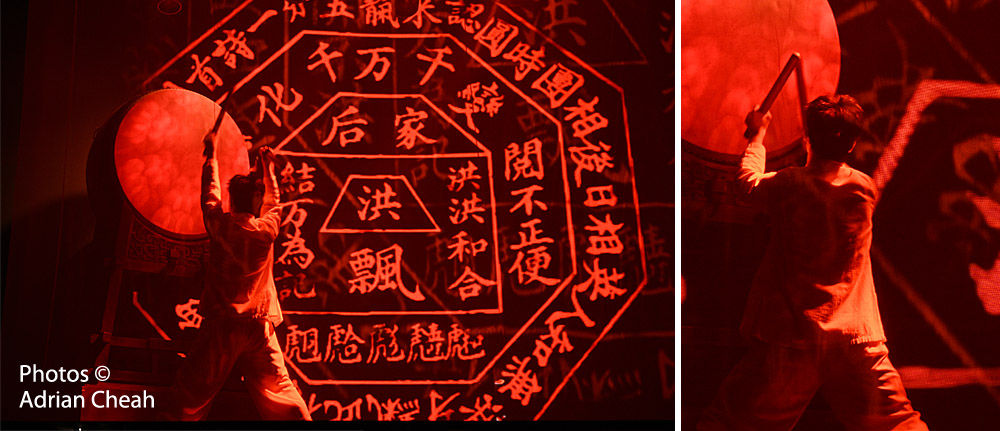
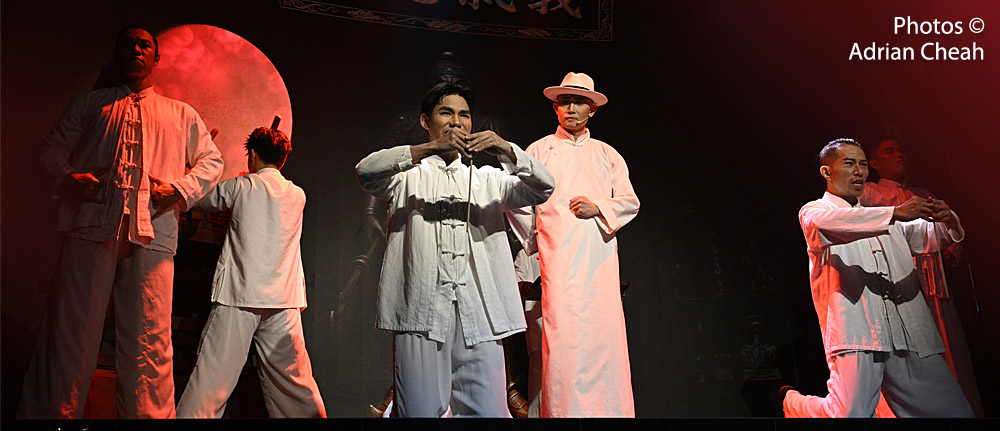
With the beating of drums, the next scene erupted with rising intensity, delving into the formation of dialect groups, clan associations, and secret societies (often known as hui or kongsi) which played a vital role in social order, protection, and mutual aid among the early Chinese community. In Penang, these societies became increasingly prominent in the 19th century, particularly among labourers working in tin mines and along the bustling port.
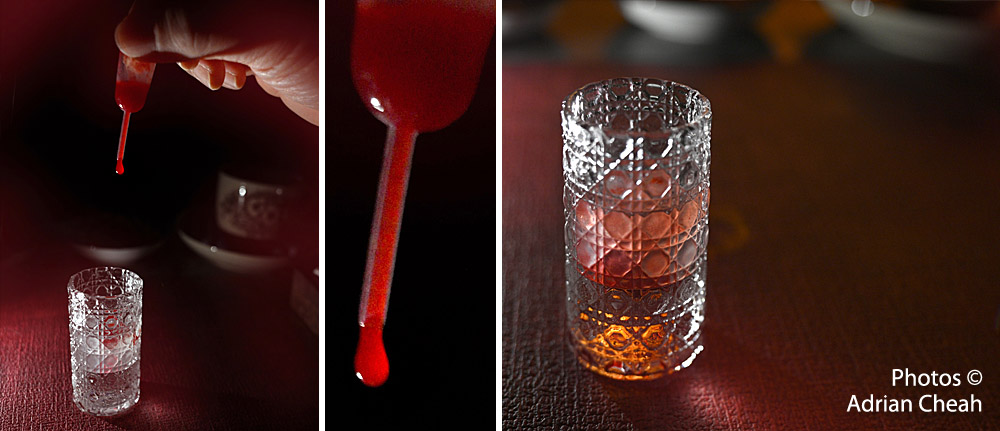
In a striking moment of theatre, each of us was presented with a shot of “Brotherhood Chalice”. It was a refreshing granita, accompanied by a dropper of red liquid. With a few drops of the “blood” added to the glass, we were invited to raise it in unison, symbolically stepping into the fold of the secret society. It was a clever gesture, where audience and performance briefly merged into one. The ice-cold granita, taken in a single shot, served as a welcome interlude, resetting the senses before the main course.
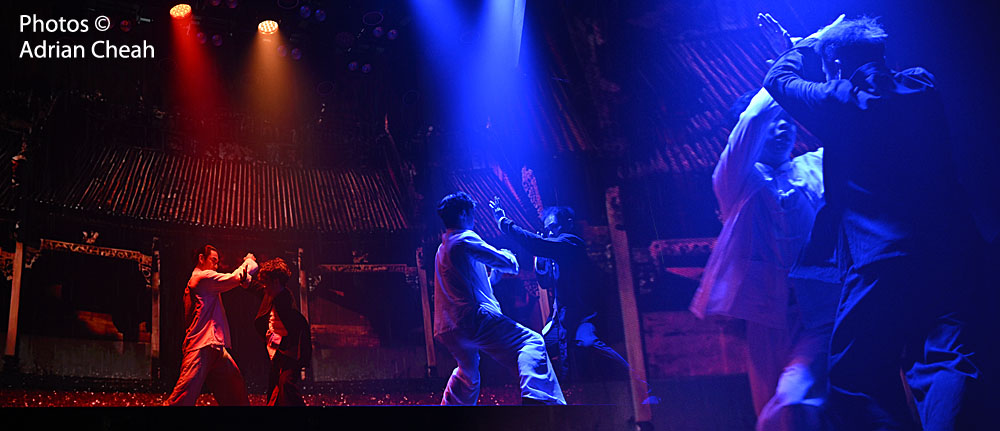
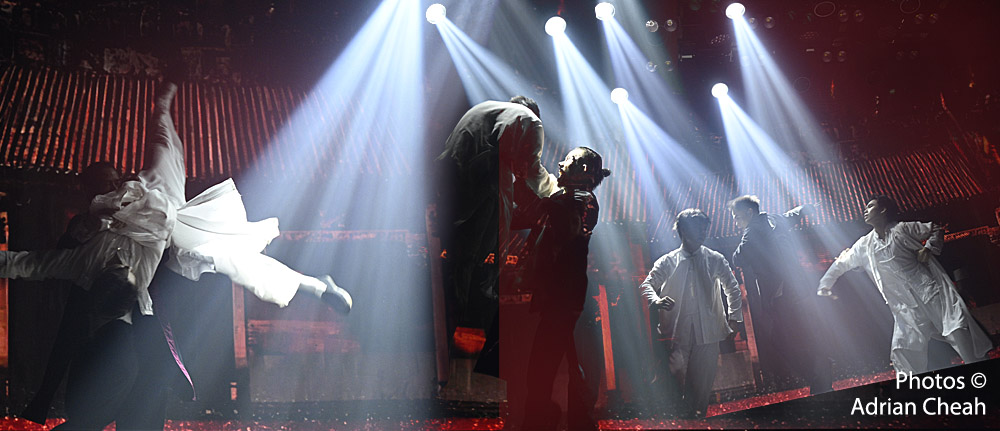
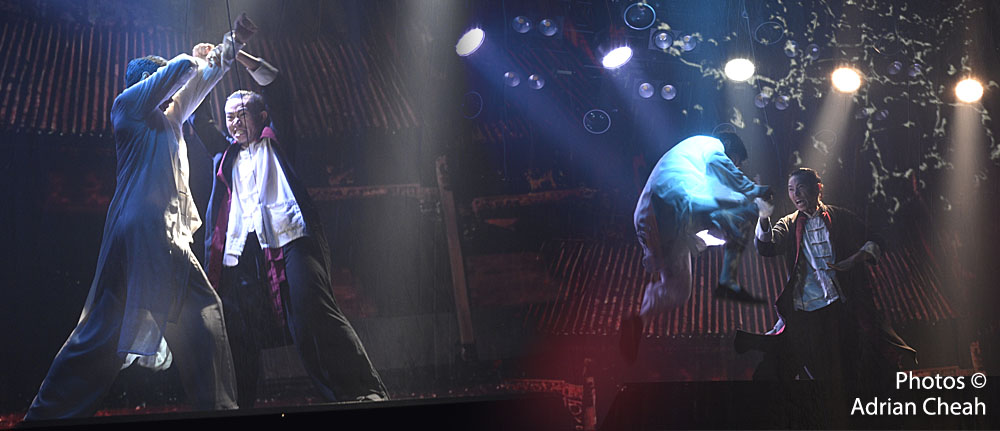
The next scene revealed the tensions within the secret societies, struggles over power, labour, identity, and economic control in a rapidly growing colonial port. These latent rivalries eventually boiled over into the violent bloodshed of the 1867 Penang Riots, marking a dark chapter in the island’s history. The dramatic lighting heightened the sense of unease, with shifting shadows mirroring the turmoil on stage.
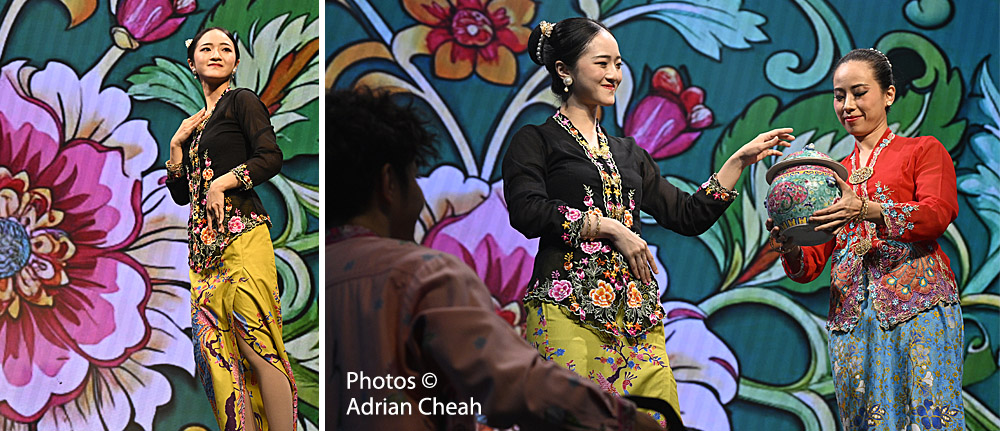
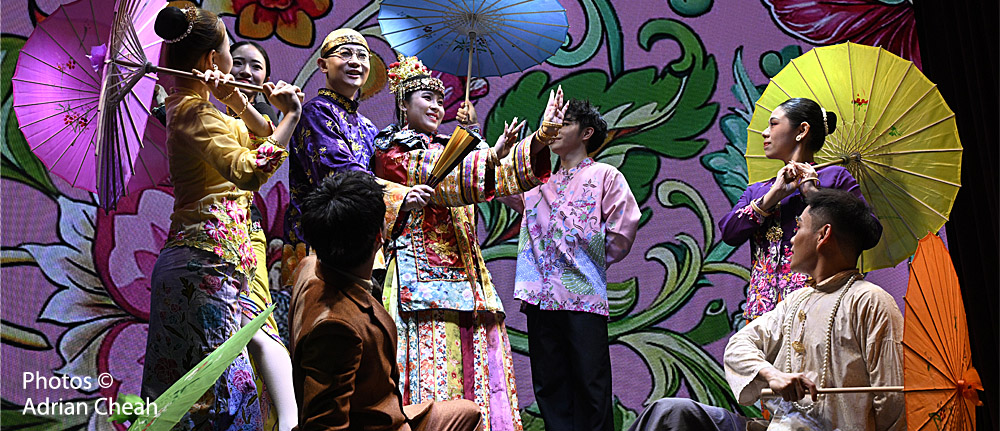
The next chapter turns to the more established Chinese Peranakan community, whose family-based social structures offered greater stability compared to the uncertainties faced by newly arrived migrant labourers. More locally rooted and culturally acculturated, they maintained strong ties to commerce, administration, and property ownership. Over time, they carved out a distinctive identity expressed through their attire, jewellery, food, and everyday customs. Renowned for their culinary heritage, the Nyonyas developed an array of signature dishes and kuihs, shaped by a rich blending of Chinese and local influences.
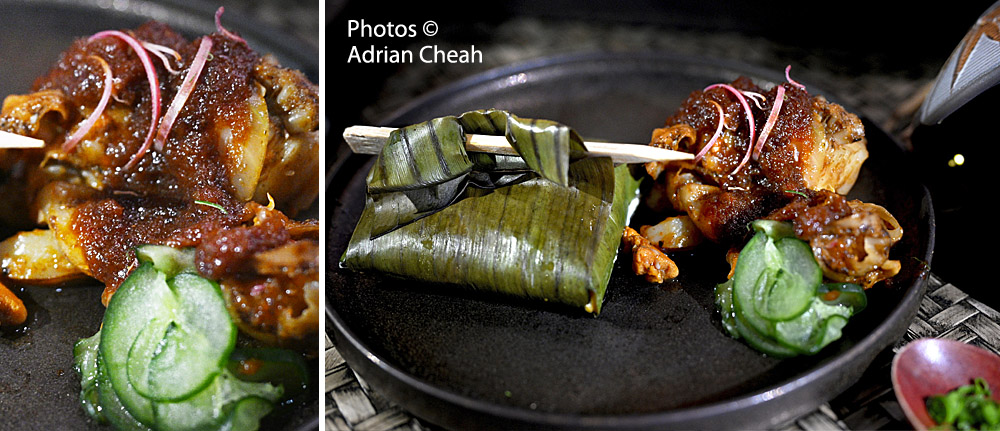
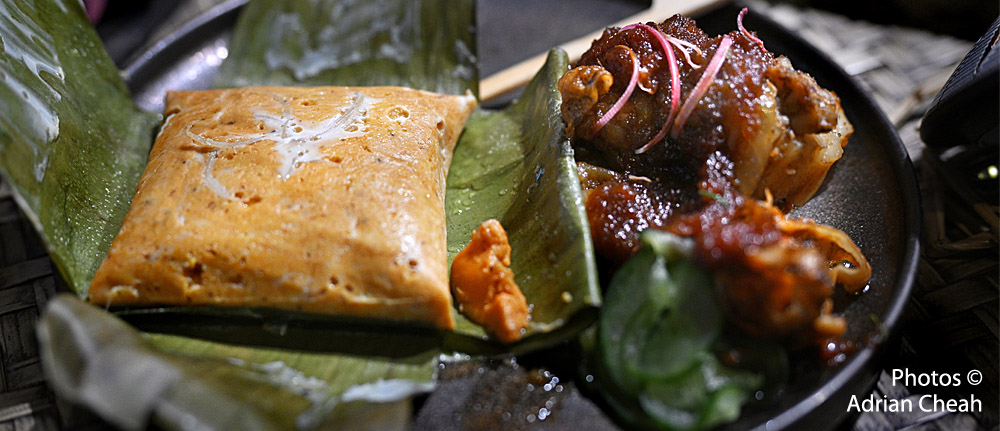
The next dish returned to familiarity with its lovely Peranakan flavours. The otak-otak, wrapped in a banana leaf parcel, carried the aromatic depth of Nyonya cooking, built on fresh herbs, spice, and, not forgetting, santan for its creamy, lemak richness. On the side was tender squid in a dry curry, almost reminiscent of rendang. The dish felt grounded, less interpretive and more rooted in tradition, and I loved it.
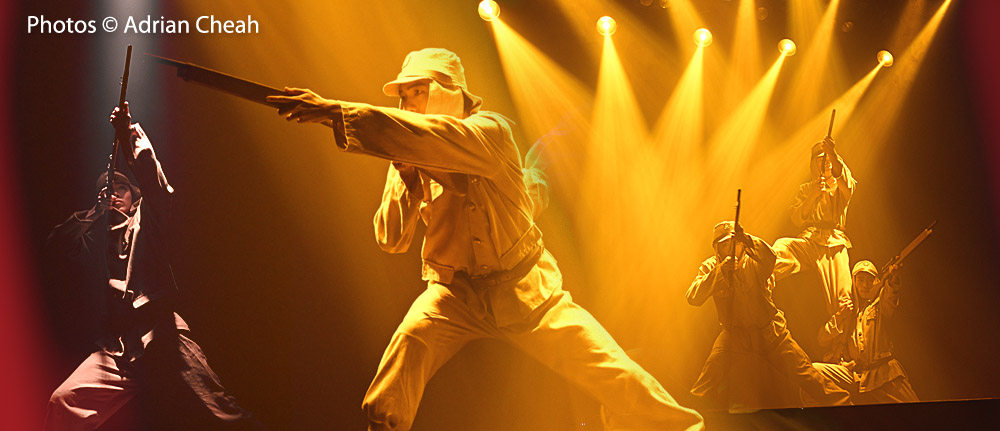
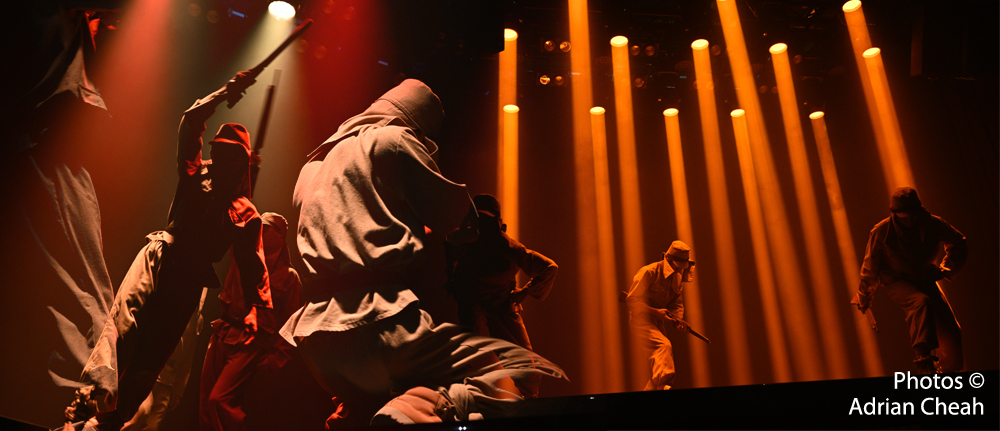
Drama ensued as time plunged us into 1941, when World War II broke out and the Japanese occupation swept through Penang. The creative use of dramatic lighting and choreography conveyed a far more chilling narrative.
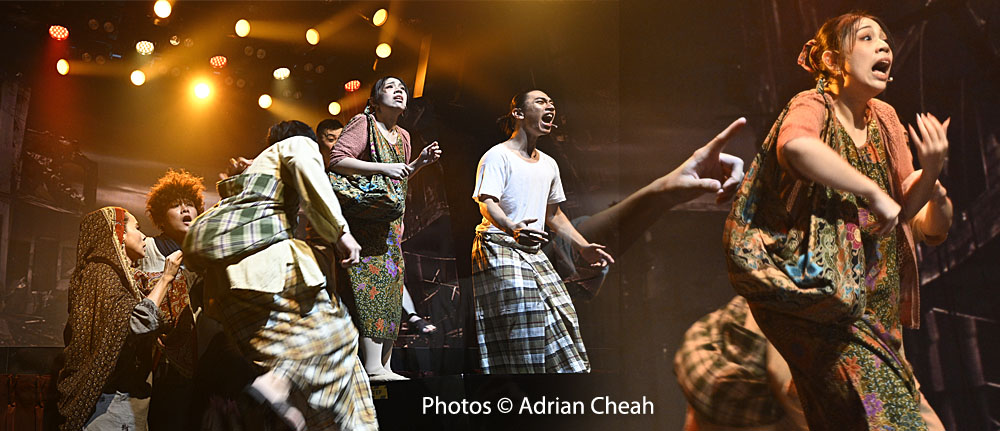
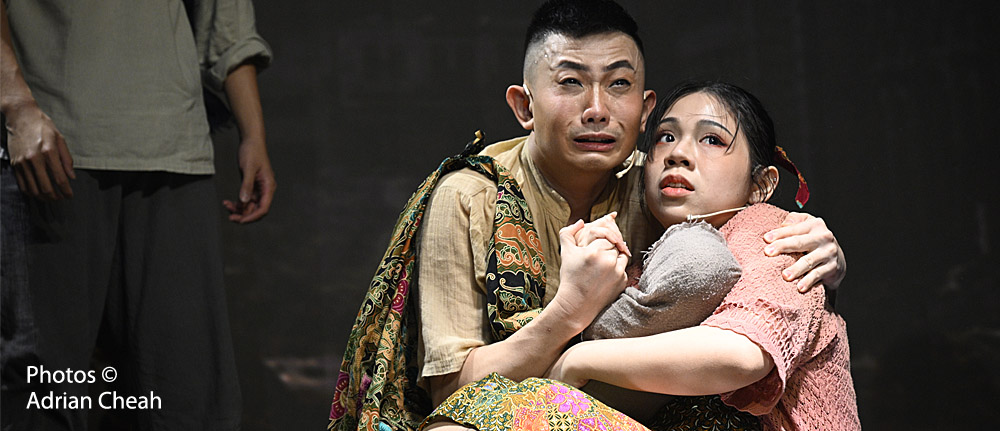
The proximity of the performers, within the intimate scale of the dining hall, made the experience deeply visceral. We could feel their trembling voices and desperate cries of anguish. In that moment, history felt uncomfortably close, no longer distant, but surrounding us.
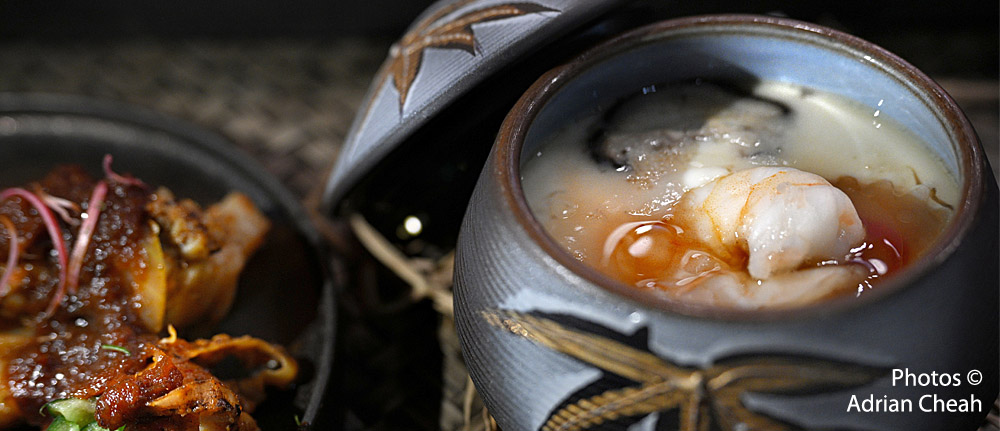
Alongside the otak-otak was “Jade Blossom”, a steaming-hot serving of chawanmushi. This silky-smooth Japanese egg custard was comforting, its gentle texture inviting a moment of contemplation. The scene of the Japanese occupation closed with the birth of a newborn. This moment was perhaps symbolised in this offering where the egg, a universal emblem of life and fertility, echoed Penang’s enduring story of resilience, renewal, and continuity.
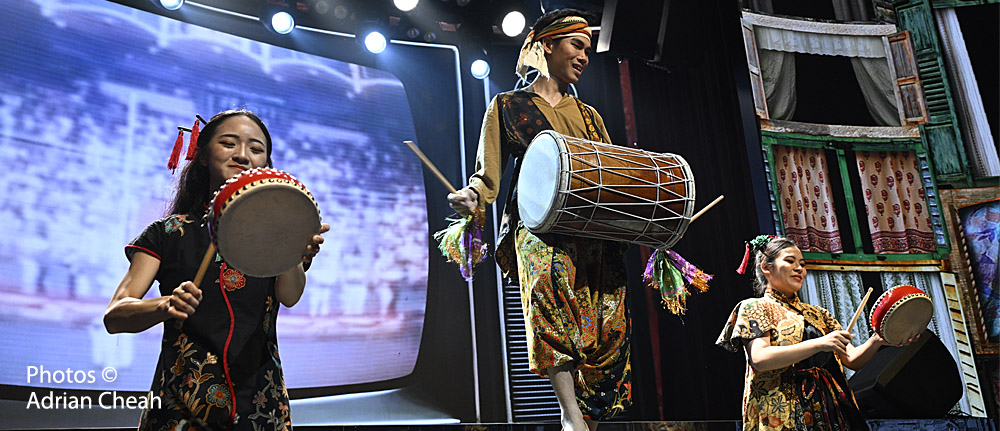
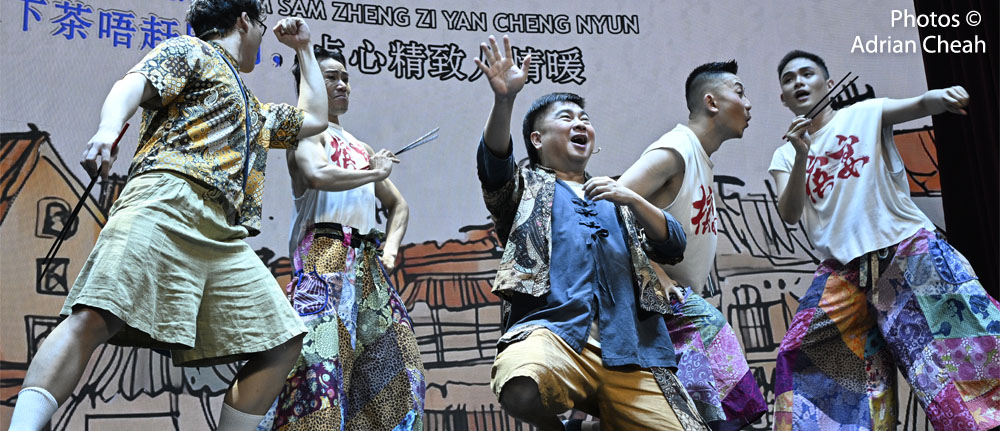
A little over a decade later, the Federation of Malaya declared independence, and jubilant cries of “Merdeka” rang out across the nation.
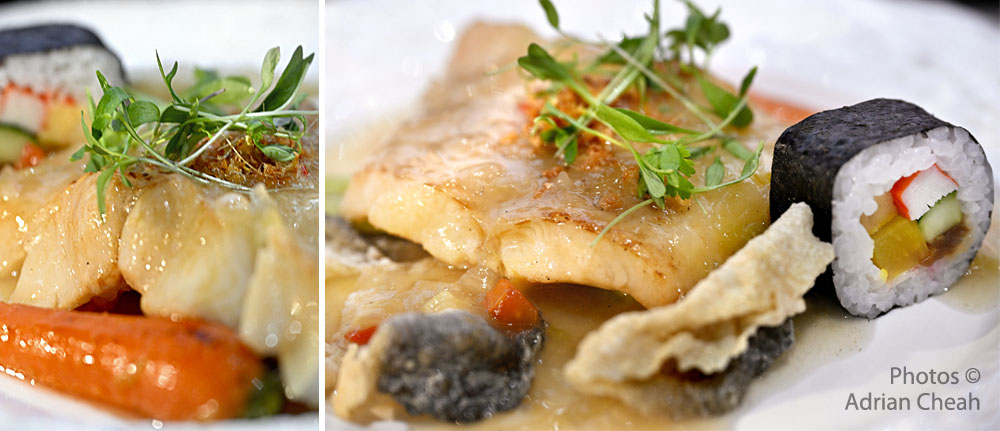
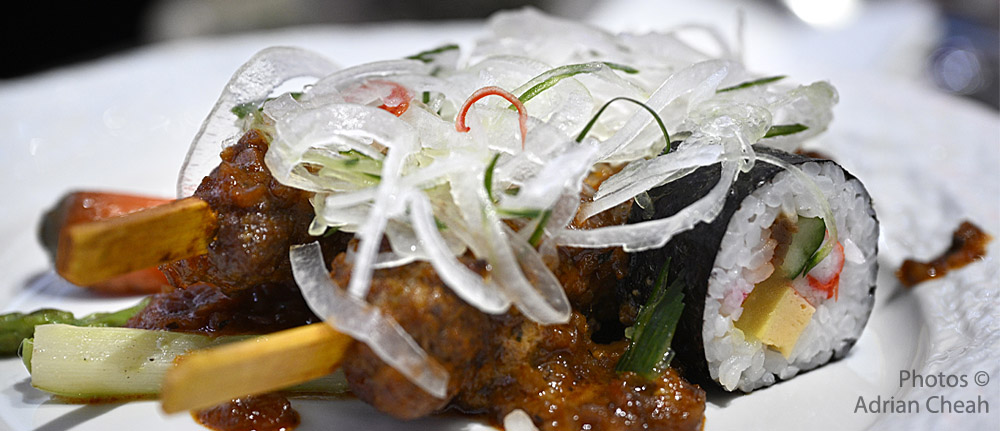
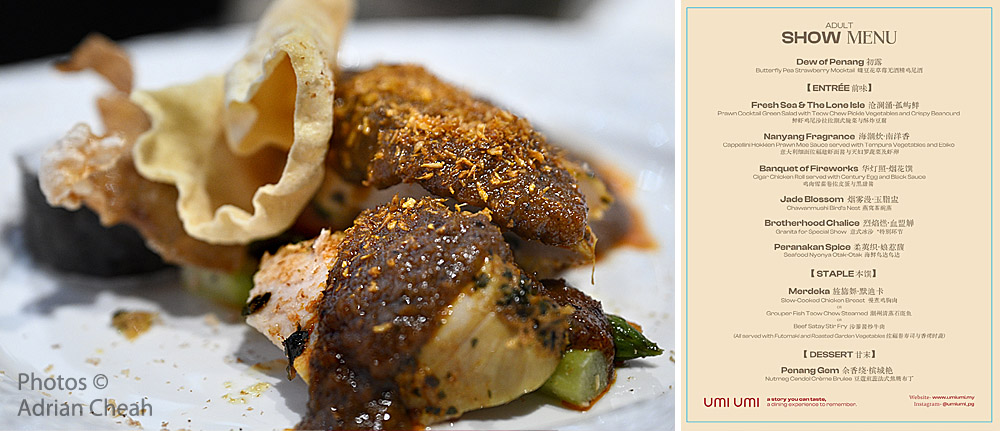
Then it was time for the main course. There were three options: chicken, fish, or beef. Under the banner of Merdeka, I opted for the Teochew-style steamed grouper served with crispy fish skin crackers and a futomaki. The addition of preserved vegetables and salted plum accentuated the natural sweetness of the fish.
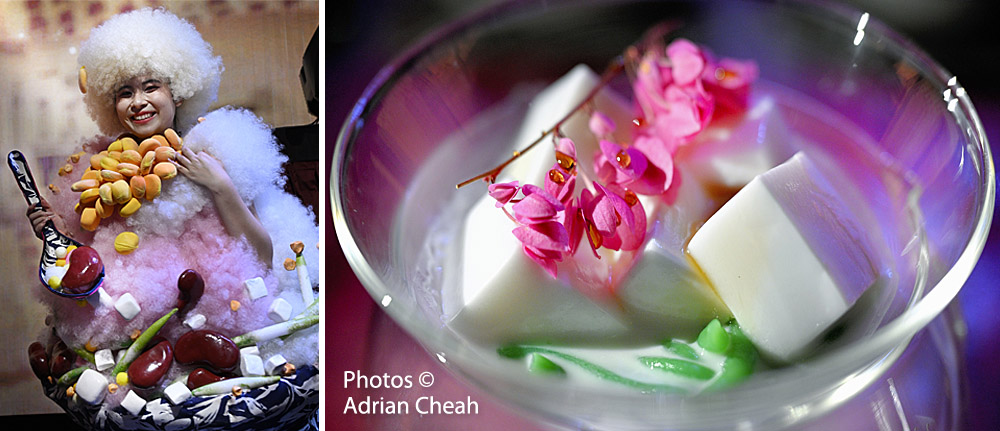
“Penang Gem”, a chilled dessert of cendol, santan jelly, and a rich santan sauce, closed the evening. The familiar was reimagined.
On its own, the menu presented an eclectic mix of flavours, yet it gained greater coherence when paired with the live performance. I have always preferred omakase-style dining, where the chef, guided by the freshness of the ingredients, brings a focused precision to each course. In contrast, as a set menu, it inevitably felt more standardised, designed for consistency across a larger audience. That said, there were a few standout dishes on the menu that I particularly enjoyed.
The Creative Team
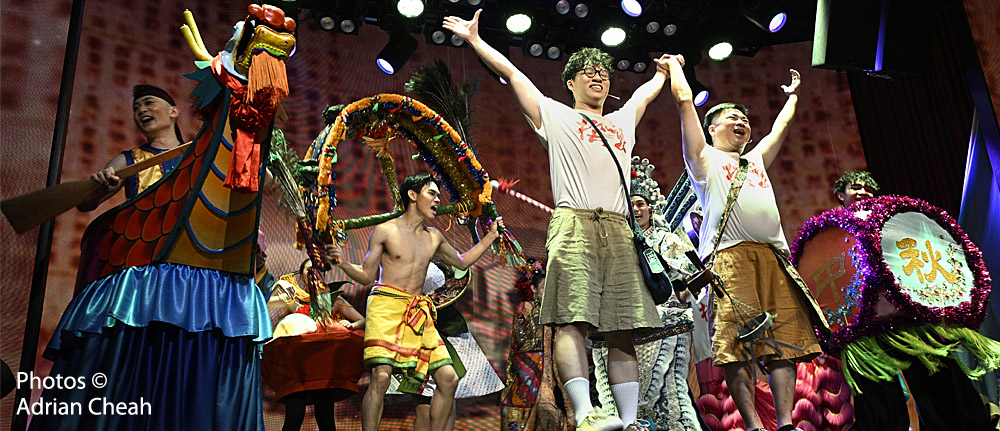
Stage manager Goh Yong Jian, working closely with Ethan Khoo and Hongyu Chan, crafted a moving and dynamic storyline. Music director Kitz Wong played a vital role in the success of the production as well. "The Chronicle of Penang" took nearly nine months to develop from concept to stage. With a cast and crew of about 25, they debuted their first performance on 8 November 2025 to a standing ovation.
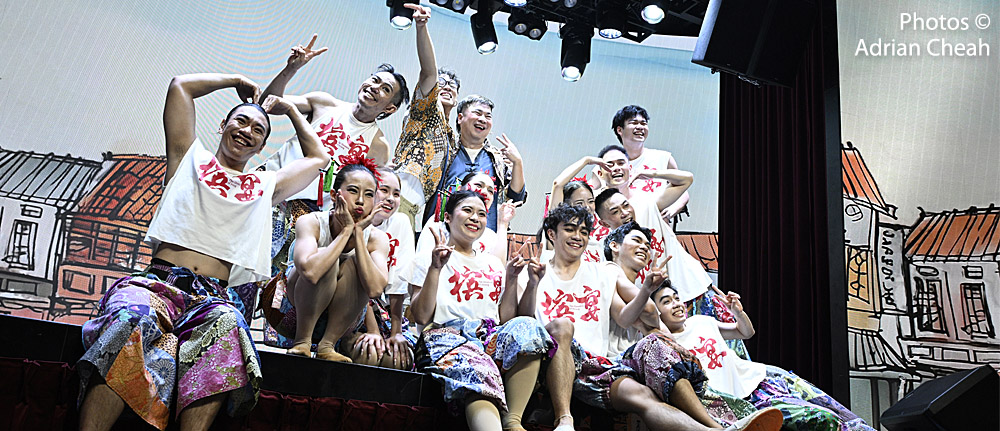
Khoo, Goh, and Chan are also the founders of a production house involved in filmmaking projects across Malaysia, Singapore, and Thailand. The company first proposed the dining theatre concept to Umi Umi Penang, which adopted and together brought the idea to life. They now stage seven shows a week and continue to develop new ideas for future productions.
A Different Kind of Theatre Experience
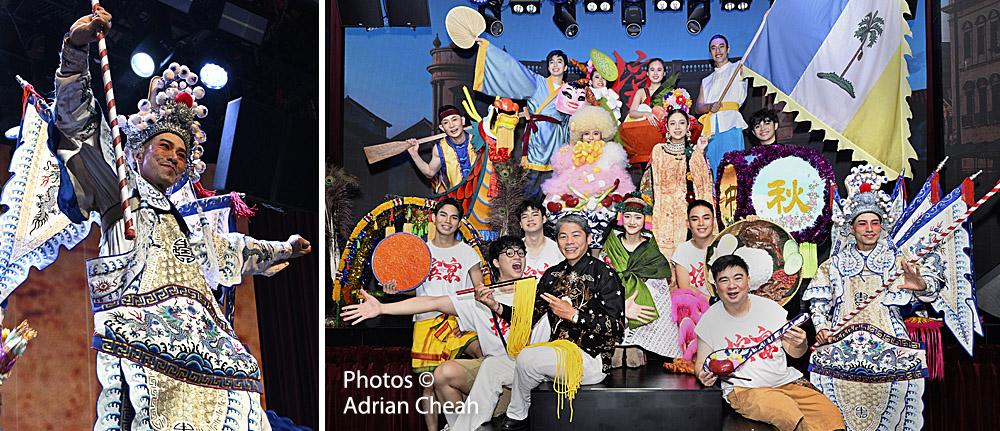
This was all new territory for me. I have always imagined theatre as something to be experienced without distraction—the kind of moment where you sit back, surrender your attention, and let the performance carry you. In contrast, this evening asked for something else entirely. A meal unfolded while the story played out, and attention was divided between the plate, the stage, and the company I was with.
Yet there was something undeniably engaging about the experience. It asked one to be present in a different way and simply take it all in as it happened. And yet, I found myself with my Nikon Z8 in hand, half observing the performance, half composing my shots while trying to enjoy the flavours before me. I came to realise that it is only when one sets the handphone or camera aside that one can fully respond in the moment—to clap, to cheer, to enlist as a secret society member, and to become part of the energy in the room. Perhaps that is where the real magic lies.
-------------------------------------
Written and photographed by Adrian Cheah
© All rights reserved
22 March 2026
If you enjoyed this story, you may like to bookmark this site or return for future essays.
Umi Umi
2A-01-08 & 2A-01-09, Jalan Penang, 10000 George Town, Penang
T: +6012–200 9796
The performance is conducted in Mandarin, with English subtitles displayed on screen.
Check website for showtimes, pricing, and more details
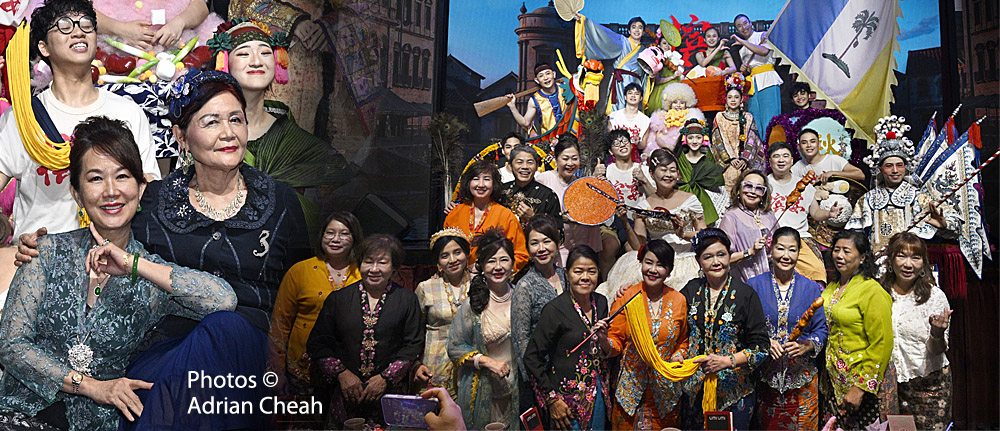
PS: My thanks to Cecilia Lim for arranging the evening. She was also involved in the production, contributing to the creation of selected costumes for the performers.