An insight into tradition, taste and timelessness of Lemang

Lemang is available throughout the year in Penang and across Malaysia, yet it holds a special place during Hari Raya Aidilfitri (Eid al-Fitr) and Hari Raya Aidiladha (Eid al-Adha). Although the ingredients are simple, cooking lemang is labour-intensive and requires an open fire and a well-ventilated space. For this reason, many people prefer to buy it rather than cook it themselves.
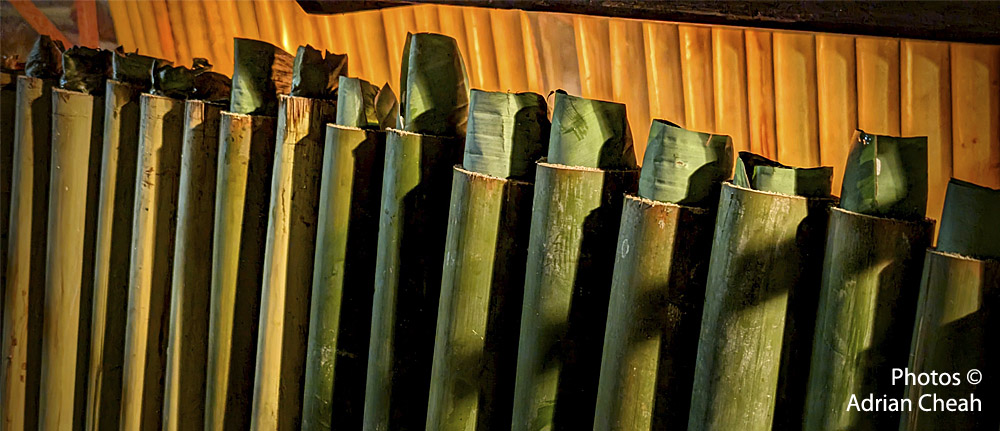
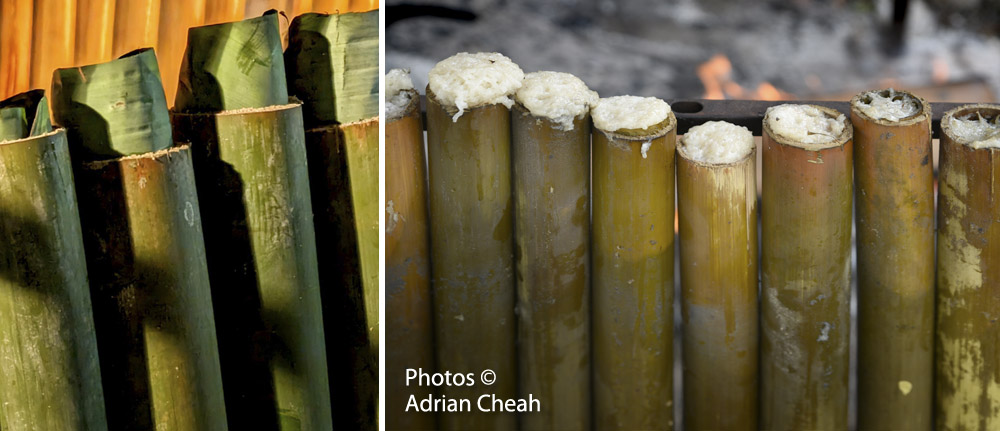
Lemang, a cherished heritage delicacy in Malaysia, consists of glutinous rice, santan (coconut milk) and salt, cooked over an open flame within a hollow bamboo tube lined with banana leaves. Patience is essential for achieving evenly cooked lemang, requiring the frequent rotation of the bamboo poles every few minutes or so. The roasting process can extend for hours, depending on the intensity of the fire. Once uniformly cooked, high-quality lemang should exude a distinctive smoky aroma, possess a soft texture as well as deliver the delightful taste of lemak goodness.
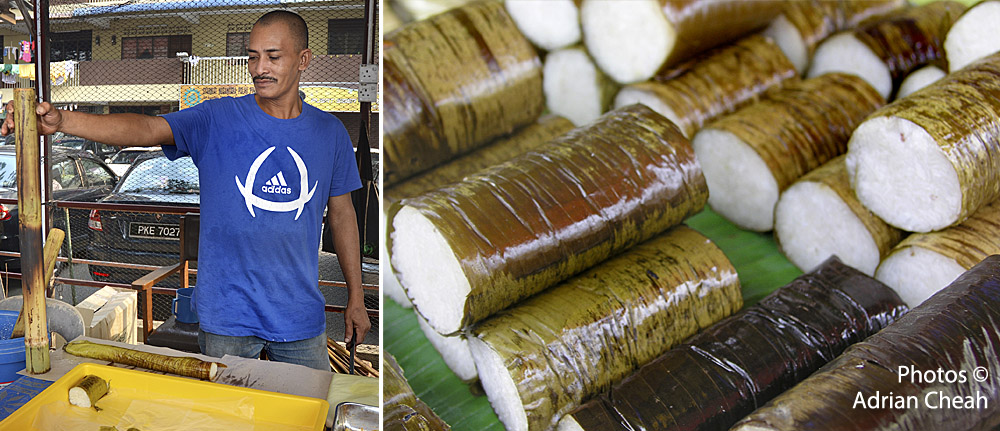
About two days or so before the end of Ramadhan (the fasting month), vendors can be seen cooking and selling lemang by roadsides. Lemang is usually 'bought by the bamboo' and should be left unopened until it is ready to serve.
The origins of lemang
Cooking food in hollow bamboo over an open flame appears to be an old and common practice. This cooking method has been recorded among indigenous communities across Southeast Asia and other tropical regions where bamboo grows abundantly.

This information caught my attention while I was delving into the culture of the Orang Asli in Malaysia. The Orang Asli, alongside the Orang Ulu and Anak Negeri groups, constitute the indigenous population of Malaysia.
According to the International Work Group for Indigenous Affairs (IWGIA) as of 2017, the Orang Asli represent the indigenous peoples of Peninsular Malaysia, encompassing 18 subgroups within the Negrito (Semang), Senoi, and Aboriginal-Malay communities, accounting for 0.7% of Peninsular Malaysia's population. In Sarawak, the indigenous peoples are collectively referred to as natives (Dayak and/or Orang Ulu), including various ethnic groups such as the Iban, Bidayuh, Kenyah, and others, making up approximately 70.5% of Sarawak's population. Similarly, in Sabah, the 39 different indigenous ethnic groups known as natives or Anak Negeri constitute about 58.6% of Sabah's population, with major groups including the Dusun, Murut, Paitan and Bajau.
While the Malays are also indigenous to the region, they are generally not classified as Indigenous Peoples in this context because they form the majority population and occupy dominant political, economic and social positions within the country.
Tracing the history of a traditional dish is rarely straightforward. In the case of lemang, its story survives largely through memory and oral tradition rather than written records. Rather than trying to decide who is “right", it is worth appreciating the shared traditions, techniques, and cultural legacy that each story reflects.
Traditional and modern techniques for cooking lemang
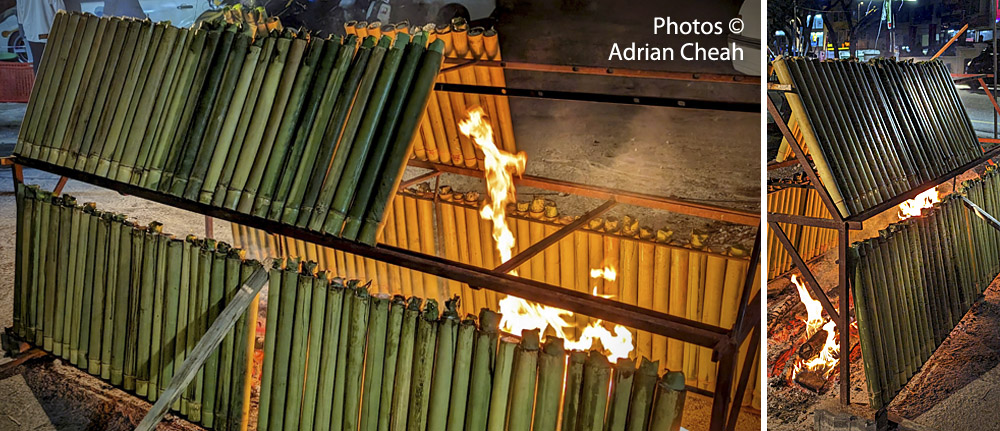
The traditional method of cooking involves using an open flame, a practice revered by many for its purported superior results, which they steadfastly uphold.
In today's culinary landscape, some lemang vendors have embraced innovative techniques to meet the increasing demand of consumers. These time-saving methods include steaming or roasting the mixture by placing bamboo tubes into steel drums. Meanwhile, at home, some cooks prefer the convenience of wrapping cooked glutinous rice in banana leaves and using an air fryer or a barbecue pit to complete the cooking process.
Vendors utilising steel drums have observed that this method retains the original aroma of lemang while providing a cleaner process, resulting in reduced air pollution. Additionally, the heat generated inside the drum allows all lemang tubes to be cooked simultaneously, adding to the efficiency of the process. The resulting lemang cooked in steel drums is said to have a softer texture and lacks any crustiness.
Each steel drum, measuring 0.9 metres in height and 0.6 metres in diameter, is estimated to accommodate up to 30 lemang tubes.
Making your own at home
Here is a simplified version of the lemang recipe for home cooking:
Ingredients:
- 1 kg uncooked glutinous rice
- 8 cups of santan (from 2 coconuts)
- Salt to taste
- Young banana leaves
- Bamboo trunks about 18-24 inches in length. Remove grit from the hollow core.
Method:
- Rinse the glutinous rice and soak it in water for 6 hours or overnight. Then, strain the rice in a colander and allow it to dry.
- Extract 8 cups of coconut milk from the 2 coconuts (add room temperature boiled water when extracting). Add salt to taste.
- Line the inside of bamboo with clean banana leaves.
- Fill the hollowed bamboo with glutinous rice, leaving approximately 3 inches or one finger's width of empty space from the top, as the rice will expand during cooking.
- Add coconut milk. Use the 'finger test' to determine the right proportion of rice and milk – dip your finger into the mixture until the tip touches the top layer of the rice. The distance from fingertip to the milk must be at least 1½ finger joints.
- Place the bamboo trunks about one to two feet away from an open fire. Rotate the bamboo every few minutes to ensure even cooking and prevent burning. Lemang typically cooks completely within around 3 hours, depending on the fire's intensity. Alternatively, you can steam the bamboo in a large pot without a cover for 2 hours for a softer texture.
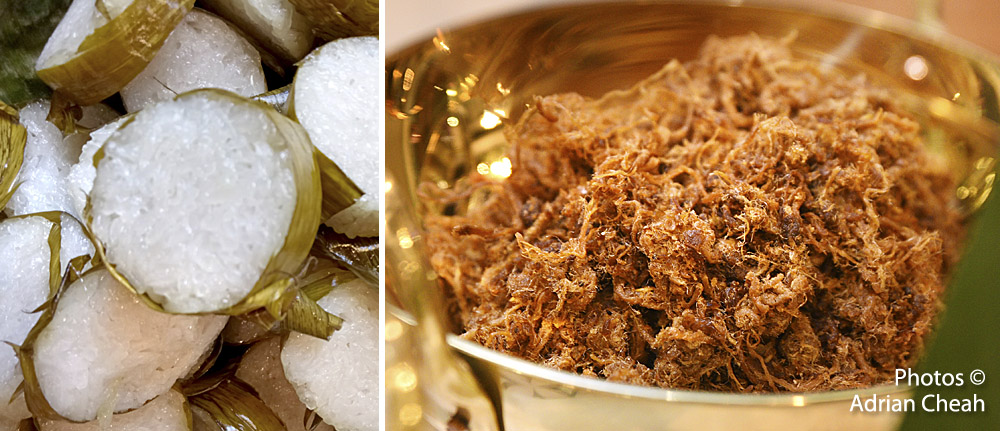
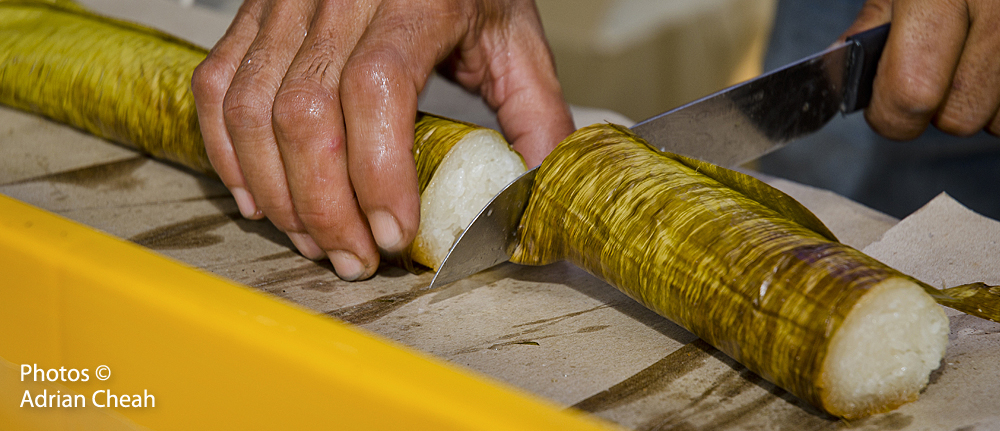
To serve, carefully break open the bamboo and unwrap the leaf-wrapped rice. Cut the lemang into 1-inch thick slices and serve at room temperature. Lemang pairs wonderfully with dishes like beef rendang, serunding (beef floss), peanut sauce or various curries. Enjoy the delightful combination of flavours and textures!

Types of Lemang
In Malaysia, lemang comes in various options, including:
1. Traditional lemang: made with white glutinous rice and basic raw ingredients, without any additional additives.
2. Black glutinous rice lemang: similar to traditional lemang, but using black glutinous rice instead, resulting in a dark burgundy-hued lemang.
In Indonesia, the lemang options are diverse and include:
1. Lemang Pisang: lemang with bananas added to the mixture.
2. Lemang Tapai: lemang with fermented rice, lending a unique flavor profile.
3. Lemang Singkong: lemang made with cassava (tapioca), offering a different texture and taste.
4. Lemang Baluoh: lemang infused with coconut and palm sugar, adding a delightful sweetness to the dish.
Whether the Indonesian lemang options will cross borders and become a hit in Penang remains to be seen. Only time will tell if these unique variations will capture the taste buds and hearts of Penangites. Alternatively, perhaps our own lemang vendors will innovate and create something excitingly new, adding their own twist to this beloved traditional dish.
-------------------------------------
Written and photographed by Adrian Cheah
© All rights reserved
PS: Glutinous rice does not contain gluten! Despite its name, glutinous rice gets its sticky texture from its high starch content, not from gluten proteins. Glutinous rice is also known as sticky rice or sweet rice. Thus, glutinous rice should be safe for individuals with gluten sensitivity or celiac disease to consume.