• index_01.jpg
  • index_02.jpg
  • index_03.jpg
  • index_05.jpg

Discovering Penang, One Story at a Time

Penang has always fascinated me with its blend of old and new: a historic trading port, a UNESCO World Heritage city, a thriving centre of commerce and industry, and a home to many cultures, traditions and flavours that have come together over generations. However, Penang is more than its landmarks and famous dishes. Its soul can be found in the people I meet, the stories I hear and the memories shared along the way. This is my journey through Penang and beyond.

A 6-course set at Wu Jia where size matters, especially the abalone and prawns
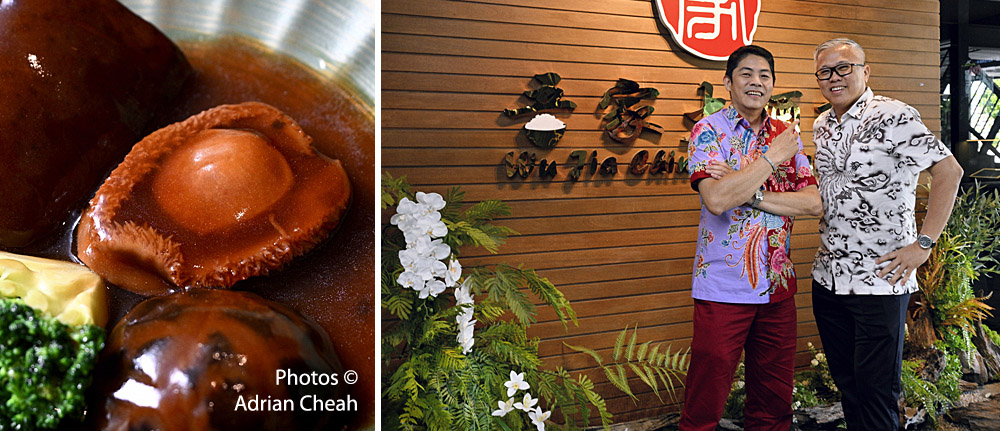
 Wu Jia, photo © Adrian Cheah

Do you know that eating a meal with someone can actually be good for your health, and maybe even your longevity?

Most of us think of food as fuel or indulgence, but research tells a deeper story. Dr Will Bulsiewicz, a leading gut health expert, explains that sharing a meal reduces loneliness and stress, which in turn supports gut health; and chronic loneliness can harm health as much as smoking cigarettes. (The Diary of a CEO, 2026) Similarly, studies show that communal meals release oxytocin and endorphins, strengthen social bonds, lower cortisol, and improve mood and overall wellbeing. (National Geographic, 2023)

Continue Reading

The elegant Nyonya kebaya – wearable art that knows no seasons
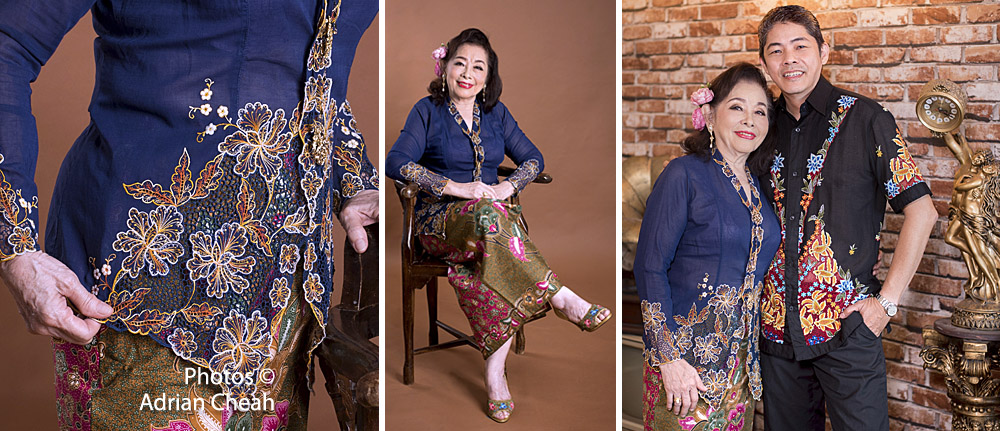
kebaya © Adrian Cheah

"When in Rome, do as the Romans do." This oft-quoted adage champions the virtues of adaptation. Whether or not the early Chinese immigrants to Malay Archipelago were familiar with this nugget of wisdom, their actions mirrored its essence. These enterprising settlers, who journeyed to these lands in search of opportunity, not only carved out new lives but also intertwined their heritage with local traditions. Some married Malays and embraced elements of their customs while steadfastly preserving their Chinese beliefs and philosophies. From this union arose the Chinese Peranakan community – also known as Babas and Nyonyas – a vibrant cultural fusion renowned for its distinctive charm and ingenuity.

Continue Reading

The murtabak – a hearty meal all by itself

Penang Murtabak © Adrian Cheah

Hameediyah Restaurant in Campbell Street serves good murtabak. Established in 1907, this is one of the oldest Indian Muslim restaurants in Penang.

Continue Reading

The floral bath (mandi bunga) ritual
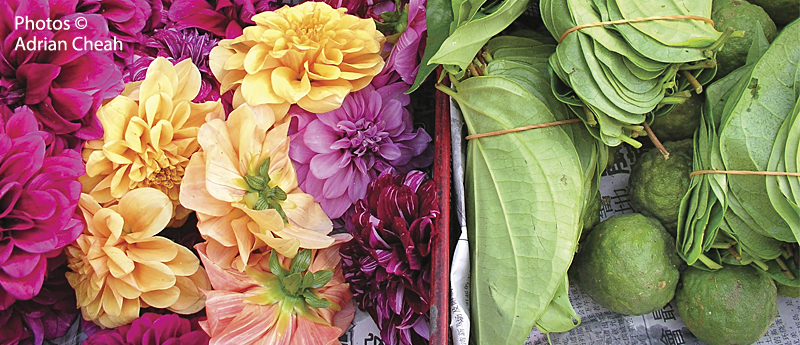
floral bath © Adrian Cheah

The Russian musician Igor Stravinsky might have composed Le Sacre du Printemps (The Rites of Spring) as an exploration of nature and the rituals of renewal and sacrifice, but one could safely conjecture that the ritual and ceremony of the Malaysian floral bath was created for more personal (and less lofty) reasons. The two may be worlds apart, but both Stravinsky and the local bomoh share one thing – invoking the power and the mystery of nature and the elements in their work.

Continue Reading

Sanctum sanctorums of the Thai and Burmese communities
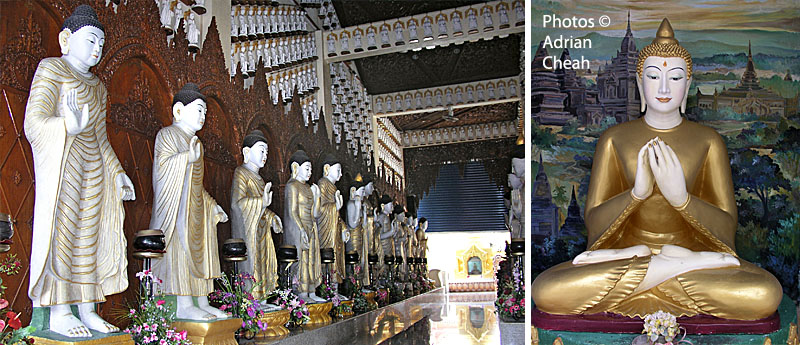
Dhammikarama Burmese Temple © Adrian Cheah

In 1845, a large endowment of land in the Pulau Tikus area was made to the Theravada Buddhists, principally Thai and Burmese, whose importance is recorded in local street names to this day. Today, the extensive lands surrounding the Thai Wat Chaiyamangalaram are home to a small and thriving kampong of about thirty families (approximately 120 persons) of Thai Chinese and Hindu Indians. (The Changing Perceptions of Waqf, as Social, Cultural and Symbolic Capital in Penang, Judith Nagata)

Continue Reading

Traditional Malay cooking at Lagenda Café in the heart of George Town

Lagenda Café © Adrian Cheah

The key signature in traditional Malay cuisine is definitely the generous use of local herbs, spices and belacan (shrimp paste). Santan (coconut milk) is a common addition to impart a creamy texture to Malay dishes. In Penang and the northern states of Malaysia, Malay cooking has further integrated Thai flavours. Meats and seafood are usually marinated with a special blend of herbs and spices before being cooked. Vegetables are often stir-fried and some eaten raw, always with sambal belacan. I love Malay dishes because of their strong, spicy and aromatic oomph. For an authentic Malay feast, visit Lagenda Café.

Continue Reading

The Han Jiang Ancestral Temple of the Penang Teochew Association – linking past and present

Teochew Temple © Adrian Cheah

You cannot miss the building. Nestled among rows of old Indian Muslim carpet stores, jewellers and eateries, the ancestral temple of the Teochew Chinese stands out with its pronounced Chinese architecture and imposing doors featuring twin larger-than-life Chinese warriors in full regalia. This silent and formidable pair with their red faces and weapons, frightening to foes yet welcoming to members and visitors, have been standing guard to the temple's peaceful interior for more than a century. Their presence recalls to mind a rather popular Chinese tercet: "Like the spring rain to a lotus blossom, thou art welcome; come, rest within".

Continue Reading

Church of the Holy Name of Jesus – a historical church in a sleepy hollow

Church of the Holy Name of Jesus © Adrian Cheah

Introduction

Old churches are fascinating buildings. Aside from their obvious roles as houses for worship and community gathering, old churches are also well known for their sublime architecture and illustrious histories. The Western continent has some of the finest and world-renowned churches, the mind immediately recalling structures like the early Gothic-styled Notre Dame in Paris (1163), St. Peter's Basilica in the Vatican (349AD) and St. Patrick's Cathedral in New York City (19th century). Equally fascinating ones also include the Santa Maria Maggiore (430AD) and Santa Prassede (780AD) in Rome and the Saxon Brixworth and Escombe churches in England (around 670AD).

Continue Reading

Nasi lemak – a parcel of Malaysian goodness

Nasi lemak © Adrian Cheah

A favourite breakfast dish for most Malaysians is Nasi Lemak – something which transcends the often-tenuous ethnic boundaries in this multi-racial country, as Malays, Indians and Chinese, all love it!

Continue Reading

The upside-down tree – Penang's very own Baobab

Penang's Baobab tree © Adrian Cheah

According to African legend, the Baobab wanted to become the most beautiful tree of all. When it realised that this was not possible, it put its head into the ground, so only the roots pointed heavenward. Another legend holds that when the Baobab was planted by God, it kept walking, so God pulled it up and replanted it upside down to stop it from moving.

Continue Reading

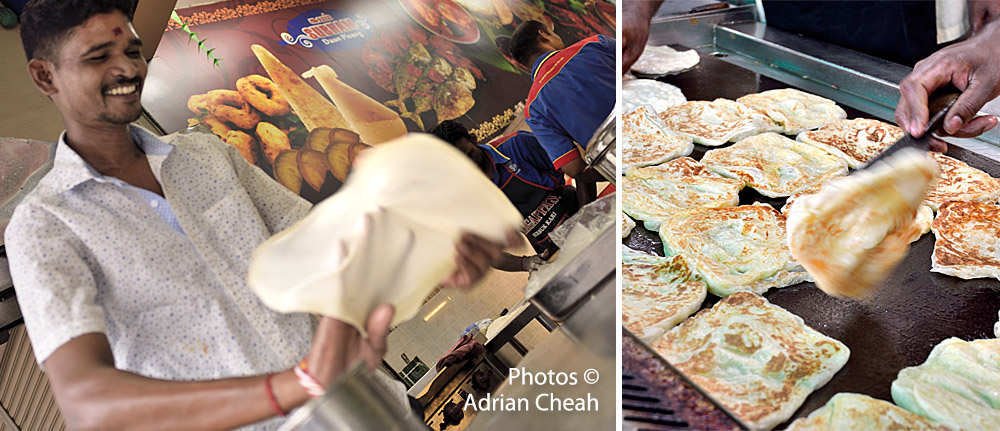
Roti canai, good for breakfast, lunch, tea, dinner, supper and any time in between

roti canai © Adrian Cheah

Yes, this is how popular roti canai is in Penang, available all day long at almost every street corner. This simple flatbread is adored by both young and old, men and women of all races in the country.

Continue Reading

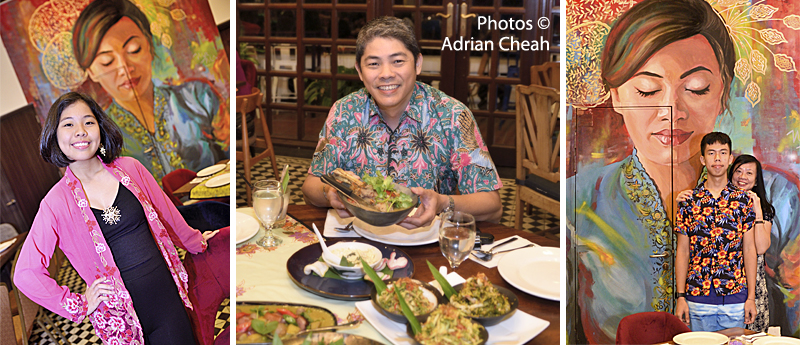
Irama Dining, the rhythm of a fresh and modern dining experience

Irama Dining © Adrian Cheah

Penang is truly a food paradise that has an extensive culinary scene, offering diverse delights from various cuisines, including delicious Malay fare. Irama Dining stands out as a culinary revelation for me. It brilliantly blends the bold, aromatic Malay cooking style with the vibrant flavours of local herbs and spices. The presentation of dishes is impeccable, complemented by the understated elegance of the dining space.

Continue Reading