Uncategorised Article Count: 4
ACEK Creative Solutions Article Count: 0
Who we are

Our roots may be humble, but our products and services are definitely on the cutting edge. When ACEK Creative Solutions (formerly known as Neo Sentuhan) was set up with the aim was to provide full-service design – this means that we oversee the production of a project from start to finish. Because we take pride in what we do, we naturally commit ourselves fully to our client's long-term satisfaction. We provide realistic, creative and innovative designs that reflect exactly what our clients want, or what they visualise but cannot realise. And best of all, we simply enjoy what we do.
We welcome the opportunity to work with you! Whether the job is upscale or modest, we can create designs to complement your personal and professional style and set you apart from the competition, all the while remaining remarkably cost-effective. If what you are seeking is something that combines eye-catching designs, creative and efficient use of technology and attractive pricing, do investigate our unique options and give us a call at +604 281 5289.
Combining practical knowledge with the artistic ability to turn ideas into formal designs
The first step in developing a new design or altering an existing one is to determine the needs of the client, the ultimate function for which the design is intended, and its appeal to customers or users.
It is prudent to begin by researching the desired design characteristics, such as size, shape, weight, colour, materials used, cost, ease of use, fit, and safety.
Publications Article Count: 57
Publications

Take the hassle and stress out of your book design by letting us make your publication look the best it can be. The process of publication designing – selecting the correct typefaces for headings and paragraphs, page layout, photo editing and cover designing – is a learned skill that requires both book design skillfulness and knowledge of the printing process.
Website development Article Count: 3
Website development

THE WORLD AT YOUR FINGERTIPS
Exciting online possibilities for the business entrepreneur
In this day and age, owning a website or homepage has become increasingly important for all businesses, large or small. Even individuals discover that setting up personal websites say so much about themselves.
Whether you've already found the design you want, or need us to help you find one, we are happy to offer professional quality designs and layout that are both affordable and 'value for money'.
"You can build the best mousetrap in the world but the world will not beat a path to your door if no one knows about it", so marketing gurus tell you.
The same marketing principle applies to websites. In order for people to find you, you have to feature prominently in search engines. Hence, Search Engine Optimisation or SEO is an essential feature for any online business aiming to be successful. Attain high rankings on search engines like Google and Yahoo by making your webpages search engine-friendly, in addition to using metatags, image tags and H1 tags when necessary.
Event materials Article Count: 1
Event materials
STOP! LOOK! READ!
Customed-designed colourful cloth and vinyl banners, flyers and posters to attract, inform and motivate people
Although they may appear similar in function, there is actually very little in common between signboards and banners. While the former is designed and made with durability in mind, the latter is more applicable and relevant to a particular event.
If you want to promote a product or a message quickly and affordably, nothing comes close to a custom-designed vinyl or cloth banner. They are suitable for all occasions, and well within the budget of any business big or small, communities, non-government organisations, schools and others. They are durable and can be used indoors or outdoors. You can choose to have banners for temporary or extended use too. For the ultimate in portability, banners also come equipped with height-adjustable support poles made from sturdy but lightweight aluminium. Supplied with a carryall bag, the banners can be taken anywhere and easily set up and dismantled.
Depending on the event or product that you are promoting, it is essential to have a singular voice in your design approach delivering your objectives clearly to your target audience. Thus, from t-shirts to button badges to posters and flyers, we understand the importance of good design to help you achieve your objectives.
Contact Us Article Count: 2
Contact Us
Get in touch with Adrian Cheah, Penang-based writer, photographer, and cultural storyteller. Reach out for collaborations, features, feedback, or a simple hello.
ACEK Creative Solutions
Blok 88-3-41, Kompleks Sri Wonder, Lintang Sungai Pinang, 10150 Penang, Malaysia
T: +604 281 5289
E: This email address is being protected from spambots. You need JavaScript enabled to view it.
W: adriancheah.com
Great Penang Article Count: 1
Great Penang
Adrian Cheah loves Penang. He brings you interesting insights into the UNESCO heritage city of George Town where he calls home.

About Penang Article Count: 1
About Penang
Widely known also as the Pearl of the Orient, Penang is one of Asia's most famous islands. Its natural beauty and exotic heritage have been attracting curious visitors for centuries.

Travel guides have referred to it as "... a place of mysterious temples and palm-shrouded beaches", while literary giant Somerset Maugham is known to have stayed on the island and spun tales about the romance of the white planter in South-East Asia.

Penang today is very much an amalgam of the old and the new – a bustling port, a heritage city and an industrial base. Perhaps it has more to offer per square mile than any other place in the world. For the sheer variety of locales, cultures and foods, Penang is hard to beat.

In its capital George Town, modern skyscrapers rise from one of Southeast Asia's largest collections of intact prewar buildings. Manufacturers of sophisticated electronic goods compete for space with wet markets and old temples. Where else can you find a century-old church, a Chinese temple, an Indian temple, and a Muslim mosque all within a five-minute walk from one another? Likewise, tall urban structures stand beside the red-tiled roofs of Chinatown and "Little India" is just across the road, while the Malay kampungs lie on the outskirts.

The seamless melding of the many peoples of Penang is best reflected in the delicious hawker foods (available around the clock) and the adherence to traditions and customs. Festivals abound throughout the year.

Should one wish to get away from the busy city, the idyllic beaches and soothing hills are but minutes away, while the industrial free trade zone, the "Silicon Valley of the East", and the international airport are equally accessible.

Penang or its Malay name of Pulau Pinang is made up of a turtle-shaped island, a total of 285 square kilometers, and a strip of land called Seberang Prai on Peninsular Malaysia about 48 kilometers wide.
Since 1985, the island has been joined to the mainland by the Penang Bridge, one of the longest bridges in the world. Alternatively, travellers arriving from the mainland can hop onto the ferry and take a 20-minute ride across. There are also international flights that connect directly to the international airport on the island.
Places to visit Article Count: 0
Places to visit

"If we say nothing but what has been said before us, we are dull and have observed nothing. If we tell anything new, we are laughed at as fabulous and romantic" so wrote the English society figure Lady Mary Wortley Montagu in a letter to her husband in 1718.

One is tempted to conjecture that had she lived in the next century and had been to Penang she might not have made such a wry comment! Simply because there is so much to tell about the places of interest you have seen. Simply because Penang is such a popular tourist destination and has been visited so many times over, it will be impossible for travellers to recount something that has not been recounted before! In short, a visit to Penang will not be complete if one does not tread a path, follow the road, get around, knock around, go places, sightsee or peregrinate for nowhere else in South East Asia will you find a more peaceful and pleasing island.

For the fun-loving and outdoorsy tourist, there are numerous beaches, fishing villages, nature trails, recreation forests and waterfalls. If you find touristy spots like Tanjung Bungah and Batu Ferringhi too crowded, you can retreat to more remote but no less attractive beaches at Muka Head, Pantai Keracut, Monkey Beach, Pantai Acheh and Gertak Sanggul.
While in Teluk Bahang do not forget to visit Entopia and the batik factory.


To rejuvenate jaded senses, Penang Hill beckons with the promise of fresh and cool air and an awe-inspiring view of the island. Still relatively unspoilt, Penang Hill provides a quiet break from the hectic pace of the city. Breathtaking views of the island and the Andaman Sea can also be enjoyed during the drive to and from Balik Pulau.


Reflecting the multi-cultural character of Penang are the numerous houses of worship to cater to nearly every faith – Islam, Taoism, Christianity, Buddhism, Hinduism and Sikhism. If you plan to visit, do remember to dress decently and remove your shoes before entering some places of prayer. When visiting a mosque, it is recommended that you do so during the hours when Muslims are not performing one of their five daily prayers. So as not to offend anyone, do not bring any meat or alcohol into houses of worship. Keep in mind that all the religions in Malaysia observe one taboo or another vis à vis food and drink.


Not to be left out of your itinerary are the Colonial Quarter, Little India, Chinatown and the historic port settlements. Heritage tours are recommended if you want to check out every nook, cranny and side street. To get a panoramic view of George Town, check out the viewing gallery on the 58th floor of KOMTAR.


There are also quite a few museums and art galleries in Penang that keep vigil over the city's rich heritage and art scene that are simply unique and diverse. Itineraries can wildly vary as you freely choose among the more classic venues and the many most curious and surprising museums. Explore and learn about Penang glorious past as well as her creative future.

In and out of George Town Article Count: 6
Places to visit: in and out of George Town

George Town, named by the British after King George III, is Penang’s capital city. The government centre and its financial heart, George Town is an interesting and bustling city with modern high-rise buildings, cathedrals, mosques, government offices, temples, bazaars, shops and cafes. A myriad of delights, George Town is very compact – the older part of the city is a labyrinth of narrow lanes and alleyways, which makes it a pleasure to walk and sight-see.
Indeed, walking is highly recommended – a leisurely stroll will enable one to slowly drink in the many details that would otherwise be lost in a hurried tour. If walking is considered tiring, try a ride on the old but exciting trishaw.
Cheong Fatt Tze Mansion, Lebuh Leith

Cheong Fatt Tze (1840-1917), a Hakka from Tai Pu in the Teochew district, migrated to Java in the 1850s where he prospered and moved his base to Penang in the early 1890s. A powerful Nanyang industrialist and a first-class Mandarin in the Manchu government, he was made Consul-General in Singapore and economic advisor to Empress Dowager. Cheong Fatt Tze had eight wives and owned many residences throughout his trading empire but made Penang his base, where he raised his six sons. The Cheong Fatt Tze Mansion was built over seven years from 1896 to 1904 by teams of master craftsmen from China. This mansion is only one of three of its kind left outside China. The mansion is the only stately Chinese-type dwelling representing the best of 18th and 19th-century Chinese architecture in the State. It was acquired and painstakingly restored to its original splendour by a group of conservationists. Cheong Fatt Tze Mansion is open for accommodation as well as conducted, historical tours. The main hall and gardens can be rented for private functions. To visit, go to Leith Street which is off Lebuh Farquhar, beside St. Xavier’s Institution school.
Address: 14, Leith St, Georgetown, 10200 George Town, Penang, Malaysia | T: +604 262 0006
China Town

China Town on the island stretches from Weld Quay to Lebuh Stewart, Lebuh Muntri, Lebuh Campbell and Lebuh King. China Town is so large and well-preserved that you will sense and feel the lifestyle of Chinese immigrant settlers who came here in the 1800s. Visitors will be intrigued by the many clan houses, shophouses and temples found along these streets, which reflect the heritage left behind. Stepping into these streets will certainly take you back in time.
Clock Tower, Pesiaran King Edward

This clock tower was presented to Penang by local millionaire Cheah Chen Eok in 1897 to commemorate the Diamond Jubilee of Queen Victoria. It towers 60 feet in high – one foot for each year of Her Majesty's reign. The Queen had died by the time the clock tower was finally completed in 1920.
Craft Batik, Jalan Kebun Bunga

A popular tourist attraction where one can indulge in the complete batik experience – from watching how it is made to shopping at the boutique and getting rare and beautiful gifts for friends and loved ones.
Boutique, factory and showroom: No. 422, Jalan Kebun Bunga, 10350 Penang | Tel: +604 229 3775
Esplanade

Next to Fort Cornwallis is the Esplanade, a popular waterfront promenade that stretches from the hawker stalls at one end to the clock tower at the other. Central in the Esplanade is the Padang, a huge square of the town green. Standing proudly beside is the City Hall, a stately colonial building which is a fine example of British Palladian architecture featuring magnificent Corinthian columns and huge windows.
Fort Cornwallis, Padang Kota Lama

Fort Cornwallis is situated at the spot where Captain Francis Light was supposed to have landed in 1786. Originally a wooden structure, the fort was rebuilt between 1808 and 1810 with convict labour. It was named after Charles Marquis Cornwallis, a distinguished Governor General of India, and designed to protect the harbour from possible French attacks. Today, much of the old fort remains, but its precincts have been converted into a public park and an open-air theater. It is still guarded by old cannons, which were retrieved by the British from pirates who had captured them from the Johore Sultanate. The most famous of the cannons is Seri Rambai, which dates back to 1613. Local beliefs have it that childless women can become fertile by placing flowers in the barrel of the cannon and offering special prayers.
Address: Padang Kota Lama, 10200 Penang, Malaysia | T: +604 263 9855
KOMTAR, Jalan Penang

Kompleks Tun Abdul Razak (KOMTAR) Tower remains as Penang's tallest skyscraper since 1985. It was originally completed with 65 floors and a height of 232 metres (761 ft). It houses government departments, commercial offices, shops, restaurants, theaters, squash courts and a geodesic dome which serves as a multi-purpose hall, while the 55th floor offers a panoramic view of the city and on clear days, also of Gunung Jerai in Kedah. In 2015, as part of a revitalisation plan, three more storeys were added, raising the height of KOMTAR Tower to 249 metres (817 ft). In addition, KOMTAR Tower is home to the Rainbow Skywalk, the highest glass skywalk in Malaysia, which has been installed at the top of the skyscraper and launched in 2016.
Little India

This enclave boasts a rich living history that spans over two centuries. Popular with heritage enthusiasts, international conservationists, tourists and locals, Little India features a thriving and vibrant collection of historic attractions, places of worship, shops, restaurants, florists, barbers, astrologers, millers, money changers, fruit sellers and herb dealers.
Nagore Shrine, Lebuh King

When wealthy Marakkayar Muslim shipping magnates arrived in Penang, they brought with them beliefs and practices regarding their patron saint Syed Shahul of Nagore, whose gift was in the rescue and protection of seafaring ships. As the saint was special to them, a moghul shrine was built in his honour.
P. Ramlee's Birthplace and Gallery, Jalan P. Ramlee

P. Ramlee's house is located at Lot 2180, Jalan P. Ramlee, Penang. P. Ramlee was born in this house which was built in 1926 by his father and uncle, Rejab bin Hussein. The house was twice renovated by the latter – once during the Japanese Occupation and the other in 1948. The National Archives acquired the house and carried out restoration works in 1991. The original form of the house is still intact. Today, a small gallery stands next to Ramlee's birthplace, displaying memorabilia of all kinds.
Penang House of Music, KOMTAR, Jalan Penang

Penang House of Music (PHoM) celebrates the rich and colourful musical heritage of Penang. Step in and discover Penang’s music and musicians, their many contributions to the heart and soul of the state, and the nation. The Gallery shines a spotlight on the music of Penang’s communities, as well as defining periods that affected music adaptability and transformation from the 1940s to the 1970s. It also has interactive fun for all. Get the feel of being a puppeteer with the digital PoTeHi Theatre, listen to tunes in the Listening Chair and Listening Dome, watch a virtual reality performance, all combining the music of the past with the technology of today! Check out the Black Box – a dedicated performing space for music and arts-related events to make your visit more memorable.
Address: Level 4, KOMTAR, Jalan Penang, George Town, 10675 Penang | T: +604 370 6675
Penang Museum and Art Gallery, Jalan Macalister

The Penang Museum and Art Gallery formerly located at Lebuh Farquhar will move to No 57, Macalister Road in October 2017. It is one of the most popular attractions in Malaysia. It showcases old photographs, maps, charts, historical relics, paintings of early Penang, all of which provide an insight into Penang's history.
No. 57, Macalister Road, Georgetown, 10400 Penang | +604 226 1461
Pinang Peranakan Mansion, Church Street
A very good example of adaptive reuse, the former home of Kapitan Chung Keng Kwee has been converted into a showcase of the opulent lifestyle of the Peranakans and their many customs and traditions, displaying over a thousand pieces of antiques and collectibles of this unique community.
Address: 29, Church Street, 10200 Penang | Tel: +604 264 2929
Segara Ninda – former home of Ku Din Ku Meh, upper Penang Road
Located at No. 20 in upper Penang Road is another restored heritage home that once belonged to a Ku Din Ku Meh, whose real name was Tengku Baharuddin bin Tengku Meh.
State Art Gallery, Dewan Sri Pinang
Located within the Dewan Sri Pinang, the Art Gallery features two exhibitions. A permanent collection featuring the cream of Malaysian artists situated on the third floor, and a contemporary collection on the ground floor.
Tel: +604 261 3144
Sun Yat Sen's Penang Base, 120 Armenian Street
At a cursory glance, the indigo-blue terraced house on 120 Armenian Street looks rather unassuming, blending in effortlessly with the other houses on the same street. One would not have guessed that it was here that the epoch-making "Canton Uprising" of the 1911 Chinese Revolution was strategised. Their struggle sowed the seed of discord which signaled the end of 2000 years of imperial rule in China and gave birth to the Republic of China, with Dr. Sun Yat Sen (1866-1925) as the President.
Dr Sun Yat Sen Museum, Lorong Susu
The Sun Yat Sen Research Centre and museum are now opened to the public. It serves as a nerve centre for planning and collecting information, records and artifacts of Dr Sun Yat Sen's six years of involvement in Penang.
Address: Dr. Sun Yat Sen Museum Foundation Research Centre, 26 Lorong Susu, 10400 Penang | Tel: +604 229 6188
The Streets of George Town
George Town, although multicultural in composite, is predominantly Chinese and a big portion of it is Chinatown - a noisy, crowded, delightful conglomeration of people, goods, mobile stalls and old shophouses. For the best of George Town, walk along Love Lane, Pitt Street, King Street and Carnarvon Street. Certain streets like Chulia Street and Campbell Street are best viewed in (Not Netscape) the evening when they burst to life with hawker stalls and nighttime activities. Incidentally, some of the best hawker food are found on these two streets. See also the Southern end of Penang Street for a taste of “Little India.” Along this street are several banana leaf rice restaurants and a Hindu temple. For the best of colonial architecture, see Beach Street and Light Street, where financial institutions and chambers of the State Assembly are housed.
Tanjung City Marina, Pengkalan Weld
The RM44-mil Tanjung City Marina (TCM) in Penang, the first inner-city marina in the country, was completed in October 2005 and is fully operational. With the new marina, the state government hopes to turn the Penang into an international cruise centre by attracting sailing vessels from all over the world. Marina manager, Captain Md. Suyud Suhaimi noted that the marina has the potential to be an entertainment hub for Penang, where shows and exhibitions could be frequently staged.
Address: Tanjung City Marina (Penang Port Sdn Bhd), Pengkalan Weld, 10300 Penang | Tel: 604-210 2336, 337, 338 and 339
Toy Museum, Lebuh Armenian
Malaysia's first toy museum previously from Subang Jaya, Selangor is now here in Penang. The museum covering a 650sq m floor features over 100,000 items, including toys, models, collectibles, and detailed doll houses furnished with wardrobes, accessories and make-up parlors.
Address: Jalan Tanjung Bungah, 11200 Penang (in front of the Copthorne Orchid Hotel) | Tel: +6012 460 2096
War Museum, Batu Maung
If you want to know what life was like in Penang during wartime, you'll find some of the answers at the Penang War Museum. Housed in what was once a British fort built during World War II, the museum is the only one of its kind in the country.
Address: Lot 1350 Mukim 12, Merah Barat Daya, Batu Maung, 11960 Penang | Tel: +6016 421 3606
Places of worship Article Count: 14
Places to visit: Places of Worship
Penang’s spiritual landscape reflects its rich multicultural heritage. The island’s residents, guided by deep religious and cultural values, have nurtured a remarkable environment of faith and reverence. George Town is home to a diverse array of sacred sites: stately mosques, Taoist and Buddhist temples, Indian and Sikh sanctuaries, Burmese shrines, Thai wats, and churches of many denominations. Together, they represent centuries of devotion, harmony, and colourful coexistence. Click on the links below to discover the unique stories behind these places of worship.
Natural gateways Article Count: 8
Places to visit: Natural Gateways and Parks
Minutes away from the hustle and bustle of the city is Penang’s natural heritage: her emerald green hills and golden sandy beaches. Leisure activities are varied – tennis to golf, riding to scuba diving. Penang is one place where you can jog, cycle, sunbathe, sail, beachcomb, snorkel and windsurf.
Ayer Itam Dam
One of the most popular and scenic spots for exercise enthusiasts is the Ayer Itam Dam. Located above the famous Kek Lok Si Temple in the Ayer Itam village on the outskirts of George Town, the Dam is Penang’s answer to the Hoover Dam in USA or the Aswan Dam in Egypt, although at a smaller scale. Nevertheless, the Ayer Itam Dam can hold its own for the breathtaking views of the city and the surrounding areas.
The Aquarium of the Fisheries Research Institute
Have you ever visited an aquarium? If you have not, now's the time to see and touch our diverse marine wonders at the Fisheries Research Institute aquarium at Batu Maung. What are you waiting for?
The aquarium is located at the Fisheries Research Institute grounds at Batu Maung | Tel: +604 626 3925
Balik Pulau
The hills of Balik Pulau abound with clove and nutmeg trees which bear fruit from November to January and July. Or savor the durian, a seasonal fruit which is the luscious "king of fruits".
Beaches and fishing villages
Most activities are centered around Batu Ferringhi, where most of the popular beach resorts are located. Their facilities include waterskiing, sailing, windsurfing, water scooters, and waterskiing. This prime stretch of beach is always a hive of activity with elite nightspots and restaurants which come to life in the evening.
Further down is the equally lovely Teluk Bahang Beach, which houses an international beach resort and is home to kampungs and a fishing village. If privacy is preferred, head for the secluded beaches of Teluk Duyung, Monkey Beach, Pantai Kerachut and Pantai Mas which are accessible via the trails in the Pantai Acheh Forest Reserve from Teluk Bahang.
The Pasir Panjang Beach at the south-western tip of the island is a secluded stretch of beach and clear waters, at the end of a 25-minute hike over challenging terrain from Betong.
See also Batu Maung, a small fishing village at the south-eastern tip of the island, which owes its fame to the beach-front shrine dedicated to Admiral Cheng Ho, the famous Chinese admiral who featured prominently in the history of the Malacca Sultanate.
The huge footprint in the vicinity is said to be that of the Admiral’s and is worshipped as something sacred. There is a belief that anyone who lights joss sticks and places it in an urn beside the footprint will be bestowed good fortune. The best seafood on the island can also be found here.
Bukit Mertajam Recreational Forest
The Bukit Mertajam Recreational Forest lies 457 metres above sea level and covers an area of 37 hectares. Some locals refer to Bukit Mertajam as Bukit Ubat (or medicinal hill) because of the therapeutic qualities attributed to it - people with minor ailments actually claim of feeling relieved after a hike. One of the more popular parks on the mainland, it is usually packed with people during holidays. Facilities include a swimming pool, camping and picnic spots, jungle treks and comfortable accommodation.
Bukit Panchor Recreational Forest
Located 10km from Nibong Tebal or 50km from George Town lies the Bukit Panchor Recreational Forest – an ideal getaway for picnics, camping and jungle trekking. A perfect place for the family.
Entopia, Teluk Bahang
Located at Teluk Bahang, 20km from George Town, Entopia covers an area of 0.8 hectares. Visitors can marvel at the hundreds of species of butterflies and local insects in their natural habitat. The best time to visit is in the late morning or early afternoon when the butterflies are most active.
Address: No 830 Jalan Teluk Bahang, 11050 Penang | Tel: +604 885 1253
The Esplanade: A microcosm of Penang's colourful legacy
No well-planned and picturesque city are ever complete without a park and George Town is no exception. Parks can range from grand landscapes like Central Park in New York City or Hyde Park in London, to modest affairs like Penang's Esplanade, the landing point of Francis Light and home to a historical battle fort.
Kampung Seronok, Batu Maung
The name "Kampung Seronok" originated from a suggestion by an English engineer, D.W. Grehan who had, on a number of occasions, shared in the joy and merrymaking of the kampung folk, the days shortly after the Japanese Surrender.
What makes this place unique is the fact that it is virtually 'open' to visitors who are free to observe and participate in the various cultural activities, traditional games and rural economic pursuits of the people, showcasing the intrinsic values of traditional village life.
Penang Bird Park, Jalan Todak
A must-see for bird lovers is the Penang Bird Park, accessible via a five-minute drive from the Penang Bridge. This 2-hectare park is home to more than 300 species of birds from all over the world, including our local bread and some endangered species too. See huge birds of prey, pelicans, the gigantic cassowaries, emu and ostriches surrounded by their natural habitats. The Park is also home to non-feathered animals like fishes, reptiles and mouse deer. The park also features beautifully landscaped gardens, relaxing waterfalls, lotus ponds, walk-in aviaries, a souvenir shop and a restaurant.
Address: Jalan Todak, Seberang Jaya, 13700 Perai, Penang | Tel: +604 399 1899
Penang Botanic Gardens, Jalan Air Terjun
This 30-hectare sprawling garden of flora and fauna is a favourite recreation spot for locals. Central to the Gardens is a waterfall that starts over a hundred metres above, hence its more popular moniker of "Waterfall Gardens". Today, the waterfall is a restricted area and hidden from public view by the green foliage. While the vibrant hues of Penang’s native fauna is the prominent feature, the star attraction is the large number of macaque monkeys that greet visitors from the entrance right to the heart of the garden. Walkers, joggers, runners, picnickers and lovers frequent this gem of a garden for its spacious and blissful settings. Every year, The Penang International Floral Festival will be held for about a week at the Botanic Gardens. The entire garden will be transformed into a floral wonderland with thousands and thousands of flowers and blooms, of all sizes and gorgeous colours.
Address: Jalan Kebun Bunga, 10350 Penang | Tel: +604 2270 428, 2271 354
Penang Forestry Museum
Did you know that one of the oldest tropical rainforests in the world is found on Penang island? Or that Penang is home to diverse species of plants and insects? Discover and learn about the wonders of our very own natural heritage at the Penang Forestry Museum, located within the Telok Bahang Forest Park.
Penang National Park (Taman Negara Pulau Pinang)
The Penang National Park (Taman Negara Pulau Pinang) is one of the few natural forested areas left on the island. It is also currently the world's smallest national park.
The Park is located at the north-western corner of Penang Island, on what resembles the side profile of a face, hence the name Muka Head (muka literally means face). With 1181 hectares of forest and 1381 hectares of wetlands, the Park's ecosystem is a diversity of habitats with hills, sandy and rocky beaches, streams and coastal forests - representing much of the natural habitats of Penang.
Penang Hill
Penang Hill is actually made up of a series of hills that rise above the island. The peak stands at 821 metres above sea level, which makes it a cool getaway from the tropical heat below. The hill is accessible via a funicular train which was first opened for use in 1923. The train operates in two sections and passengers change railcars at the midpoint. It takes about half an hour to reach the summit and the train service operates at half-hour intervals. Alternatively, the fit and adventurous can hike up the hill from the many hiking trails available — the most popular trails start at access points close to the Penang Botanic Gardens. The hike itself is about 6.7 km or 4.5 miles long, which will take hikers an average of two to four hours, depending on their level of fitness. Upon reaching the summit, one is rewarded with a panoramic view of Penang island. There are also old bungalows, a hotel, a bird park and walking trails which are worth checking out.
Pulau Aman
Pulau Aman in Bahasa Malaysia means "island of peace" and as its name suggests, it is the gateway to tranquility and serenity. Situated on an island covering an area of 288 acres, it is 2.5 nautical miles from the mainland just off the coast of Seberang Perai's southern district. The nearest town is Bukit Tambun. An idyllic fishing village with a population of only three hundred, the majority of people on Pulau Aman are elderly folks and laughing, carefree children. Fishing, water sports and jungle trekking are some of the popular activities of holiday-makers on the island. Places of interest, each with their own fascinating story to tell, await the exploration of the adventurous.
Pulau Jerejak
Pulau Jerejak is only minutes away from Penang city life yet tucked away among the magnificence of lush tropical rainforest; also known as the "virgin jungle" island as it is one of the few remaining preserves of primary forest in Malaysia. A virtually undisturbed island graced with the rich diversity of 362 ha of over 210 species of flora and fauna. Towering tropical trees, lingering lianas and exotic orchids prove to be sheltered to some of the most remarkable living creatures, such as the monitor lizard and the White-Bellied Sea Eagle. The island also boasts of an ancient emerald environment, older than the equatorial forests of the Amazon or the Congo, thus producing a marvelous ecosystem that is both inspiring and engaging. Equally intriguing is the island's history as a penal colony – an interesting bit to the surrounding pristine nature.
Telok Bahang Recreational Forest
The diehard nature lovers will find delight in the recreational forests of Telok Bahang, Sungai Tukun and Pantai Kerachut on the island and Bukit Mertajam on the mainland. There is a bewildering range of flowering plants and numerous species of insects, exotic birds, butterflies, snakes and lizards. Expect to find jungle tracks that lead to the heart of the forest with camping sites along the way.
Tropical Fruit Farm, Teluk Bahang
Tropical fruit farm is situated at about 900 ft above sea level on the hilly terrain of Teluk Bahang, the orchard covers 25 acres and it was developed back in 1993 to converse the rare and exotic fruit trees and to educate and promote to the locals as well as foreigners on the gift that our land is blessed.
Address: Batu 18, Jalan Teluk Bahang, Penang | Tel: +604 227 6223
Tropical Spice Garden, Teluk Bahang
... the region's largest Spice Garden located in an eight-acre valley fronting the shores of Teluk Bahang on Penang island. The Garden showcases a living collection of more than 500 varieties of local and introduced flora from Malaysia and around the world, with particular emphasis on tropical herbs and spices, and also wild animals, birds and insects set amongst lush nature conservation.
Address: Lot 595 Mukim 2, Jalan Teluk Bahang 11100 Penang | Tel: +604 881 1797
Youth Park
Nested under a canopy of mature trees, the Youth Park is Penang's largest recreational area. Today it boasts new outdoor adult exercise machines, children's outdoor pools and play equipment, lush tropical gardens vibrant with colour, and quiet conversation corners.
Mainland Penang Article Count: 8
Places of visit: Mainland Penang

Connected to the island by the Penang Bridge, Prai is a thriving industrial premise on the mainland. While her island sister hogs most of the limelight, Prai has her own share of attractions.
Bukit Mertajam Recreational Forest

The Bukit Mertajam Recreational Forest lies 457 metres above sea level and covers an area of 37 hectares. Some locals refer to Bukit Mertajam as Bukit Ubat (or medicinal hill) because of the therapeutic qualities attributed to it – people with minor ailments actually claim to feel relieved after a hike. One of the more popular parks on the mainland, it is usually packed with visitors during holidays. Facilities include a swimming pool, camping and picnic spots, jungle treks and comfortable accommodation.
Bukit Panchor Recreational Forest
Located 10 km from Nibong Tebal or 50 km from George Town lies the Bukit Panchor Recreational Forest – an ideal getaway for picnics, camping and jungle trekking. A perfect back-to-nature venue for the family to explore.
Penang bridges – connecting the island to the mainland

Since its inauguration on 14 September 1985, the first Penang Bridge has become an iconic part of George Town. Like the Brooklyn Bridge or the Golden Gate Bridge, the Penang Bridge has contributed significantly to the rapid development of Penang.
Every year the Penang Bridge Run takes place on the first Penang Bridge itself and along the scenic coastal highway of George Town. This is the only time of the year when the bridge is closed for several hours in the wee hours of the morning. The biggest run in the country incorporates a marathon, a half-marathon and a quarter-marathon. The Run caters both to serious runners and amateurs.
The Sultan Abdul Halim Muadzam Shah Bridge or Penang Second Bridge has the length of 24 km, making it the longest in Southeast Asia. It links Batu Maung on the island to Batu Kawan on the mainland. It was officially opened to the public on 1 March 2014.
Mengkuang Dam, Bukit Mertajam

The biggest dam in Penang that had been expanded with a storage capacity of 86.40 billion litres of water is located in the Mengkuang Valley north of Bukit Mertajam on the mainland. It was officially opened by the former Governor, Dr. Tun Awang Hassan in 1985.
A haven for nature lovers, the dam features a well-landscaped garden with rubber, pinang and pine trees and some wildlife. Besides using the jogging tracks and walking trails, fitness buffs hold regular sporting and recreational activities there as well. The dam at times hosts the annual Penang International Dragon Boat Festival.
The dam is accessible via the Butterworth-Kulim Expressway (BKE). Get off at the Penanti exit from the BKE and drive on for about 2 km until you reach the Mengkuang Dam.
Opens from 6:00 am to 7:30 pm daily. For more details, call the Water Authority office at 604-255 8255
Penang Bird Park, Jalan Todak

A must-see for bird lovers is the Penang Bird Park, located at an accessible five-minute drive from the Penang Bridge. This 2-hectare Park is home to more than 300 species of birds from all over the world, including our local breeds and some endangered species too. See huge birds of prey, pelicans, the gigantic cassowaries, emu and ostriches surrounded by their natural habitats.
The Park is also home to non-feathered animals like fishes, reptiles and mouse deer. The park also features beautifully landscaped gardens, relaxing waterfalls, lotus ponds, walk-in aviaries, a souvenir shop and restaurant.
Address: Jalan Todak, Seberang Jaya, 13700 Perai, Penang, Malaysia.
T: 604-399 1899
St. Anne’s Church, Jalan Kulim, Bukit Mertajam

From a small chapel built atop a hillock by visiting priest Fr. Adolphe Couellan in 1846, the St. Anne Church grew to become a centre of pilgrimage in the region. Hence a bigger church was built next to the old one, now called the Shrine. The dedication of the new church with its multi-tiered Minangkabau roofs and Gothic architecture was held on the 26 July 2002. The church was named after St. Anne, mother of the Blessed Virgin Mary and has a sitting capacity of 1,800. Celebrations are held on a grand scale annually in conjunction with the annual St. Anne's Feast (in the month of July) which is usually followed by two nights of candlelight procession by thousands of devotees at the church grounds.
Culture and heritage Article Count: 34
Culture and Heritage

Although the British were described as latecomers in a line of Western Colonialists in Malaysia's history, they arguably left the most enduring legacy, particularly in the form of legislation and the development of George Town into a modern city. Even a short gallop through the history of Penang will not be complete without mention of the arrival of the British in 1786, and the subsequent introduction of British rule in the day-to-day administration and governance of Penang.


One could conjecture that had there been no British authority in Penang, the shape and destiny of heritage conservation could have turned out to be entirely different. Shorn of British influence, the built heritage and living culture of the ethnic enclaves could very well come to the fore. Be that as it may, historical landmarks in Penang bear the inspiration of various influences. Many still stand to this day, although in the preface to the 2nd edition of Streets of George Town, the author lamented that "many heritage buildings have fallen."

George Town, the capital of the state of Penang, has one of the largest collections of 19th, and early 20th century buildings in Southeast Asia. It is a living historic city, with inner-city communities, places of worship, guilds, wet markets and bazaars, traditional trades and retail shops, trishaw peddlers and hawkers. Since 1948, George Town's heritage buildings had been protected under a Rent Control Act. A 1994 census showed that Penang had 12,453 rent control premises with 8,259 located in the heart of George Town. With the repeal of Rent Control at the dawning of the new millennium, tenants who have lived in the inner city for the last 50 years face potential dislocation. A whole historic environment, community and way of life may disappear forever. Penang's living heritage city is now facing a critical period following the repeal. The Penang State Government is doing all it can to ensure that George Town's heritage city and living culture will survive this transition. Getting George Town recognised as a World Heritage City will go a long way towards this goal.

Daily, hundreds of tourists both local and foreign, visit this vast preservation of treasures in George Town, in which may be seen and enjoyed the story of Penang's man-made heritage. As the starting point of Penang's multicultural community, the inner city of George Town has many houses of worship, guilds, mosques, temples, clan houses, district associations, sanghams and lodges which are Penang's 'open museums' of migration and cultural history. The many heritage tour guides are only too happy to reveal to the visitor the beauty and wonder, and the inspiration and spiritual meaning that lie behind each building, each community and each culture including the scrumptious food and vibrant festival they offer.


A nimble amble through the historical sights in George Town: the first four streets mapped out by city fathers in George Town, namely Beach Street, Light Street, Pitt Street (now Jalan Mesjid Kapitan Keling) and Chulia Street are still very much relevant and bustle with traffic every day. Just around the corner from Beach Street lies the Colonial Quarter, where Fort Cornwallis, Esplanade, City Hall, Court-house, St. George's Church, Convent Light Street, Cheong Fatt Tze Mansion, the Protestant Cemetery, and other historical buildings are situated.


A short distance away are what is described as the historic port settlements or 'ethnic enclaves' – the Little India commercial orb, Kapitan Keling mosque, Goddess of Mercy Temple, Mahamariamman Temple, Armenian Street, Acheen Street, Khoo Kongsi, King Street, Weld Quay and others.

Festivals and events Article Count: 35
Festivals and Events
Penangites are among the most hospitable people in the world – there is always an excuse for a smile, time for a welcome, and willingness to lend a helping hand. Enriched by various ethnic communities co-existing in harmony, Penang is blessed with a multi-faceted culture brought about by the integration of the many races which form its population, with each community making its unique contribution.
It has been said that the true character of a place is defined by its people. If that is true, then Penang's myriad cultural identities must be her most fascinating aspect. Despite the growing pains that accompany modern development, Penang's multi-ethnic communities have managed to preserve to a remarkable degree their traditional way of life, particularly with respect to the observance of cultural and religious festivities, among other things.
With religion being a major part of the lifestyle of Penangites, it is no small wonder that the main festivals of Penang are naturally religious in origin. Within each community, cultural identity is popularly and conspicuously asserted through religious festivals and cultural shows – Bangsawan, Boria, flag processions, the Chingay Parade, the Nine Emperor Gods Festival, the Hungry Ghosts Festival, Thaipusam and so forth. Although some of the festivals have largely departed from the versions in their source country, much of their 19th-century rituals have been retained, while developing uniquely Malaysian elements.
Penang's multi-cultural composition ensures a succession of colourful, exciting festivals and celebrations that are unrivalled anywhere else in the world. Considering the number of special events, festivals, celebrations, gods and deities' birthdays and religious occasions among the three main race groups (Malays, Chinese and Indians) when one big celebration is finished, another is just about to begin. Penangites are always game for an excuse to celebrate and feast, and there is much enthusiasm, painstaking preparation and merry-making all year round. Thus, Penang sees a kaleidoscope of festivals and celebrations which seems to last the entire year.
Many festivals take place according to the lunar calendar and, as a result, these festivals are celebrated at different times in different years, unlike the fixed dates of holidays like Christmas and Halloween for example. The lunar calendar which most of Asia uses is based on the movement of the moon, whereas the Gregorian calendar used by the rest of the world is based on the movement of the sun.
Possibly nowhere else in the world is there an open-door policy like Malaysia's for religious festivals. Friends of other faiths, whether they be from across the street or across the world, are welcomed into the homes and cultures of celebrants for a short time as their respective religious event is observed. As these festivals are religious in nature, visitors should always remember to accord them the proper respect, in terms of dressing and behaviour.
Despite the distinct ethnic and cultural differences among the various communities, Penangites have developed a sensitivity for, and an understanding of each other. Born of mutual respect for traditions, the high level of cultural and religious tolerance which abounds never fails to astound visitors. In many ways, the cultural wealth of Penang can be found in the rich festivals of its people.
Glorious food Article Count: 0
Glorious food
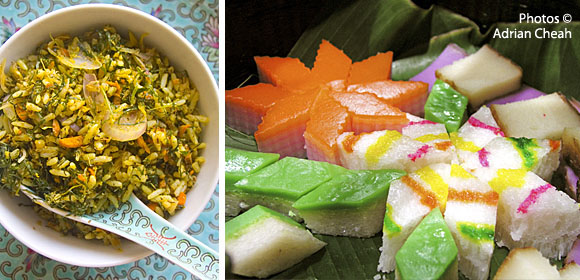
Having a reputation as a food paradise, be it haute cuisine, or cuisine bourgeoise (hawker fare), Penang offers a heady and exotic mix of delicious cuisine to choose from.
In a word, Penang food is both famous and fabulous. When people mention Penang food, they are more often than not referring to hawker food and coffee shop dining. It is true that some of the hype is overblown but it cannot be denied that Penang is home to many uniquely delicious chow. Ironically, hawkers in other states or towns have been known to pull the crowd by simply advertising their food as hailing from Penang, regardless of its authenticity or quality. Then there are the Penang hawkers who advertise their cuisine as specialties from another state, like Johor bak kut teh, Ipoh chicken and bean sprouts or laksa Kedah. In short, an infinite variety of dishes are yours to savour – all you need to do is pick and choose.
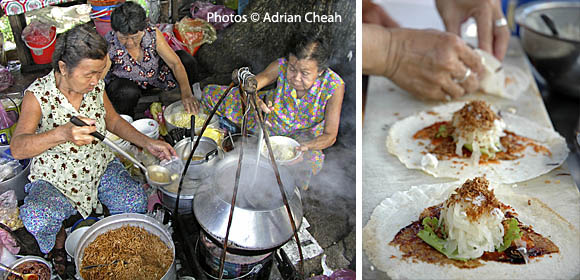
Penang hawker food can be broken down roughly into several varieties, with each being attributable to Penang's multi-cultural character: Nyonya, Chinese, vegetarian, Indian, Malay, Hakka-styled Western, seafood and desserts. Hybrids are also known to exist, and some famous examples are Malay-style chicken rice and char koay teow, and Chinese satay and nasi lemak. The prices are cheap and reasonable.
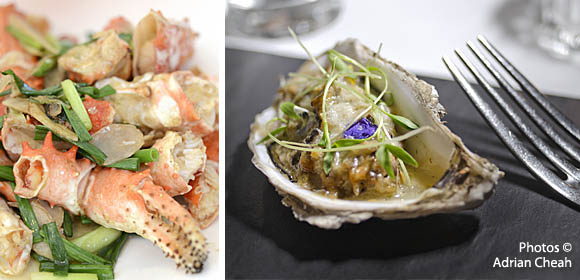
With fishing being a major economic activity on the island, Penang is naturally a haven for seafood, and a handful of restaurants have already achieved legendary status among locals and foreigners. Tucked away in remote corners, these eateries are not easy to find without local guidance but are definitely worth the extra effort to seek out.

Desserts play a major role in Penang gastronomy. There are as many varieties as there are races in Penang! To mention a few would do injustice to the rest, so you would just have to let your nose and eyes be your guide. A word of warning though – most local desserts tend to be sweet and rich, as coconut milk, flour and sugar are the main ingredients.

Thanks to early Chinese migrants, Chinese cuisine ranges from Cantonese to Teochew to Hokkien to Hainanese to Szechuan cooking. There's also Penang Nyonya food, which is a combination of Chinese, Malay and some Thai. The Penang variety of Nyonya food, apparently, is different from the Malaccan or even Singaporean versions. For a touch of luxury, try a five or ten-course Chinese meal at one of the restaurants or hotels in town.

Indian cuisine goes by two names generally – banana leaf rice and nasi kandar. Both are hot and savoury with rice being the main staple, and a menu from north Indian tandoori and nan bread, to South Indian rice and chapati.
Nasi kandar is famously popular with Penangites, and many restaurants selling it are well known not only to those on the island but those in other states as well. It is quite common to find people from other states detouring to Penang just to stop for a meal of nasi kandar before continuing on their journey elsewhere...
Indulge! Savour!
---------------------------------------------------------
Written and photographed by Adrian Cheah © All rights reserved
Updated: 6 March 2019
Homegrown favourites Article Count: 28
Glorious food: Homegrown Favourites
Penang and hawker food are inextricably linked. Never the two be torn apart! It is not very surprising then that when one thinks of Penang food, the mind automatically conjures up visions of freshly cooked hawker fare. Whether you are a local or a tourist, hawker fare has something to satisfy many palates. Best of all, eating out at hawker stalls would not break the bank.
The varieties of hawker fare and hawker centres are seemingly endless, and there are plenty to choose from at almost any time of the day. It is prudent to leave your stomach with a little room for some of Penang’s famous dessert or snacks – before or after a meal.
Ice kacang

Ice kacang, the mother of all Malaysian desserts, is also known as ang tau s'ng (Hokkien for iced red beans) or ABC (ais batu campur in Malay). Although “kacang” means beans in Malay, this jubilant offering contains more than just ice and beans. Brimming in a bowl, the colourful concoction is made of a tower of shaved ice swirled with a mixture of red beans, leong fan (grass jelly or cincau in Malay), creamy sweet corn, chewy tapioca pearls and translucent attap chee (nipa palm fruit), smothered with at least two types of syrup and evaporated milk. You can further top it with a scoop of ice cream (especially durian, making it even more sinful).
If you are visiting Penang, this is a super-cool dessert that you have to add to your list of must-try items. It makes a rewarding icy treat especially in the tropics when the sun shows no mercy. Ice kacang is available at most food courts throughout Penang including some roadside stalls. Here are some venues where you can enjoy a bowl of good ice kacang (in no particular order):
- Kek Seng Cafe, 382 & 384, Jalan Penang
- Swatow Lane Ice Kacang, E, 102, 1, Jalan Burma, George Town
- Medan Selera at Taman Free School, 75, Jalan Terengganu, Taman Free School
- Penang Road Famous Teochew Chendul, 27 & 29 Lebuh Keng Kwee, George Town
- Presgrave Street Hawker Centre, 67D, Lebuh Presgrave, 10300 George Tow
Cendol/Chendul

Cendol/chendul is an iced sweet dessert that contains strands of green jelly served with fresh coconut milk and fragrant gula Melaka (palm sugar) syrup. This humble-looking offering certainly has its irresistible charms. Cendol tastes even better under the sweltering tropical heat. The cool, refreshing concoction is commonly found throughout Penang. Some stalls offer additional toppings such as boiled kidney beans/red beans, pulut (steamed glutinous rice), sweet corn, sago pearls, diced jackfruit, ice cream and even durian.
For good cendol (in no particular order):
- Penang Road Famous Teochew Chendul, 42, Lebuh Keng Kwee, 10100 George Town. Opens daily: 10:30 am – 7:00 pm
- Penang Road Famous Chendul, 25, Lebuh Keng Kwee, 10100 George Town. Opens daily: 10:30 am – 7:00 pm
- Cendol Asli Pak Haji, Pantai Miami, 11100 Batu Feringghi, Penang. Opens daily: 11:00 am – 7:00 pm except for Fridays and Sundays (12:00 – 4:00 pm)
- Kulim Best Cendol, No 12, Tingkat Tenang, Taman Tenang, 14000 Bukit Mertajam, Penang. Opens daily except Mondays: 11:00 am – 5:30 pm
- Hawker centres and food courts. Most hawker centres and food courts in Penang would sell cendol including New World Park Food Court, New Lane Hawker Centre, Air Itam Market Food Court, Taman Free School Food Court, Batu Lanchang Food Court, Sungai Pinang Food Court, Presgrave Street Hawker Centre, Long Beach Food Court, CF Food Court and Cecil Street Food Court. Some coffeeshops would serve them as well.
Rojak

Fruit and vegetable salad consisting of cucumber, pineapple, nutmeg, unripe mango, cuttlefish and jambu air (rose apple), mixed in a potent sauce of prawn paste, chilli, belacan and crushed groundnuts.

You could also ask for a slice of bang kwang (turnip) topped with rich rojak sauce and grounded peanuts. This is very popular among local kids.
For good rojak (in no particular order): Hock Seng Rojak King at Gat Lebuh Cecil, Gurney Drive Hawker Centre and Esplanade Food Court.
Sotong bakar (grilled squid)

Thin strips of dried squid gently roasted over a charcoal fire eaten with a sweet and spicy sauce, topped with grounded peanuts. The texture of this fishy delight is crispy, brittle and uber delicious. For the best sotong bakar in town, head over to the hawker stalls at Gurney Drive and Esplanade.
Tong Sui (Chinese dessert)

Tong Sui is a Cantonese term to describe sweet soup or custard. It literally means ‘sugar water’ but contains more than just syrup. Tong Sui covers a wide range of Chinese desserts of fruits, beans and jellies in syrup served hot or cold. The choices are bountiful such as red bean soup, peanut soups, almond milk soup with eu char koay (deep-fried cruellers), bee koh moy (black glutinous rice porridge served with coconut milk), gandum (pearl wheat porridge with palm sugar) and bubur cha cha (pearl sago, sweet potatoes, yams, bananas, black-eyed peas cooked in coconut milk) and Leng Chee Kang (a lovely dessert with dried longans, snow fungus, gingko nuts and lotus seeds).
- Dessert Old Time Delight Shop at 78, Lebuh Kimberley
- Sweet Dumpling Tang Yuan at 33, Lebuh Kurau 5, Taman Chai Leng, Perai
- Sweet-i Dessert House at 41, Jalan Nipah, Taman Lip Sin
- Tong Sui Po at 64, Jalan Seang Tek
- Mat Toh Yau at 22, Jalan Penaga, Jelutong
- As well as most hawker centres and market areas throughout Penang
Other goodies
Take the opportunity to savour these specialities listed below
Apom balik and apom manis are among the most lovely delicacies that should never be missed.

One of the most popular apom balik vendors in Penang has to be Apom Guan at Lebuh Burma. Due to the sheer popularity of his apom, expect to wait for a while. Ah Guan adds pieces of bananas and sweet corn in his palm-size apom before folding it in half to form a delicious semicircle of goodness.

Apom manis is a wonderful snack in Penang originating from India that resembles crepes. Swee Kong Coffee Shop at Solok Moulmein in Pulau Tikus serves up good Apom manis. The family-run business has been for over 80 years. There are also many apom stalls dotted all over Penang. The key to a good apom is its crispy skirting and fluffy centre. These paper-thin pancakes are made of eggs and coconut milk – key ingredients in kuih kapit, thus the similarity in its fabulous aroma. Catch skillful apom makers in action as they swirl batter on clay pots.

Eu char koay (deep-fried Chinese crullers) is crispy when fresh and best eaten with a cup of kopi-o. It is also served with porridge, almond cream soup, bak kut teh and even in rojak. These golden brown Chinese puff breadsticks could also be stuffed with various fillings and cook as a dish. Top-quality ingredients and good heat control are key in making good eu char koay.
Available at most markets such as Ayer Itam, Lip Sin and Jelutong. 76, Cintra Street, and Kedai Kopi Kwai Lock in Pulau Tikus also offers good eu char koay.
Gado gado is an Indonesian salad of blanched or steamed vegetables, hard-boiled eggs, potatoes and fried tofu served with a savoury peanut sauce dressing. Sample this delectable dish at Mews Cafe, 77 Muntri Street and Cafe Lagenda at 43, Campbell Street.

Ham chim peng in Cantonese literally means "deep-fried salted dough-bread". It is a deep-fried snack made from salty and sweet dough, filled with red bean paste or glutinous rice. The strong five-spice powder gives ham chim peng its distinct flavour. This popular street food is absolutely delicious when eaten hot.
It is available at most marketplaces and hawker centres. However, the most famous in Penang is at a little unassuming stall located at the junction of Cintra Street and Campbell Street. It opens only in the evenings. This stall also sells pak thong kou (white sugar steamed cake).

Muah chee is made from glutinous rice flour. When cooked, the soft sticky-gooey dough is diced into small pieces and rolled around in a sandy mixture of grounded peanuts, sugar and roasted sesame seeds. These nice little golden nuggets are soft and taste even better when topped with fried shallots.
Uncle Chee Muah Chee at 2, Lebuh Cannon seems to be popular. Sometimes at hawker centres, you can find muah chee vendors on motorcycles or bicycles.
Pie tee or "top hat" is a beautiful and petit hors d'oeuvre of deep-fried pastry shell 'hat' generously filled with a mélange of julienned vegetables topped with fried shallots and a dollop of sauce. The filling and ingredients are almost similar to that of poh piah and it is not surprising if some poh piah vendors do serve pai tee too.
Available at Nyonya eateries and most of the food courts in Penang.
- Kek Seng coffeeshop at 382 & 384, Jalan Penang
- Perut Rumah Nyonya Cuisine at 17, Jalan Bawasah
- Food courts in Penang

Goreng pisang - crispy golden-brown, deep-fried banana fritters are difficult to stop once you start munching on one. Best fried fritters are extremely crispy. Besides banana, try yam, sweet potato, cempedak, green pea, tapioca rolls and tnee kuih (glutinous rice cake) sandwiched between a slice of yam and sweet potato fritters. This snack food is commonly available with street vendors throughout
Penang.
- Tanjung Bungah Goreng Pisang at the corner of Jalan Chan Siew Teong and Jalan Tanjung Bungah
- Roadside stall at Jalan Free School
- Weld Quay Goreng Pisang at 90-A, Pengkalan Weld
- Market Cross Pisang Goreng

Popiah – fresh Chinese spring roll with a filling of grated bang kwang (turnip), carrot, bean sprouts and a sprinkling of shredded omelette, diced bean curd and fried shallots. The name popiah in Hokkien means "thin wafer", which refers to the white crêpe skin which is made from wheat flour. You would find them at most hawker centers.
- Hawker centers at Padang Brown, Gurney Drive, Sungai Pinang, Esplanade
- Padang Brown Hawker at Jalan Perak
- Joo Hooi Café at 475, Jalan Penang
- Kek Seng coffeeshop at 382 & 384, Jalan Penang | T: + +016-412 1300
- Apollo market at Jalan Raja Uda

Putu piring is a rice flour cake with jaggery filling cooked by steaming and best eaten with freshly grated coconut and brown sugar. Besides the traditional saucer-shaped putu piring, there are also other various shapes available. If you see a green version, then pandan extract is added to offer a fragrant aroma to the dish. Usually, putu pring vendors would also sell putu mayong or putu mayam (string hoppers).

You can sample some of these humble yet wonderful offerings at stalls located at Pulau Tikus market area, Jalan Pasar at Little India enclave, Apollo market at Jalan Raja Uda and night markets throughout Penang.
Local fruits

There is nothing quite like a serving of refreshing local fruits, packed around with crushed ice to end a meal. It is also a good opportunity for one to experience the wide variety of local fruits that are in season. Because they are naturally rich in vitamins, minerals and fibres, you could find fresh fruit stalls at virtually every food centre. Should you decide to get some for later, wet markets and supermarkets would be an ideal place to shop.
Tropical Fruit Farm in Teluk Bahang list that they have over 250 types of tropical and sub-tropical fruits. That is indeed a fantastic place to visit of have a feast on local fruits. Recommended local fruits include durian (an acquired taste), rambutan, starfruit, campedak, nangka (jackfruit), mangosteen, dragonfruit, jambu air (rose apple), dukung, chiku, banana, guava, nutmeg, nona (custard apple), soursop, papaya and pomelo.

If you love pickled fruits (locally known as jeruk in Malay), head down to Chowrasta market in Penang Road. Pickled nutmeg, papaya, guava, mango, kedondong, salak, asam kelubi and cermai are among those you should try. They are also available at night markets.
Lipsmacking local biscuits

When talking about Penang's biscuits, tau sar piah (pneah) reigns supreme. It comes with a roll of five pieces. They are available in two varieties – with green (mung) bean filling or with lotus paste filling. Tambun biscuits are a miniaturised form of tau sar pheah with green bean filling and are sold in a box of 16 or 32 pieces.
Freshly baked tau sar piah has a crumbly flaky crust. The savoury green bean paste filling should be soft and moist with a distinct aroma of fried shallots. Simply divine and suitable to be eaten any time of the day. They would also make great gifts.
Coming in at a close second at the popularity stakes is hneoh piah (pneah) – a flattish biscuit with a flaky crust and sticky caramel filling. Both biscuits are available from most shops selling local products or better still, get them fresh, directly from the source:
- Ghee Hiang, 216, Jalan Macalister | T: +604-227 2222 (Penang’s oldest tau sar piah maker)
- Him Heang, 162, Jalan Burma | T: +604-228 6129 (the superstar of tau sar piah)
- Soon Hiang, 36, Jalan Kuantan | T: +6 04-229 5799 (still traditionally made by hand and with heart)

Check out Little India for a variety of Indian crunchies like savoury muruku and kacang putih. If you have a craving for sweet and savoury nibbles Malay style, try pisang manis sira gula, bahulu, pisang abu masin, kerepek ubi masin, kerepek ubi and tempeyek. Available from Chowrasta, Lorong Kulit flea market and night markets (pasar malam) throughout Penang.
---------------------------------------------------------
Written and photographed by Adrian Cheah © All rights reserved
Updated: 7 March 2019
Malay-style cooking Article Count: 18
Glorious Food: Malay-style cooking

Coconut milk, chillies and belacan (shrimp paste) are among the main ingredients in Malay cooking. Rice and curry feature consistently while a must-have side accompaniment with every meal is the spicy sambal belacan, a potent concoction of chillies, shrimp paste and lime juice. Other finger-licking variations of the sambal dip are sambal belimbing which is made with baby star fruit (belimbing), chillies and grated coconut, and ‘sambal kicap’ which consists of cut chillies in sweet soy sauce, tomatoes, shallots and lime juice.
Malay food stalls are a permanent feature in Malaysian streets, whether urban or rural, offering a varied menu of the savoury, spicy and sweet. The stalls are literally a one-stop, drive-in eatery for the busy office crowd in search of a complete meal. After a spicy meal, a refreshing drink to cool the mouth and throat is ais manis or rose syrup served with shaved ice, with or without milk.
Nasi lemak

The favourite breakfast dish for all Malaysians. Nasi lemak is rice cooked with coconut milk and served with spicy ikan bilis (anchovies), peanuts, sambal (spicy gravy), sambal prawn or fish, eggs, long beans and cucumbers. Nasi lemak is available either pre-packed in newspaper and banana leaf or 'buffet' style. The latter allows the customer to choose the lauk (dishes) like sambal squid, fried/hard-boiled egg, fried fish, vegetables, curry chicken or beef to go with the nasi lemak.
Purists say that nasi lemak ought to be eaten in an authentic setting, nasi lemak should be eaten at a mamak teh tarik stall (wooden pushcart with wooden bench and tables arranged by the roadside, normally under a shady tree) and wash it down with a cup of teh tarik (literally translated to mean “Pull Tea” – or tea that is poured in mid-air from one container to another).
Satay

Some say that this dish has Turkish roots. Be that as it may, satay has been available in Malaysia for many years already and is synonymous with Malay cuisine. In the olden days, satay sellers would carry their wares balanced on a long pole and propped on the shoulder, going from house to house in a village, calling out "satay! satay!" Whenever there was an order, the seller would there and then set up the stove, light the fire, roast the satay, and layout the food on a small makeshift table for eating!
Satay consists of beef, goat or chicken bite-size pieces marinated in spices, skewered onto thin sticks and grilled over a charcoal stove. The chef ensures thorough cooking of the meat by fanning the fire and turning the sticks of satay over at the right time. Satay is best eaten with its own spicy peanut sauce, ketupat (rice cakes) cucumber and raw onions.
Nasi Tomato
Tomato flavoured rice with servings of your choice: chicken kurma is recommended, although beef, mutton, seafood, egg and vegetables are also available. This rich meal will keep you sated for a long time. The cost depends on the dishes selected. Nasi tomato is also commonly served at Malay weddings.
Nasi Minyak
Note that the translation of this dish is not, as expected, oily rice but scented rice. Nasi minyak is rice cooked with butter, ginger, coconut milk, spices, raisins and almonds. Very popular at weddings and official functions. When an elder Malay asks a young person when she or he is going to serve nasi minyak, he really means to ask when they are getting married!
Popular Malay lauk (dishes to go with rice)


- Bergedel – a minced beef and potato patty deep-fried to a golden brown.
- Sayur pucuk masak lemak – fern fronds cooked in coconut milk and turmeric. Another variety uses the sweet potato leaf.
- Ikan masak lemak – a mild fish curry cooked in coconut milk and turmeric, which gives the dish its distinct yellow colour.
- Ayam ros – Forget the modern stalls with the electric stove. The best ayam ros (roasted chicken) is made traditionally. A whole chicken marinated in turmeric and spices is roasted over a wood fire which imparts a smoky flavour to the meat.
- Parjeri – pienapple or brinjals cooked in a thick and sweet kerisik-flavoured sauce.
- Gulai masam – skate or mackerel cooked in a sourish stock.
- Ikan panggang – roasted skate eaten with a hot and sourish dip made with tamarinds, chilli padi and onions.
- Ulam – fresh greens like cucumber slices, raw petai, boiled cashew leaves, boiled long beans, fresh cabbage and boiled papaya leaves go into this Malay style salad. Eaten with sambal belacan.
Appetisers, snacks and kuih

- Gado-gado – deep-fried prawn fritters and taukua served with sweet peanut sauce. Usually eaten at tea time.
- Cucuk badak – deep-fried flour pattie with sambal prawn filling.
- Popiah – the Malay/Mamak variety is different from the Chinese. This variation is sweeter and spicier and not sopping wet like the Chinese kind.
- Ketupat – ketupat nasi (made with plain rice) and ketupat daun palas (made with glutinous rice). Both varieties are wrapped in palm leaves and then boiled in water until cooked.
- Lemang – made from glutinous rice and coconut milk, and cooked in a hollowed bamboo. Taste great with rendang or serunding.
- Kueh bahulu – A fluffy sponge cake made of eggs, flour and sugar. It has a slightly crusty outer layer and is quite similar in taste and texture to the French Madeleines.
- Kueh keria – Resembles a doughnut. Made from sweet potato which is first deep-fried and then soaked in sugar syrup and air-dried before eating.
- Kueh lopis – Glutinous rice patty coloured bright green, coated with grated coconut and served with gula melaka (palm sugar) syrup.
- Lepat pisang – steamed mashed banana with grated coconut filling.
- Pulut udang – glutinous rice with sambal prawn filling roasted over a charcoal stove until slightly burnt.
- Seri muka – glutinous rice topped with rich kaya. The mark of a well made seri muka is the softness of the kaya topping, which should be creamy but not runny.
For some good Malay-style cooking, try these places.

- Ani Nasi Campur Gulai Sembilang at Balai Nelayan Jelutong, Tun Dr Lim Chong Eu Expressway | T: +6016 458 4229 | 11:30am – 5:00pm, closed on Sundays
- Cargas Cafe at 978, Main Road, Jalan Bayan Lepas | T: +6016 423 6392 | 9:30 am – 4:00 pm, closed on Fridays
- D'Dapor at 7, Lebuh Union, George Town | T: +604 262 9323 | 11:00am – 10:00pm
- Jawi House Cafe & Gallery at 85 Armenian Street, George Town | T: +604 261 3680 | Opens: 11:00am – 10:00pm, closed on Tuesday
- Lagenda Café, 43, Lebuh Campbell | T: +604 -261 2293 | 11:00am – 11:00pm
- Nasi 7 Benua at Koo Boo Cafe, 231 Jalan Tun Dr Awang, Bayan Lepas | T: +6017 439 7617 | 11:30am – 11:00pm, closed on Sundays
- Nasi Melayu Lidiana at Arked Tanjong Bungah (No. 5), 11200 Tanjung Bungah | T: +6016 415 8686 | 7:00am – 9:00pm, closed on Sundays
- Nasi Campur Wati at Hai Beng Coffee Shop, 216 Jalan Burma, George Town | 10:30am – 7:00pm
- Nurul Ikan Bakar Special at Tun Dr. Lim Chong Eu Highway, Gelugor | T: +6013 455 5430 | Monday-Thursday: 5:00pm -1:00am, Friday-Sunday: 5:00pm – 2:00am
- Padang Brown Medan Selera at Jalan Perak Road and Anson Road, Penang | 7:00pm – 11:30pm
- Projek Nasi Lemak at 498, Jalan Dato Keramat | T: +6018 989 8018 | 12:00pm – 2:30pm, 6:30pm – 11:00pm, closed on Wednesdays
- Restoran Ikan Bakar Din at 6735, Jalan Butterworth, Kampung Permatang Manggis, Kepala Batas | 11:00am – 4:00pm, closed on Fridays
- Restoran Minah at 362 S & T, Sungai Gelugor, Jalan Sultan Azlan Shah | T: +604 658 1234 | 8:00am – 6:00pm, closed on Mondays
- Restoran Nasi Campur Awet Muda at 795-B, Lorong Sungai Dua, Kampung Dua Bukit, Gelugor | T: +6012 494 7478 | 10:00am – 4:00pm, closed on Sundays
- Restoran Nasi Padang Minang at International Hotel, 92 Transfer Road | 11:00am – 3:00pm, closed on Mondays
- Restoran Pen Mutiara at Wisma Nelayan, Pelabuhan LKIM Batu Maung | T: +604 626 4615 | 11:00am – 12:00am
- Restoran Terapung Pulau Aman at 120, Pulau Aman, 14100 Simpang Ampat | T: +6016 495 5125 | 12:00pm – 3:00pm
- Sup Hameed at 48, Jalan Penang | T: +604 261 8007 | 11:30am – 5:30pm, closed on Sunday
---------------------------------------------------------
Written and photographed by Adrian Cheah © All rights reserved
Updated: 5 April 2019
Chinese cuisine Article Count: 39
Glorious food: Chinese cuisine
Penang's Chinese gourmet dishes

Chinese gourmet cuisine is widely regarded as one of the world's finest and the fine dining establishments in Penang mostly serve this cuisine in its authentic form with recipes handed down through generations. In general, there are four main influences in Chinese gourmet cuisine originating from the different regions of China – Hakka, Cantonese, Hokkien and Teochew.
With its roots in the imperial palace and filtered down to the private homes of the rich and powerful and to the restaurants where the privileged entertained, Chinese gourmet dining tends to be lavish and opulent affairs with 8-course and 10-course menus. Peking duck, Beggar's chicken as well as abalone, scallops and fish maw-inspired dishes are some of the more popular choices among the locals.

Chinese restaurants in Penang are popular for banquet functions such as weddings and anniversary celebrations or business lunches or dinners where deals are clinched and favours curried. But for the occasional diner who just wants to have a treat, Chinese gourmet cuisine is still very much affordable with a la carte choices or set menus. Here is a list of restaurants in Penang serving great Chinese cuisine (in no particular order):
- Maple Palace Chinese Restaurant at 47 Jalan Sultan Ahmad Shah, George Town | T: +604-2279690
- Starview Restaurant at 341, Dato Keramat Road, 10150, George Town | T: +604-2266544
- Ang Hoay Lor Restaurant at 260, Jalan Brick Klin, George Town | T: +604-2624841
- Chin Bee Tea Restaurant at 124, Lebuh Noordin | T: +604-2611761
- Chin's Chinese Stylish Cuisine at Tanjung City Marina, Church St. Pier, 8A, Pangkalan Weld | +604-2612611
- CRC Chinese Restaurant at 22, Jalan Pangkor, George Town | T: +604-2289787
- Double Good Restaurant at 28 A, Jalan Tun Dr Awang, 11900 Bayan Lepas | +604 643 4188
- Dragon-I Restaurant at No. 2F-115-118, Queensbay Mall, Jalan Persiaran Bayan Indah | +604-6466888
- Foong Wei Heong Restaurant at 25, Jalan Sri Bahari, George Town | T: +604-2611918
- Goh Swee Kee RestaurantAT 5, Jalan Sri Bahari, George Town | T: +6012-4296736
- Golden River Restaurant at 6, Jalan Sungai Emas, Batu Ferringhi | T: +6012-4428880
- Hainanese Delights at 42, Lebuh King, 10020 George Town, Penang | T: +6012-424 6681
- Hei Yeong Seng Chinese Restaurant at 207-221; 231-245, Jalan Burma, George Town | T: +604-2293623
- Hua Hee Restaurant at 4c-1, Tingkat Kenari, Taman Desaria, Sungai Ara | T: +6017-5352700
- Jade Palace Restaurant at Lot 163D Level3 &4, Paragon Mall, Jalan Kelawai | T: +604-2189191
- Ming Garden at Lot 77-2-28, Penang Times Square, Jalan Dato Keramat | T: +604-2269977
- Tho Yuen Restaurant at 92, Lebuh Campbell, George Town | T: +604-2614672
- Tek Sen Restaurant at 18 Lebuh Carnarvon, George Town| +6012-9815117
- Zhong Hua Restaurant at 488D-G-18-19 Jalan Burma, George Town | T: +604-2299818
Besides Chinese banquets, here are some recommended Chinese dishes at street stalls and hawker centres.
Bak Kut Teh

Chunks of pork ribs, pork belly, assorted mushrooms and bean curd slow-cooked in a dark, aromatic Chinese herbal broth infused with spices is served with plain steam rice or yam rice. Bak kut teh literally means “meat bones tea” in Hokkien. On the side, mix up a batch of your own dipping sauce with diced garlic, sliced red chilli, bird's eye chilli, dark and light soy sauce. Remember to order a plate of eu char koay (deep-fried puff breadsticks) which goes well as a side dish. Bak kut teh is popular in Penang for breakfast and supper.
For the best bak kut teh in town (in no particular order):
- Coffee Island at 77, Persiaran Gurney | T: +604-2272377
- Gurney Carnation Bak Kut Teh at 63, Persiaran Gurney | T: +6012 553 3927
- Zealand Bak Kut Teh and Seafood Restaurant at 62-65, Persiaran Gurney | T: +6017-4738877
- Yi Xiang Bak Kut Teh at 88, Jalan Macalister | T: +604-2298131
- Hong Xiang Bak Kut Teh at 88, Jalan Macalister | T: +604-2298131
- Bak Kut Teh Good Master at 134, Jalan Tembikai, Taman Mutiara | T: +6012-4235896
- Beng Heang Bak Kut Teh at 554-S Jalan Ayer Itam | T:+604-8291906
- Delima Mas Cafe at Gelugor 2, Lorong Delima 6, Green Lane Market | T: +6016-4433304
- Khoon Klang Bak Kut Teh AT 320 J, Jalan Perak, Taman Desa Green
- Lai Xiang Bak Kut Teh at 90, Lintang Mayang Sari 4, Bandar Bayan Baru, Bayan Lepas | T: +604-6439968
- Tiong Lor Bak Kut Teh at No. 51, Lorong Madras | T: +6016-4742930
Bak Chang
Steamed glutinous rice with soy sauce wrapped in bamboo leaves and stuffed with pork, mushroom, dried prawns, salted egg yolk or just white beans. Oily and high cholesterol delight which is a specialty during the Bak Chang festival (fifth moon of the Chinese calendar). Available all year round at roadside stalls in Swatow Lane in the afternoons.
For the Nyonyas they have their own version of chang – pua kiam tea. Still made of glutinous rice but the stuffing differs from that of the traditional bak chang. No soy sauce is being used, leaving the chang white.
Dim Sum
Translated literally means “to touch your heart”. Many beautiful variations of small steamed dumplings made with pork or pork ribs, and dough with meat and prawn fillings. Try also chee cheong fun, broadsheet rice noodles rolled and steamed with prawns, served with light soy sauce. This breakfast fare is now available in the evenings as well. Price differs from restaurant to street stalls, depending on the number of variations consumed.
For the best dim sum in town (in no particular order): Tho Yuen at 92, Campbell Street; and coffee shops along Chulia Street, Kimberly Street, Gottlieb Road, Anson Road and Bali Hai at Gurney Drive.
Dumplings or pau
Dumplings with meat – the Chinese version of the American burger. Other variations include sweet paste instead of meat. Best eaten when warm. Available at most food courts and coffee shops.
Char Koay Teow

The original recipe was said to have used only garlic and soy sauce with lard and was rather popular among labourers. The high-fat content and low cost of the dish made it attractive to them as it was a cheap source of energy. Today, this plate of flat rice noodles has succulent prawns, a handful of bean sprouts, seeham (cockles), a few slivers of Chinese waxed sausage, a dollop of ground chilli paste, kuchai (garlic chives) and an egg, all fried up with chopped garlic in a large spoonful of lard and some good black soy sauce.
Char Hor Fun (Sar Hor Fun)

This dish consists of thick flat rice noodles accompanied by vermicelli wok-fried on high heat with lard, seasoned with dark and light soy sauces until slightly charred. With a good bone broth (either pork or chicken), a tasty gravy is cooked with a host of ingredients including chai sim (choy sum), prawns, thin strips of pork and slices of pig’s liver as well as fish cakes. The gravy is then thickened with tapioca flour and egg (if desired) before being poured over a plate of smoky hor fun. Prior to serving, the dish is topped with slices of char siew (Chinese barbecue pork) and a dusting of white pepper. It is also served with some slices of preserved green chillies.
Chee Cheong Fun
Chee cheong fun is a thin sheet of steamed broad rice noodles rolled into a thick stick. It is served with a sweet sauce, a chilli paste and topped with sesame seeds. Chee cheong fun is available at most food courts, each stall offering their own secret sauces. One of my favourite stalls is located at Genting Cafe in Island Glades. The peanut butter sauce is truly delicious. If you come across chee cheong fun served with cockles curry, order and relish it.
Curry Mee
Wheat base mee in spicy coconut curry soup, garnished with beansprouts, prawn, cuttlefish, cockles, beancurd and mint.
For the best curry mee in town (in no particular order): Corner coffee shop in Lorong Seratus Tahun off Macalister Road in the mornings; hawker center opposite of the Ayer Itam market in the mornings; hawker centres at New Lane, Bangkok Lane and Gurney Drive.
Fried Oyster
Oyster omelet with spring onions and mixed sauce. High cholesterol goodie for the brave-hearted glutton. There is only one stall in Penang that stands tall when compared with others here in Penang. Situated in Carnarvon Street, he sells only in the afternoon and you must taste it to believe it. Also available at most hawker centres.
Hokkien Char
Fried wheat base mee with dark soy sauce and strips of meat, prawns, liver and vegetables. Goes very well with sambal belacan.
Hokkien Mee
Wheat base mee in a special prawns and pork bones enriched soup garnished with beansprouts, kang kong, prawns, egg and pork.
For the best Hokkien mee in town (in no particular order): Coffee shop along with the Ayer Itam bus terminal in the mornings; hawker centres at Gurney Drive and New Lane.
Jawa Mee
Blanched noodles served with tomato-based gravy, garnished with beansprouts, potato, beancurd, egg, prawns, deep-fried flour paste and sprinkled with groundnuts. The fried version is also available on request at most places. For extra kick squeeze in a little lime juice.
Joo Hoo Eng Chye
Steamed cuttlefish served with hei tay (jellyfish), kang kong, sesame seeds, groundnuts and sweet sauce. Available at most hawker centres.
Koay Chap
A special rice noodles (different from koay teow) served in a soup-based dish with duck meat, beansprout and hard boiled eggs.
Koay Teow Th'ng
Rice noodles in savoury soup with beansprouts, fish balls and slices of chicken.
For the best koay teow th’ng in town (in no particular order): Opposite of the Ayer Itam Police Station in the mornings served with slices of pork, minced pork, liver and fish balls; Coffee shops in Hutton Lane, most hawker centers and New Lane hawker centre served with duck meat.
Lok Lok
Lok lok means "dip dip", a hawker version of a steamboat dinner. A wide selection of fresh uncooked food such as seafood ranging from cuttlefish to crabsticks, meat and vegetables are dipped into a central pot of boiling soup to cook. The cooked bits of food are eaten off the skewer after dipping into a nut-based sauce and the cost is calculated according to the number of colour-coded skewers used.
Wan Tan Mee
Cantonese egg noodles served with soup or “dry”. Garnished with pork or wan tan – shrimp balls wrapped in thin dough, vegetables and char siew, strips of sweet grilled pork meat. Try the green preserved chilli. It goes well with the noodles.
For the best wan tan mee in town (in no particular order): Corner coffee shop in Pulau Tikus opposite Church of the Immaculate Conception in the mornings and hawker centres at New Lane and Gurney Drive.
---------------------------------------------------------
Written and photographed by Adrian Cheah © All rights reserved
Updated: 5 April 2019
The spice of India Article Count: 5
Glorious Food: The spice of India

Budget Indian food in Penang is mainly of the South Indian variety. Rice and vegetables are a prominent feature in sumptuous meals like banana leaf rice; white flour-based pancakes and fried rounds of dough with dhall or potato curry are hot favourites for breakfast or tea-time snacks.
Muslim-Indians are a small minority in Penang with great culinary skills. The not-too-politically-correct colloquial slang of “Mamak” is the Malaysian term of description for these people. Their cooking is the merging of Indian and Malay cooking, so expect thick curries with coconut milk and spicy chillies.
Banana leaf rice
Streamed white rice served on banana leaf with an assortment of vegetables, papadom and curried meat to choose from. Best eaten with hands. A sumptuous South Indian meal for any big eater on a budget. Drenched your meal in savoury curries and indulge. Remember to ask for yogurt. It goes well with the meal. Rasam, a spicy, sourish drink is usually taken after the meal.
Here are some venues to enjoy a good banana leaf rice meal:
- Jaya Restaurant at 99, Jalan Penang | T: +604-263 7991
- Muthu’s Traditional Banana Leaf at 143, Acheen Street | T: +6012-421 3090
- Passions of Kerala at New World Park, Jalan Burma | T: +604-227 2550
- Sri Ananda Bahwan at 52 Penang Street; 225 Jalan Macalister; 14, Jalan Tanjong Bungah
- Sri Subham Restaurant at 47, Penang Street
- The Garden Banana Leaf 50 at Jalan Free School | T: +6017-896 2331
- Restaurant Veloo Villas at 22, Penang Street | T: +604-262 4369
- Woodlands Vegetarian Restaurant at 60, Lebuh Penang | T: +604-263 9764
Chapati

A popular Indian unleavened flatbread made with whole wheat flour. Goes with your choice of curry. Costs vary depending on the curry/curries you select – chicken, mutton and sardine or with just the classic dhall. Some cook the rolled-out chapati on charcoal while others on a griddle plate.
Here is some trivia for you. The word "chapat" in Hindi means "slap", "flat" which describes the traditional way of forming rounds of thin dough by slapping the dough between the wetted palms of the hands. This is how chapati got its name. With each slap, the round of dough is rotated.
There are a dime and a dozen choices in Penang and here are some:
- Annalakshmi at Temple of Fine Arts, 1, Babington Avenue | T: +6 04-228 8575
- A stall in front of Restoran Sultania at 57, Lebuh Queen
- Gerai Makanan Dan Minuman Maj, next to 47, Ah Quee Street
- Jaya Restaurant at 99, Jalan Penang | T: +604-263 7991
- Sri Ananda Bahwan at 52 Penang Street; 225 Jalan Macalister; 14, Jalan Tanjong Bungah
- Woodlands Vegetarian Restaurant at 60, Lebuh Penang | T: +604-263 9764
Mee goreng and mee rebus
Mee goreng is yellow noodles, stir-fried over high heat with bean sprouts, potatoes, bean curd, squid and eggs, showered with luscious chilli and tomato gravy and topped with chopped lettuce and a wedge of lime for a tangy touch. Mee rebus uses the same ingredients except that the noodles are blanched and served with a thick gravy flavoured with potato and tomato. These popular noodles are commonly available at most hawker centres.
- Bangkok Lane Mee Goreng at 280, Jalan Burma | T: +604-226 1844
- Edgecumbe Road Mee Goreng at Gurney Drive food court
- Ghani Mee Goreng at Medan Selera Padang Brown, Jalan Perak
- Hameed Pata Mee Sotong at Esplanade Food Court
- Hussain Mee Goreng at Jelutong market
- Jones Road Mee Goreng at 280, Jalan Burma
- Mee Goreng Jalil at Jalan Kenari, 11900 Bayan Lepas
- Mee Rebus at Golden City Restauran, 104, Burmah Road
- MNR Mee Goreng at 64, Bishop St, George Town
- Rasheed Mee Goreng at 22-30, Lebuhraya Jelutong, Taman Jelutong
- Rahim Mee Goreng at 8, Jalan Air Itam
Murtabak

The key components of Murtabak are a mixture of beaten eggs and pre-cooked filling of, minced meat, diced onions and spices. After whisking these components thoroughly in a metal cup with a fork, half of this mixture is poured into the frying pan, topped with a square-shaped roti canai sheet before pouring the rest of the mixture on top of that. It is then sprinkled with ghee. When both sides are cooked, it is removed from the hot plate and placed in the middle a large thinly stretched pastry. The filling is wrapped in the pastry like an envelope and returned to the hot plate and fried till golden brown on both sides. Straight from the hot plate, this paper-thin outer skin is crispy encasing a delicious filling within. Murtabak is commonly served with pickled onions and your choice of curry.
Nasi Briyani
Rice cooked with spices and 'ghee' accompanied by a choice of curried dishes. Kurma Chicken is recommended as the top choice. Goes well with air manis or a glass of iced rosed syrup drink. For the best nasi briyani in town (in no particular order): Hameedeyah Restaurant at Campbell Street; Taj Restaurant at Campbell Street
Nasi Kandar
Indian muslim rice with curried dishes. Derived its name from the shoulder poles (kandar) used by vendors of the past. The assortment of curried squids, chicken, fish, and prawns are worth a try. For the best nasi kandar in town (in no particular order): Taj Restaurant in Campbell Street; coffee shop opposite Gama Departmental Store; Kayu Nasi Kandar at Bukit Jambul and Penang Road.
Pasembur
Indian salad comprising of shredded cucumber, turnip, bean sprouts, beancurd, and potatoes topped with prawn fritters, spicy deep-fried crab, and octopus, covered with a generous spread of spicy nutty sauce. For the best Pasembur in town (in no particular order): Hawker stalls at Esplanade and Gurney Drive.
Roti canai

Also known as roti paratha, it is a flaky, moreish flatbread made with flour, water, salt, a little sugar and fat. The ingredients are mixed and kneaded into a dough. After resting the dough, it is divided and rolled into palm-size balls. The rested dough ball is stretched; held at a corner, it is then flung in the air onto the oiled work surface twice or thrice, stretching it paper thin before folding to obtain a layered texture. Pan-fried on a griddle with oil till golden, the wonderfully cooked bread is fluffy, layered, flaky and crunchy on the outside and slightly soft and chewy inside. Adding more ghee (traditional Indian clarified butter) or butter to the cooking process will enhance its flavours further.
Tosei
Indian savoury pancake made from rice flour and served with curry. Served with your choice of curry.
Tandoori chicken
Punjab's most famous contribution to Indian cooking has to be the tandoor – an oven made from clay, a simple artifact which does many things like bake bread or roast chicken on long skewers. Savour this authentic tandoori chicken usually served with nan bread and curries. For refreshments, try the fresh tang of lassi (yogurt drink), with choices from mango to rose and more. Available at most Indian restaurants and nasi kandar shops throughout Penang.
Nyonya food Article Count: 23
Glorious Food: Nyonya food

Nyonya cooking is peculiar only to the Chinese of Penang, Malacca and Singapore. In a nutshell, the Peranakan culture is itself a melding of two distinct groups, namely the Chinese who settled in Southeast Asia in the 19th century and the local Malays. Out of this intermixture came forth interesting customs and traditions hitherto non-existent. Much of Nyonya cooking is inspired by the rich spices of Malay cooking featuring local herbs and ingredients. However, in Penang, Nyonya cooking also has a very strong Thai influence, borrowing soury and fiery flare from their neighbouring country.
Their distinct curries and spiced salads like acar and kerabu are simply delicious. Typical Nyonya savoury dishes include otak-otak, ayam pongteh, devil's curry, tauyu bak, pai tee, assam pedas, kari kapitan, inche kabin, roti babi, babi chin, kangkung belacan, assam laksa, laksa lemak, ayam buah keluak masak assam, geram asam and itik tim. Nyonya desserts and cakes are also hot favourites.
Cendol/Chendul
Cendol is a favourite dessert among locals. It is easily identified: green pandan-flavoured noodles, kidney beans in white coconut milk with palm sugar. Sweet heavenly stuff – super cheap and ultra good.
For good cendol (in no particular order): Teochew Chendul off Penang Road, Gurney Drive Hawker Centre, Taman Free School food court and Lorong Selamat coffee shop.
Laksa

Penang laksa is extremely popular, especially among locals for its wonderful balance of spicy, sweet and sour flavours. This is strictly a hawker treat, as one is unlikely to find great laksa in a fancy restaurant. It is basically made out of coarse rice noodles in a sour fish in assam-base gravy, plus a robust combo of onions, sliced chilli, cucumber, pineapple and bunga kantan (ginger buds); topped with a swirl of thick, black shrimp paste sauce. There is also an alternative variant called Siam laksa, which has a coconut milk-based soup instead of assam (tamarind).
Available at most hawker centres in Penang. For delicious laksa (in no particular order), try:
- Ayer Itam Laksa beside the wet market | 11:00 am – 8:0 0pm
- Kim’s Laksa at 20, Jalan Sungai Air Putih, Bandar Baru Air Putih, 11000 Balik Pulau | +6012 428 6235 | 11.00 am –5.00 pm | Closed on alternate Mondays and every Tuesday
- Café Ko Cha Bi Balik Pulau at 110, Jalan Balik Pulau | 10:00 am – 6:00 pm
- Bee Hooi Restaurant at 415, Jalan Burma | 6:00 pm – 10:00 pm
- Cecil Street wet market and hawker centre | 8:00 am – 5:00 pm
- Gurney Drive hawker stalls in the evenings
- Kek Seng Coffee Shop at 382 & 384, Jalan Penang | 9:00 am – 5:00 pm
- Kedai Kopi Sin Hwa at 329, Jalan Burma | 10:30 am – 4:30 pm
- Laksalicious at 123, Hutton Lane, 10050 George Town | 11:30 am – 7:30 pm
- Laksa Tempurung Ombak Damai at Jalan Gertak Sanggul, Kampung Suluk | (Monday –Thursday) 3:00 pm – 7:30 pm (Saturday & Sunday) 12:30pm – 8:00pm (closed on Fridays)
- One Corner Cafe at 4-8, Jalan Bawasah | 7:00 am – 2:00 pm
- Penang Road Famous Laksa at 5, Lebuh Keng Kwee, Off Penang Road | 9:00 am – 6:00 pm
- Shell Station Laksa @ Farlim at 1-G-01, Jalan RU 1, Bandar Baru Air Itam | 11:00 am – 7:00 pm (closed on alternate Tuesdays)
- Taman Emas Laksa at 1, Jalan Gottlieb | 12:00 noon – 5:15 pm (closed on Mondays)
Loh bak

Loh bak is a pork roll wrapped with bean curd skin and deep-fried until crispy. The filling includes strips of pork marinated in five-spice powder and various ingredients such as water chestnuts, jicama, carrot and onions. Loh bak is available at most hawker centres throughout Penang. Alongside loh bak, you would be happy to find other companions on offer too such as prawn fritters, spring rolls, fish fritters, fried bean curd, baby octopus as well as century eggs with pickled ginger. Select what you fancy and a plate of these scrumptious delights would be served with sides of freshly cut cucumber and starchy soy-flavoured and chilli dipping sauces.
For the best loh bak in town (in no particular order):
- Kafe Ping Hooi at 179, Lebuh Carnarvon | 8:00 am – 2.30pm
- Kheng Pin Cafe at 80, Penang Road | 7:00 am – 3:00 pm
- Taman Free School Food Court at 75, Jalan Trengganu | 1:00 pm – 10:00 pm
- Tan Jetty Loh Bak at 90-A, Tan Jetty, Weld Quay | 8:00 am – 6:00 pm
- Chulia Street Night Hawker| 6:00 pm – 12:00 pm
- Joo Hooi Café at 475, Jalan Penang | 11:30 am – 5:30 pm
- Hon Kei Food Corner at 45, Kampung Malabar | 9:00 am – 3:00 pm, 5:00 pm – 12:00 am
- Kedai Kopi Seng Thor at 160, Lebuh Carnarvon | 2:00 pm – 5:00 pm
Nyonya kuih


Nyonya kuih include a wide selection of colourful, dainty bites such as angku, bee koh, kuih talam, kow chan kuih, seri muka, pulau tai tai, abuk abuk, onde onde, kuih kosui, pulut inti, rempah udang, kuih tayap, kuih koci and kuih bengka.
For the best Nyonya kuih in town (in no particular order):
- Nyonya Kuih stalls at Ayer Itam Market, Batu Lanchang Market, Cecil Street Market
- Kuih Nyonya Moh Teng Pheow at Jalan Masjid (off Chulia Street) | T: +6012 415 2677
- Mama Kuih at Apollo Market, Jalan Raja Uda | T: +6012 489 8368
- Genting Cafe at Lorong Delima 3, Taman Island Glades
Nyonya dishes


Must try Nyonya dishes are kiam chye boay, joo hoo char, otak-otak, sambal boreng, acar awak, perut ikan, asam prawn, asam pedas, nasi ulam, kerabu beehoon, kerabu kacang botol and curry kapitan.
To sample some of the best Nyonya dishes in town, try these restaurants:
- Auntie Gaik Lean's Old School Eatery: 1, Lebuh Bishop | T: +6017-434 4398
- Bibik's Kitchen Nyonya Cuisine: 73, Jalan Sri Bahari | T:+6012-669 7488
- Little Nyonya Kitchens: 179, Lebuh Noordin | T: +604 261 6731
- Ivy's Kitchen: 58, Jalan Chow Thye | T: +6013 433 7878
- Kebaya Dining Room: Seven Terraces, Lorong Stewart | T: +604 264 2333
- Mama's Nyonya Cuisine: 31-D, Lorong Abu Siti | T: +604 229 1318
- Putri Nyonya: 168 Lebuh Mcnair | T:+6010-249 3684
- Nyonya Breeze Desire: 3A-1-7, Straits Quay, Tanjung Tokong | T: +604 899 9058
- Nyonya Su Pei Private Dining: 53, Jalan Padang Victoria | T: +6016 410 6116
- Richard Rivalee Nyonya Cuisine Restaurant: 62 & 64, Lorong Macalister | T: +604 227 4888
---------------------------------------------------------
Written and photographed by Adrian Cheah © All rights reserved
Updated: 23 December 2022
Foreign flavours Article Count: 78
Glorious Food: Foreign flavours

International tourists and ex-pats need not worry as there is an assortment of international food outlets and restaurants to remind them of home. Locals often patronise them for a change in diet . . . actually Penangites are game to eat anything, anywhere. Most of the international restaurants are pricey compared to local pricing standards.
Neapolitan delights
The Italians have great skills with pasta, turning this basic staple into a virtual encyclopaedia of dishes, ranging from marinara to lasagna.
- Barista Cafe & Casa de Pizzeria at 133 Jalan Masjid Kapitan Keling | T: +604-261 5013
- Bella Italia at 368-1-7, Jalan Burma | T: +604-227 2195
- Elmondo Italian Western Cuisine at 1-1-3 E-gate, Lebuh Tunku Kudin 2 | T: +604-659 2328
- Il Bacaro at 106 Campbell Street | T: +604-261 8290
- Jaloux at 24, King Street | T: +6016-452 9882
- Lunarich One Precinct Pizza & Pasta at Lengkok Mayang Pasir, 1B-G-31, Bayan Baru | T:+604-611 5340
- Mario’s Italian Cuisine at 88, Lintang Bukit Jambul | T: +6019-472 5837
- Markus Restaurant at 37F, Jalan Cantonment | T: +604 226 1443
- Pizzaiola at 33-SB-03, Jalan Dr Lim Chwee Leong | T: +604-250 5501
- Via Pre Italian Restaurants at 20E, Lebuh Penang | T: +604-262 0560
- Viva La Pasta at 96, Jalan Rangoon | T: +604-226 7618
Japanese temptations

The cuisine of Japan has enjoyed an unprecedented boom in popularity here in Penang. The Japanese believe a feast begins with the eyes and the presentation of even the simplest dish is always a masterpiece of colour and texture. Japanese temptations include sushi (seaweed paper spread with rice and topped with one or more fillings), sashimi (thin slices of raw fish), sukiyaki, tempura and teppanyaki.
- Aji Noren at 98-G-35, Prima Tanjung, Jalan Fettes | T: +604-899 4720
- Azuma Japanese Restaurant at Queensbay Mall, Bayan Lepas | T: +604-641 3118
- Dozo, Penang, No. 1-1-26, 27 & 28 (Ground Floor), SummerSkye Square, Jalan Sungai Tiram 8, 11900 Bayan Lepas | T: +604 608 6296
- Edo Ichi Japanese Restaurant at G05 & G06, Island Plaza, Jalan Tanjung Tokong | T: +604-890 3199
- Ginza Japanese Restaurant at 118, Jalan Tanjung Tokong, Tanjong Takong | T: +604-890 9918
- Hachiban Izakaya, Level 1, 32, Jalan Kelawei, 10250, George Town | T: +6016 617 8228
- Kaze Japanese Restaurant at Icon City, Bukit Mertajam | T: +604-611 8489
5-G-1, Promenade, Persiaran Mahsuri, Bayan Baru, | T: +6012-408 9980 - Kazumasa Japanese Restaurant, Fettes 10, 50C-1 Jalan Fettes, 11200 Tanjung Bungah | T: +6018 297 1886
- Kirishima Japanese Restaurant at Cititel Penang, 66, Jalan Penang | T: +604-370 0108
- Matsu at Lone Pine Hotel, 97, Jalan Batu Ferringhi | T: +604-886 8686
- Miraku Restaurant at 1st Floor, G-Hotel, 168A, Pesiaran Gurney | T: +604-229 8702
- Oh Sushi Japanese Restaurant at 3E-G-5, Block E, Straits Quay, Jalan Seri Tanjung Pinang | T: +604-899 0109
- Shunka Japanese Restaurant at 124 E, Jalan Burma | T: +604-228 3889
- Sushi Tei at Gurney Plaza, 170, Persiaran Gurney | T: +604-226 1486
- Sushi Zento at 10-A-11&12 Jalan Precinct 10, 10470 Tanjung Tokong | T: +604-899 2725
- Tsuruya Japanese Restaurant at I-avenue, 1-1-25, Medan Kampung Relau 1, Bayan Lepas | T: +604-641 0828
Thai cuisines

Thai chefs are skilled in whipping up tongue-tingling delights at Penang's top Thai restaurants. A local favourite is tom yam soup with its fiery, rather acidic blend of flavours. Pandan chicken, featuring morsels of chicken barbecue in pandan leaf, is also extremely popular.
- Aroi Thai Restaurant at 387, Jalan Burma | T:+604-227 6771
- Blue Chang Mordern Thai Cuisine at 417, Jalan Burma, Pulau Tikus | T:+6010-274 7351
- Bukit Genting Hill Leisure Park and Restaurant, Lot 569, Bukit Penara 7, 11000 Balik Pulau | T: +6016 492 8778
- ChiliHead Social Bar & Eatery AT 3A-G-11 Straits Quay, Tanjung Tokong | T: +604-890 3009
- Chok Dee Thai, 231-D, Jalan Burma | T: +604-229 1492
- Khunthai Restaurant at 1052, Mukim 9, Pasir Belanda, Teluk Kumbar | T: +604-625 1155
- Khunthai Restaurant at 7, Jalan Bunga Raya Merah 3, Permatang Tengah, Butterworth | T:+604-332 7523
- Krung Thep Thai Restaurant at 118, Lorong Selamat | T: +6011-1252 1693
- Sebai Sebai Thai Restaurant at 1, Lintang Batu, George Town | T:+604-656 8891
- Sebaidee Thai Restaurant at 1, Batu Green, Taman Jelutong | T: +604-656 8891
- Wayla Kin Authentic Thai & Western Cuisine at 41 Jalan Sultan Ahmad Shah | T: +604–218 9663
Western and continental fare

Fast-food chains such as Mc Donalds, Pizza Hut, Colonel Sanders' famous Kentucky Fries Chicken and Kenny Rogers' Chicken are everywhere and Penang. On the other side of the coin, you have fine dining restaurants offering a wide range of Continental cuisine. You can feast on wild game dishes, slice through a done-to-perfection steak or sample succulent Boston lobsters and leave some room for sinful desserts and treats.
- Ferringhi Garden Restaurant, 34C, Batu Ferringhi, 11100 Penang | Tel: +604 881 1193
- Indigo, 14, Leith Street, 10200 Penang | T +604 262 0006
- Java Tree, Eastern & Oriental Hotel, 10 Lebuh Farquhar, 10200 George Town | T: +604 222 2000
- La Vie Restaurant, Le Dream Boutique Hotel, 139 Jalan Pintal Tali, George Town | T: +6012 402 1342
- Le Venue, 80, Lebuh Tye Sin, 10300 George Town | T: +604 251 9833
- Restaurant Au Jardin at The Warehouse, 125, Jalan Timah, George Town, 10300 Penang | T: +604 218 9594
- Sigi’s Bar & Grill, Golden Sands Resort by Shangri-La, Batu Feringgi Beach | T: +604 886 1852
- The Book Sandwich Cafe, 205 Lebuh Pantai, George Town | T: +604 261 3445
Middle Eastern meals

Middle Eastern cuisine spanning parts of three continents includes Arab, Persian, Jewish, Assyrian, Kurdish, Cypriot and Turkish dishes. The cuisine of the region is diverse comprising primarily of hummus, falafel, tahini, tabouleh, baklava, pita bread, baba ghannouj, foul mudammes and lokum as well as various meats and vegetables. Their style of cooking incorporates heavy use of olive oil and a diverse variety of spices. Indulge and sample authentic Middle Eastern meals in Penang as there are good restaurants located within the heart of the city, along Tanjung Tokong and Batu Feringghi.
- Al-Araby Mathaam at G3-G4, Tesco Extra Seberang Jaya | T: +6013-5000 900
- Al Shami Restaurant at Plaza Ivory, Halaman Bukit Gambir | T: +6019-232 0121
- Dandy Modern Food at 72-1-17, Arena Curve, Jalan Mahsuri | T: +6017-557 3141
- Khayrat Al-Sham Restaurant at Lot 15, Ground Floor, Lebuh Sungai Pinang 5 | T: +604-283 3859
- Lebanon Restaurant at 15, Jalan Tanjung Bungah | T: +604-891 7228
- Halab Penang at 381, Chulia Street | T: +604-251 9550
- Mr. Shawerma at 273a, Chulia Street | T: +604-251 9590
- Nasi Bukhari Mendi Sajid Khan at 2-1-25, Plaza Ivory, Halaman Bukit Gambir | T: +6017-427 2115
- Restaurant Qasar Hadramawt at 9, Ground Floor, De’ Rendezous, Jalan Perda Selatan, Bandar Perda, Bukit Mertajam | T: +604-537 2673
- Rubin Mardini Cafe Restaurant at 389 Jalan Batu Ferringhi | T: +6014-910 0478
---------------------------------------------------------
Written and photographed by Adrian Cheah © All rights reserved
Updated: 15 May 2021
Where to stay Article Count: 7
Where to Stay
George Town

From dusk to dawn and city lights to beach settings, the accommodation that awaits each visitor to Penang is a sure sign of our gracious hospitality. For the unfussy visitor who is here on a budget, yet keen to experience our local hospitality in its simplest form, the suitably located hotels in George Town, along Chulia Street and Penang Road would be ideal.

With towering KOMTAR setting the landmark, visitors can easily find their way around; taking to the heels or by way of the ever-popular trishaw, at an affordable price. For the more selective traveller who wants a bit of the same action, but chooses a more refined and luxurious environment, there is a whole range of choices ranging from 3-star hotels to 5-star hotels. These city hotels located conveniently along George Town are just right for the entrepreneur who has to be in the city's vicinity.

- 23 Lovelane
- Bayview Hotel Georgetown
- Chulia Heritage Hotel
- Cititel Penang
- Cocoa Mews
- Deluxcious Hotel
- Eastern & Oriental Hotel
- Evergreen Laurel Hotel
- G-hotel
- Georgetown City Hotel
- Jawi Peranakan Mansion
- The Gurney Resort Hotel & Residence
- Hotel Continental
- Hotel Malaysia
- Hotel Mingood
- Hotel Penaga
- Hotel Royal Penang
- Hotel Sentral Georgetown
- Mango Tree Place
- Muntri Grove
- Muntri Mews
- Noordin Mews
- Northam All Suite
- Oriental Hotel Penang
- Red Inn Cabana
- Red Rock Hotel
- Seven Terraces
- Straits Heritage
- Sunway Hotel Georgetown
- Traders Hotel
- Tune Hotels.com
Batu Feringghi and Tanjung Bunga

Penang's famous beach hotels and resorts are our pride and joy. Located along one of the finest beach paradises in Southeast Asia, they guarantee relaxation, sun and enjoyment that is so characteristically Penang. These famous beach hotels are strictly for those who come to Penang for a bout of relaxation.

The ever-popular guest houses are another quiet attraction not widely known even among locals. Superbly situated along Batu Ferringhi's beachfront and uniquely camouflaged by greenery, some of these guest houses are old colonial houses that have been left to make a name for themselves. Turned into Guesthouses, they provide an atmosphere of historical significance, with the beaches to complete the setting.

- Bayview Beach Resort Penang
- Chymes
- Copthorne Orchid Hotel
- Flamingo Hotel by the Beach
- Golden Sands Resort
- Hard Rock Hotel
- Hydro Hotel Penang
- Holiday Inn Resort
- Lone Pine Hotel Penang
- NAZA Talyya Hotel Penang
- Parkroyal Penang
- Rainbow Paradise Beach Resort
- Shangri-La's Rasa Sayang Resort & Spa
- Tanjung Bungah Beach Hotel
Bayan Lepas and Bukit Jambul

Bayan Lepas is Penang's main industrial hub with the strategically located within is Penang International Airport. Penang's largest shopping mall, Queensbay Mall and many interesting attractions such as the Snake Temple and the War Museum are also located in this area. This location is ideal for business travellers who wish to stay nearby the Free Trade Zone at Bayan Lepas where most of the major multinational engineering firms are located. Below is a list of accommodation in Bayan Leaps and Bukit Jambul area, ranging from luxury suites to budget motels.
- B-Suites
- Century Bay Private Residences
- Eastin Hotel
- The Krystal Suites
- Jerejak Resort and Spa
- Vistana Hotels
Seberang Prai (Mainland)

Butterworth is the principal town of Seberang Perai in Penang. Named after William John Butterworth, Governor of the Straits Settlements (1843–1855), Butterworth was established in the mid-19th century as a landing place across the channel from the capital of Penang, George Town. Butterworth is the site of the Malayan Railway station for Penang and is linked to the island by the Penang Ferry Service and by the Penang Bridge. Seberang Perai is home to the Penang Bird Park.
Faces of Penang Article Count: 12
Faces of Penang
Ordinary people who make Penang Extraordinary
Penang is not just about its hot weather, tasty food, and wonderful heritage buildings. A great part of the delight of living here is the friendliness of the everyday encounters with ordinary Penangites. Neither obsequious nor snooty, most possess a genuine warmth and an interest in people that sets them apart. Join us as we celebrate a few of the human jewels of Penang.
AC Photography Article Count: 0
AC Photography
"I love photography, freezing a moment and revealing how rich reality truly is." – Adrian Cheah

Adrian Cheah loves to capture the timeless images of life, of Penang and almost anything that is captivating with the trusted eye of his camera. Hundreds of his photographs have appeared in coffee table books, scientific journals, ad campaigns, book covers, websites, brochures, newspapers and magazines.
Events and functions Article Count: 15
AC Photography: events and functions
I would love to capture your milestone event, corporate function, or community fundraiser. From the setup to the décor and interacting with the guests, I know just what needs to be done to get the best shots that capture the mood of your event. Over the years I have worked with some amazing companies and been privileged to be a part of fantastic launches and events. Looking forward to sharing an exciting event photography experience with you!
Food Article Count: 3
AC Photography: Food
A photograph that perfectly captures the essence of a dish is vital in the food industry. To achieve this, it is important to understand how to draw out its aesthetic beauty from the ideal lighting to creative composition and from artistic plating to necessary editing. Mouth-watering photographs will have to do more than pique your interest or make you salivate, they have to move you to take action – to walk into the restaurant or order online. I am enthusiastically passionate about food; I love to cook, eat and above all, photograph scrumptious delights that will make you go hungry. Let me capture food that looks so real and inviting that would make a difference in your business.
Interior and exterior spaces Article Count: 1
AC Photography: interior and exterior spaces
Globetrotting Article Count: 16
AC Photography: Globetrotting
The travelling bug bit me at a very early age. My fascination with life and the many facets it offers, stretching throughout the four corners of the world is simply diverse and beautifully astounding. My father gave me his Japan-made Topcon camera when I was in college, the first camera that led me on a fascinating journey of discovery, immortalising a fraction of a second for life. Here are some of the photographs and stories of my travels.
Books and websites Article Count: 5
Books and websites
The Artist Article Count: 1
The Artist
Emil Goh (1966 – 2009) Article Count: 0
The eternal flame – remembering Emil Goh 1966 – 2009

Emil Goh was an artist, designer, traveller, foodie, people person. He was born in Malaysia on 6 March 1966 and studied psychology (Newscastle University) and then Fine Art (Sydney University), developing his practice across different media, particularly video and photography. Emil exhibited extensively throughout Australia and internationally. He moved to Seoul in 2004. At age 43 on 7 September 2009, he passed away due to a heart attack at his apartment in Seoul.
Foreword Article Count: 3
Foreword
Emil Goh was an artist, designer, traveller, foodie, people person. He was born in Malaysia on 6 March 1966 and studied psychology (Newscastle University) and then Fine Art (Sydney University), developing his practice across different media, particularly video and photography. Emil exhibited extensively throughout Australia and internationally. He moved to Seoul in 2004. At age 43 on 7 September 2009, he passed away due to a heart attack at his apartment in Seoul.
Bio Article Count: 1
Bio
Art works Article Count: 5
Art works
Photo gallery Article Count: 9
Photo gallery
Tributes Article Count: 27
Tributes
Lemaklicious Article Count: 153
Lemaklicious

Lemaklicious illustrates my passion for good food. "Lemak" is a Malay word that means more than just "fat" or "rich in taste". It can be used in any context, always bring with it a luxurious feeling of creamy and rich indulgence that is equally satisfying and rewarding. Hence, it is most fitting that I fuse "lemak" with "licious" (from delicious) to sum up my love affair with food.
I grew up in Penang, surrounded by a large Peranakan family, so it is no wonder that I became passionate about food. The food we ate was very traditional – delicious Nyonya recipes based on fresh ingredients. Over the years, I recreated the taste of home or other delicious dishes which I have tasted around the world. I came to learn that preparing food is not just about the recipe itself but also its ingredients and awareness for choosing each element to create a dish. Enjoy and indulge!