The best laksa in Balik Pulau

Penang laksa is extremely popular, especially among locals for its wonderful balance of spicy, sweet and sour flavours. This is strictly a hawker treat, as one is unlikely to find great laksa in a fancy restaurant.
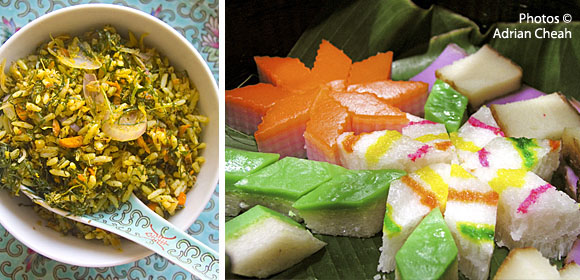
Having a reputation as a food paradise, be it haute cuisine, or cuisine bourgeoise (hawker fare), Penang offers a heady and exotic mix of delicious cuisine to choose from.
In a word, Penang food is both famous and fabulous. When people mention Penang food, they are more often than not referring to hawker food and coffee shop dining. It is true that some of the hype is overblown but it cannot be denied that Penang is home to many uniquely delicious chow. Ironically, hawkers in other states or towns have been known to pull the crowd by simply advertising their food as hailing from Penang, regardless of its authenticity or quality. Then there are the Penang hawkers who advertise their cuisine as specialties from another state, like Johor bak kut teh, Ipoh chicken and bean sprouts or laksa Kedah. In short, an infinite variety of dishes are yours to savour – all you need to do is pick and choose.
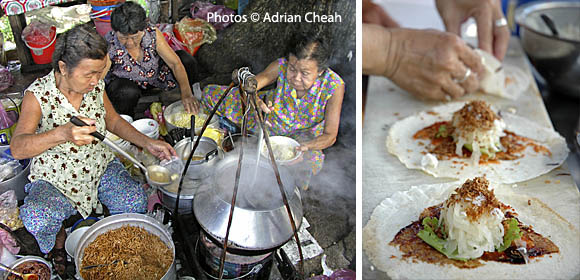
Penang hawker food can be broken down roughly into several varieties, with each being attributable to Penang's multi-cultural character: Nyonya, Chinese, vegetarian, Indian, Malay, Hakka-styled Western, seafood and desserts. Hybrids are also known to exist, and some famous examples are Malay-style chicken rice and char koay teow, and Chinese satay and nasi lemak. The prices are cheap and reasonable.
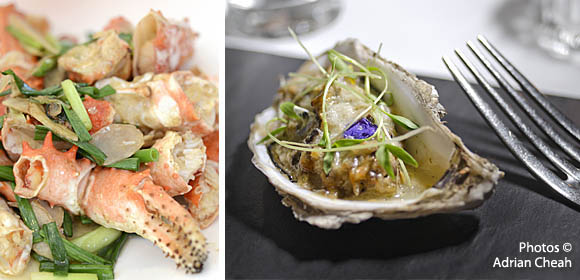
With fishing being a major economic activity on the island, Penang is naturally a haven for seafood, and a handful of restaurants have already achieved legendary status among locals and foreigners. Tucked away in remote corners, these eateries are not easy to find without local guidance but are definitely worth the extra effort to seek out.

Desserts play a major role in Penang gastronomy. There are as many varieties as there are races in Penang! To mention a few would do injustice to the rest, so you would just have to let your nose and eyes be your guide. A word of warning though – most local desserts tend to be sweet and rich, as coconut milk, flour and sugar are the main ingredients.

Thanks to early Chinese migrants, Chinese cuisine ranges from Cantonese to Teochew to Hokkien to Hainanese to Szechuan cooking. There's also Penang Nyonya food, which is a combination of Chinese, Malay and some Thai. The Penang variety of Nyonya food, apparently, is different from the Malaccan or even Singaporean versions. For a touch of luxury, try a five or ten-course Chinese meal at one of the restaurants or hotels in town.

Indian cuisine goes by two names generally – banana leaf rice and nasi kandar. Both are hot and savoury with rice being the main staple, and a menu from north Indian tandoori and nan bread, to South Indian rice and chapati.
Nasi kandar is famously popular with Penangites, and many restaurants selling it are well known not only to those on the island but those in other states as well. It is quite common to find people from other states detouring to Penang just to stop for a meal of nasi kandar before continuing on their journey elsewhere...
Indulge! Savour!
---------------------------------------------------------
Written and photographed by Adrian Cheah © All rights reserved
Updated: 6 March 2019
Penang laksa is extremely popular, especially among locals for its wonderful balance of spicy, sweet and sour flavours. This is strictly a hawker treat, as one is unlikely to find great laksa in a fancy restaurant.
Taste is very subjective and since Penangites are spoiled with choices, their discerning palate is indeed well-tuned to great food. Should you wish to see them enraged and in full disgust, just serve them a plate of something ordinary, or if you dare, something horrible. This only goes to illustrate how passionate they are about food, especially the local delicacies.
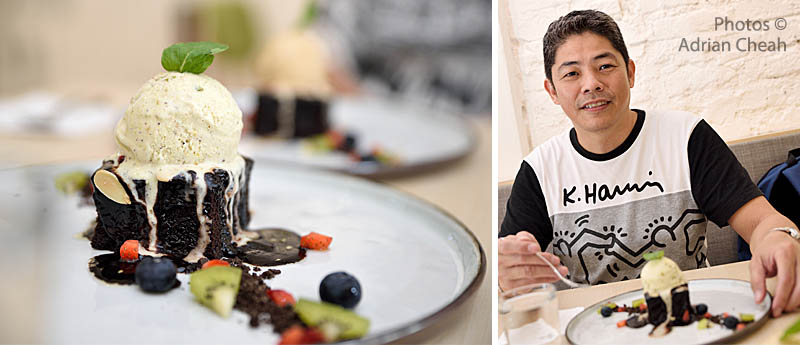
When the sweet tooth comes a-knockin', head to The Craftisan for one of its luscious dessert options. Whether it is brownies, crepe or gelato that strikes your fancy, its delicious offerings should satisfy your cravings. Hand-dripped coffee and a selection of teas complement perfectly its creative desserts.

This is something I have recently noticed about Uncle Ah Guan. He has always been great fun to chat with but on my recent visit one afternoon, although he was smiling and friendly, he was not his usual chatty self. I realised that age is catching up and grinding over the stove in the scorching tropical heat, day in and day out, which cannot be an easy task for him these days.

Thanks to its unique cultural mix, food lovers in Malaysia get to enjoy a mouth-watering blend of various flavours in their victuals (or makan-makan in local speak). Think sambal belacan with wantan noodles, Nyonya curries, Malay char koay teow and the ever-popular and versatile nasi goreng or fried rice. It can be eaten any time of the day and is found on the menu of any Penang or Malaysian eatery, from street vendors to five-star hotels.

Yes, this blue-coloured rice dish from Mews Café that is simply delicious also titillates the senses. It looks amazing, smells appetising and tasted heavenly as well.

Penang Assam Laksa is amongst the best-known and loved hawker fare in Penang. A bowl of steamed spaghetti-sized rice vermicelli is first generously garnished with finely sliced vegetables including onions, cucumber, red chillis, pineapple, lettuce, mint and pink bunga kantan (ginger buds).

“You should wash your hands using water poured over the inside chambers of a hollowed durian skin. It will remove the strong odour from your fingers", urged Mr Teh, my neighbour who accompanied me on a durian feast at one of the many durian orchards in Balik Pulau. That morning, we had a satisfying breakfast like no other, amidst the natural surroundings of the orchard, shaded by towering durian trees.
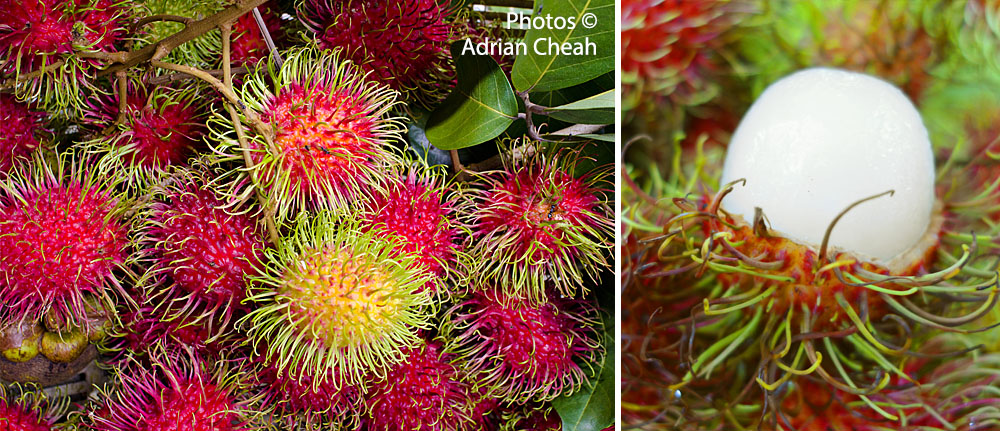
In the vast range of local fruits available in Penang, the rambutan is a popular choice among Penangites. Rambutans are tied up in bunches of 50 or 100 each and sold at roadside stalls, at marketplaces and by some fruit vendors when in season. Prices vary according to size and quality. Rambutans sold in Penang are always fresh as they come straight from the local orchards.
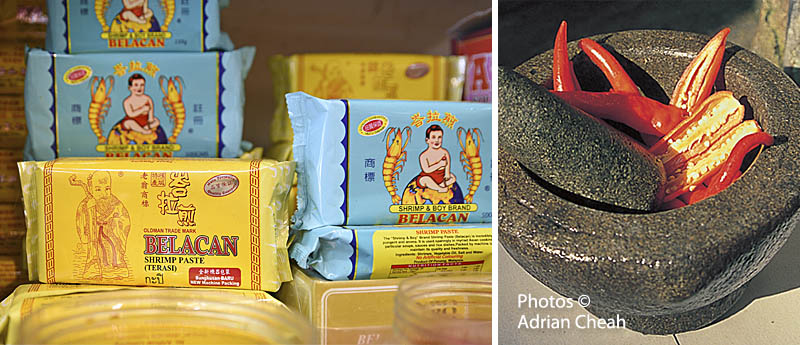
Anyone who has paid attention to local cuisine can safely hazard a guess that Penangites, and Malaysians for that matter, have a predilection for pungent foods! Call it full-flavoured, aromatic, spicy or downright nasty, Malaysian cuisine boasts more pungent varieties than arguably any other country in the world. This piquant character manifests itself in various forms, in fresh fruits (durian and jackfruit), in condiments (budu), preserves (cincaluk and tempoyak) and the innocuous-looking belacan or shrimp paste. The last item is as indispensable to Malaysian cooking as herbs are to Italian cuisine or soya sauce to Chinese. Why some purists go as far as to declare that your 'Malaysianess' hinges on whether or not you like belacan!
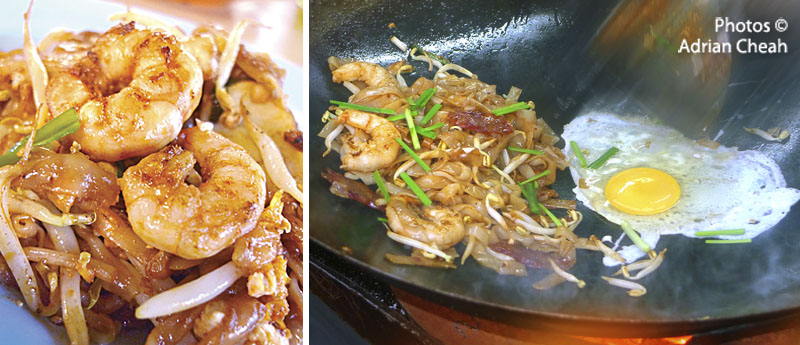
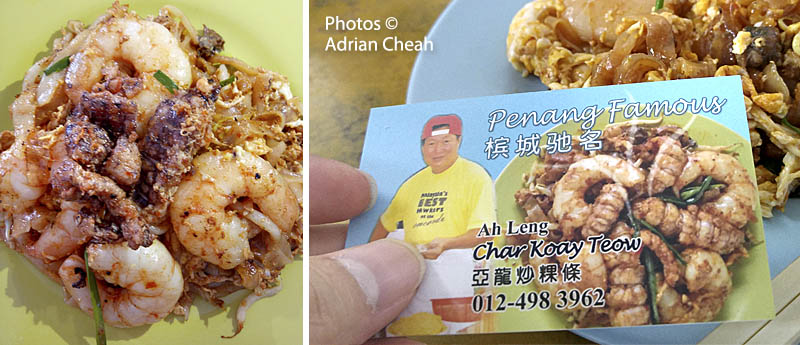
I have always wondered where the all-so-famous Penang Char Koay Teow came from? Who were its original creators? Some believe that Char Koay Teow (‘fried flat noodles in Teochew) was first sold by Chinese fishermen, farmers and cockle-gatherers on the island who moonlighted as Char Koay Teow hawkers in the evening to supplement their income.